
Best Dropshipping Niches in 2026: How to Choose Profitable Niches Before Sourcing from China

Quick Verdict: The Best Niches Are Not Just the Trendiest Ones
The best niche is not the one with the loudest trend signal. It is the one you can test with real orders, source from more than one supplier, inspect before scaling, ship without excessive damage or delay risk, and support without drowning in “Where is my order?” tickets.
For most small Shopify and WooCommerce sellers, that means choosing niches that are useful, lightweight, easy to explain, not heavily regulated, and not dependent on unrealistic delivery promises.
A niche may look attractive because demand is high. But if it creates constant fulfillment exceptions, mismatched variants, damaged packages, unclear tracking, refund pressure, or Shopify chargeback risk, it is not ready to scale.
Use this rule:
Do not scale a niche until two things are true: buyers want it, and your fulfillment workflow can deliver it without constant human rescue.
What Makes a Dropshipping Niche Profitable in 2026?

A profitable dropshipping niche is not a category like “pets” or “home decor.” If your niche is just “pets,” you do not have a niche yet. You have a shelf in a department store.
A stronger niche identifies a buyer, a repeated problem, and a product angle.
“Pet products” is too broad. “Apartment-friendly enrichment products for small dogs” is more useful.“Home organization” is too broad. “Renter-friendly storage products for small kitchens” is closer to a real niche.
Before scaling a product, sellers should treat drop sourcing as part of niche validation, not as a task that starts after the product page is already live.
Use these standards when evaluating a niche:
Factor | What to Check | Why It Matters |
Demand | Search interest, marketplace reviews, social comments, competitor ads | You need evidence beyond one viral post |
Margin | Product cost, shipping, packaging, payment fees, ad spend, refunds | Gross margin is not real margin |
Supplier depth | Multiple suppliers, stable variants, clear product specs | One supplier is a weak supply chain |
Shipping risk | Weight, size, fragility, batteries, packaging needs | Shipping can erase margin |
Return risk | Sizing, subjective taste, defects, unclear expectations | Returns create refund pressure and support workload |
Branding potential | Bundles, packaging, inserts, private label, niche positioning | Brand feel helps avoid pure price competition |
Platform fit | Shopify/WooCommerce order sync, SKU matching, tracking updates | Manual fulfillment does not scale cleanly |
A good niche lets you run 10 to 20 real orders without buying a garage full of inventory or creating a support queue you cannot manage. During that test, track delivery experience, refund reasons, tracking update speed, support tickets, and real cost per fulfilled order.
Niche Selection Criteria Before Sourcing from China

Before you source from China, pressure-test the niche with operational questions.
Can the product be photographed and explained clearly? If the product needs too much imagination, the product page will work harder than it should.
Can you compare at least three suppliers? If one supplier controls your product, any stock issue can create a manual fulfillment queue overnight.
Can you inspect the product before scaling? Low-cost goods can still work, but only if the defect rate does not eat refunds, replacements, and chargebacks.
Can the product be packed safely? Lightweight does not always mean easy. Thin plastic, glass, ceramics, low-quality zippers, loose electronics, and delicate finishes can all create post-delivery complaints.
Can you avoid regulated claims? U.S. sellers should review the CPSC Online Sellers’ Safety Guide when selling consumer products, especially products that may affect children, household safety, or personal use. Beauty sellers should also review FDA cosmetics labeling guidance before making cosmetic claims. Battery-powered products may require additional shipping review under current IATA lithium battery shipping guidance.
Can tracking return to your store reliably? Shopify’s chargeback documentation explains that sellers may need to submit evidence depending on the dispute type. For a dropshipping seller, weak tracking and unclear fulfillment records can make disputes harder to defend.
For U.S. buyers, the first support problem is often not the final delivery date. It is the silence between checkout and the first visible tracking movement. If a customer sees no USPS, UPS, FedEx, or carrier handoff update after a couple of days, they may open a “Where is my order?” ticket before the parcel is actually late. For a test batch, track how quickly tracking appears, whether the tracking page is understandable to a North American buyer, and how many customers contact support before delivery.
Comparison Table: 2026 Dropshipping Niches by Testing Rationale and Operational Risk
This table is not a market-size ranking. It is an operator’s view of which niches may be worth testing based on usefulness, sourcing feasibility, shipping risk, return risk, and branding potential.
Niche | Testing Rationale | Operational Risk | Best First Test | Verify Before Sourcing |
Pet routine accessories | Emotional buyers, repeat routines, giftable products | Medium | Grooming storage, travel bags, walking accessories | Material quality, sizing, chew safety, packaging |
Small-space home organization | Easy to demonstrate, strong before/after visuals | Low-Medium | Drawer, cabinet, closet, cable organization | Dimensions, load limits, packaging strength |
Hobby and DIY accessories | Specific buyer intent, community-driven demand | Low-Medium | Tool organizers, craft accessories, storage kits | SKU clarity, material specs, supplier consistency |
Desk and creator workspace accessories | Remote work and creator setups remain visual buying contexts | Low-Medium | Desk organizers, cable routing, lighting accessories | Variant matching, finish quality, shipping size |
Travel and commute organization | Practical, seasonal, often lightweight | Low-Medium | Packing cubes, toiletry bags, tech pouches | Zippers, fabric durability, weight |
Beauty tools and accessories | Visual, content-friendly, often bundleable | Medium | Organizers, brush holders, makeup bags | Claims, materials, cleaning instructions |
Fitness recovery accessories | Wellness buyers spend on routines | Medium | Stretching accessories, gym organization, simple tools | Avoid medical claims, inspect materials |
Lightweight fashion accessories | Visual, giftable, brandable | Medium | Bags, hair accessories, scarves, organizers | Color accuracy, finish, packaging |
Outdoor micro-gear | Practical and demo-friendly | Medium | Pouches, compact tools, repair kits | Durability, seasonality, packaging |
Kitchen convenience tools | Clear use cases and demo potential | Medium | Storage, prep, cleaning accessories | Food-contact claims, sharp edges, breakage |
The better tests are usually boring in the right way: easy to explain, light enough to ship, not heavily regulated, and not likely to trigger refund arguments.
Best Dropshipping Niches in 2026
1. Pet Routine Accessories

Pet buyers are emotionally invested, and many pet accessories are lightweight enough for cross-border fulfillment. The better angles are not generic collars or bowls. Look at routine-based problems: grooming storage, travel bags, enrichment accessories, walking organization, apartment-friendly pet care, and seasonal comfort items.
This niche fits Shopify sellers who can build content around pet routines, not just product photos. It is less ideal for sellers trying to sell chew toys, feeding products, or safety-related products without material verification.
Before sourcing, check material smell, stitching, size charts, packaging, and whether the product creates any safety concern. A cheap pet product that breaks quickly is not just a refund problem; it can damage the brand.
2. Small-Space Home Organization
North American renters, condo owners, and small-space households buy products that save space without requiring permanent installation. Think drawer organizers, renter-friendly storage, closet accessories, cable management, under-sink organization, and compact laundry tools.
This works well on Shopify because the product page can often do the selling with one photo: messy cabinet before, organized cabinet after.
The risk is dimensions. If your listing says “fits most cabinets” and customers discover it does not fit their space, your support inbox will feel it. Verify dimensions, load capacity, packaging, and photo accuracy before sourcing.
3. Hobby and DIY Accessories
Hobby niches can be strong because buyers already have identity and intent. Examples include sewing accessories, miniature craft tools, journaling supplies, model-building storage, painting accessories, and repair kits.
The advantage is audience specificity. You are not selling to everyone. You are selling to people who understand the use case and notice the details.
The risk is SKU confusion. Hobby buyers notice small differences. If your supplier changes a tool size, material, tip shape, color, or compatibility detail, your return risk goes up. Use clear SKU and variant matching before importing products into Shopify or WooCommerce.
4. Desk and Creator Workspace Accessories
Remote workers, students, streamers, freelancers, and creators continue to buy products that make workspaces cleaner, more comfortable, or easier to film. This can include desk organizers, cable routing, lighting accessories, laptop stands, monitor shelf accessories, and creator storage.
These products can work because buyers understand the use case quickly and often buy them as practical gifts, not just personal upgrades.
The operational risk is moderate. Finishes, color consistency, small hardware parts, and packaging damage can create complaints. Avoid overclaiming ergonomics unless you can support it. Sell the practical outcome: cleaner desk, better cable control, easier setup, less clutter.
5. Travel and Commute Organization
Travel does not have to mean luggage. For dropshipping, smaller accessories are often easier: packing organizers, toiletry bags, tech pouches, passport holders, under-seat organization, gym-to-office bags, and commuter storage.
This niche fits sellers who can create seasonal campaigns around spring break, summer travel, back-to-school, Thanksgiving, and Black Friday/Cyber Monday.
The risk is that the buyer judges quality the second they touch the zipper, clasp, fabric, or finish. Order samples, inspect stitching, and check whether product photos accurately represent fabric thickness.
6. Beauty Tools and Accessories
Beauty can be profitable, but formulations and claims raise risk. A safer route for many small sellers is beauty-adjacent accessories: organizers, brush holders, makeup bags, hair tool storage, reusable applicator accessories, mirrors, and non-medical beauty tools.
Do not turn a beauty accessory into a medical or cosmetic claim just because the ad needs a stronger hook. If the product touches skin, uses heat, includes electronics, or makes cosmetic claims, review compliance requirements and test quality before scaling.
This niche is best for sellers who understand content, visual merchandising, and influencer-style product demonstration. It is not ideal for beginners who want to move fast without checking labeling, materials, or claims.
7. Fitness Recovery Accessories

Recovery products can attract buyers who already spend on health and wellness. The better dropshipping angles are simple accessories: stretching straps, massage tool storage, yoga accessories, grip aids, gym organization, and hydration accessories.
The danger line is the moment your product page starts sounding like it treats pain, fixes posture, or prevents injury. Position products around routine, comfort, organization, and general fitness support rather than medical outcomes.
Inspect materials closely. Low-quality rubber, foam, stitching, or handles can lead to negative reviews fast.
8. Lightweight Fashion Accessories
Fashion accessories can still work if you avoid the worst parts of apparel dropshipping. Scarves, bags, belts, jewelry organizers, hair accessories, hats, and seasonal accessories can be easier than full-size apparel because returns may be less dependent on exact fit.
Sellers considering accessories can study jewelry dropshipping separately because material, plating, packaging, and customer expectations can change the return profile.
The key is brand angle. A generic accessory store competes on price. A focused store can sell around style identity, occasion, giftability, or capsule wardrobe utility.
9. Custom Apparel and Apparel-Adjacent Products
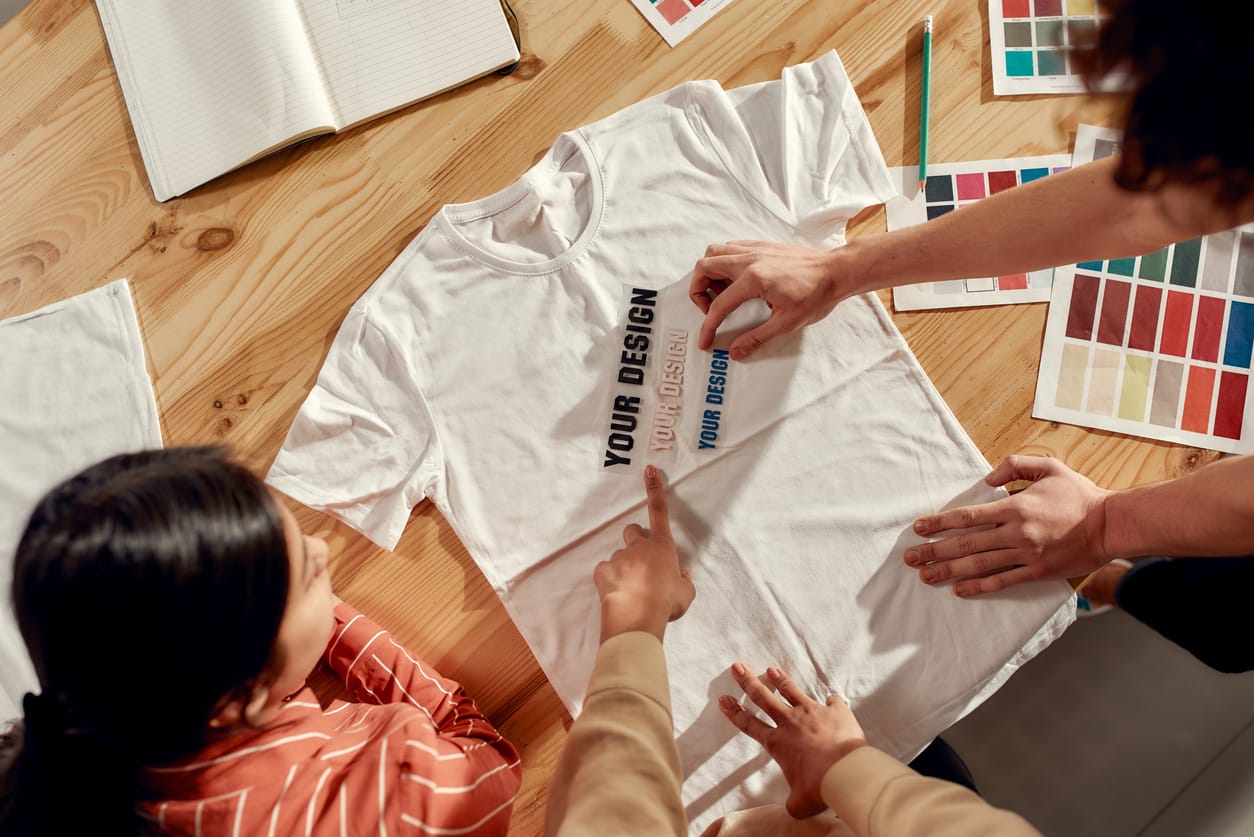
Apparel is attractive because buyers understand it, content is easy to create, and branding potential is high. But it also creates sizing, fabric, color, return, and expectation issues.
Apparel sellers should treat custom apparel dropshipping as a higher-validation niche because sizing, fabric feel, labeling, and packaging all affect refund pressure.
If you test apparel, start narrow. Test one audience, one style angle, and a limited number of variants. Do not import hundreds of SKUs before you understand size complaints, fabric comments, and real delivery expectations.
10. Outdoor Micro-Gear
Outdoor products can be attractive when they are small, practical, and easy to demonstrate. Examples include camping organizers, dry pouches, compact tools, hiking accessories, repair kits, and storage add-ons.
The risk is durability. Outdoor buyers expect products to work under stress. Do not scale until you test material strength, water resistance claims, stitching, buckles, and packaging.
This niche fits content-led sellers who can show the product in use, not just list features.
11. Kitchen Convenience Tools
Kitchen gadgets are tempting, but many are overdone. The better angle is utility: storage, prep organization, cleaning accessories, reusable bags, compact tools, and countertop organization.
Be careful with food-contact materials, sharp components, electrical kitchen products, and unrealistic claims. A cheap gadget can create expensive support problems if customers think it is unsafe or poorly made.
This niche works best when the product solves one visible problem and can be explained in a short demo video.
Niches That Look Attractive but Require Extra Validation
Some niches are not bad. They are just not beginner-friendly.
Battery-powered electronics may trigger shipping restrictions, documentation needs, adapter compatibility issues, and customer support problems if charging instructions are unclear.
Cosmetics, skincare, supplements, and ingestible products need stronger compliance review. Do not treat them like ordinary accessories.
Baby products, toys, and children’s items require extra caution. Safety expectations are higher, and U.S. sellers should review CPSC guidance before importing or selling.
Oversized home goods can look profitable until dimensional weight ruins the margin.
Fast fashion can move quickly, but sizing, fabric feel, color variance, and return expectations can create high support workload.
Trademark-sensitive products should usually be skipped. If the product relies on a character, logo, fandom, designer reference, or branded lookalike, the legal and platform risk is not worth it for most small sellers.
How China Sourcing Should Change Your Niche Decision
For sellers new to Chinese dropshipping, the biggest issue is not product access. It is whether the sourcing and fulfillment workflow can hold up after the first 10 to 20 orders.
China sourcing gives sellers access to a large product base, but the operational question is not “Can I find it?” The question is “Can I fulfill it repeatedly without damaging the customer experience?”
Evaluate four things before committing.
First, supplier depth. If you can only find one supplier with unclear specs, you do not have a reliable niche test.
Second, variant stability. Shopify and WooCommerce stores depend on clean SKU and variant matching. If your listing has five colors and three sizes, supplier-side data must stay consistent.
Third, quality control. Some products need inspection before they reach the buyer. This is especially true for apparel details, branded packaging, fragile goods, and products where color or finish matters.
Fourth, tracking visibility. Delayed or unclear tracking creates support tickets and payment disputes. Even when the product eventually arrives, the customer may lose confidence if tracking stays blank too long.
If you are comparing suppliers manually, using product sourcing tools can help organize product specs, supplier options, and fulfillment workflow before you scale.
Example Workflow: From Niche Idea to 10–20 Test Orders
Use this workflow before scaling a new niche. This is an example scenario, not a guaranteed result.
Start with three niche ideas. For each one, choose five to ten products that solve a specific problem. Do not import 100 SKUs into your store. That creates noise before you know what buyers want.
Check demand signals. Look at search terms, marketplace reviews, competitor ads, TikTok comments, Reddit discussions, YouTube demos, and product questions. You are looking for repeated buyer language, not just views.
Shortlist suppliers. Compare product specs, variants, reviews, packaging photos, and available shipping options. If the supplier page is vague, assume customer support will be vague later.
Order samples or use inspection. Test the product like a customer. Open the package. Check smell, material, stitching, fit, finish, instructions, and packaging.
Create a focused product page. Write around the buyer’s use case. Show dimensions, materials, care instructions, shipping expectations, and what is included.
Run a 10 to 20 order test. During the test, measure cost per fulfilled order, tracking return speed, refund reasons, customer support workload, and whether ad comments reveal objections you missed.
If 20 test orders create repeated manual fixes, do not scale ad spend yet.
Before vs. After: Manual Fulfillment vs. Platform-Supported Fulfillment
Workflow Area | Manual Dropshipping Workflow | Platform-Supported Workflow to Test |
Product sourcing | Search suppliers one by one | Compare supplier options and product details in a more organized flow |
SKU and variant matching | Manually copy variants into store | Check whether SKUs, variants, and product data sync cleanly |
Order fulfillment | Place orders manually after each sale | Test whether order sync and fulfillment reduce manual steps |
Tracking | Copy tracking numbers by hand | Check how quickly tracking returns to the store |
Quality control | Usually limited unless separately arranged | Verify whether inspection scope fits the product category |
Packaging | Generic supplier packaging | Test branded packaging or inserts when the product supports it |
Exceptions | Solved case by case | Track exception rate before scaling |
This is not about replacing judgment with software. It is about finding out whether the workflow can survive real orders.
Brand at a Glance: Where BuckyDrop Fits
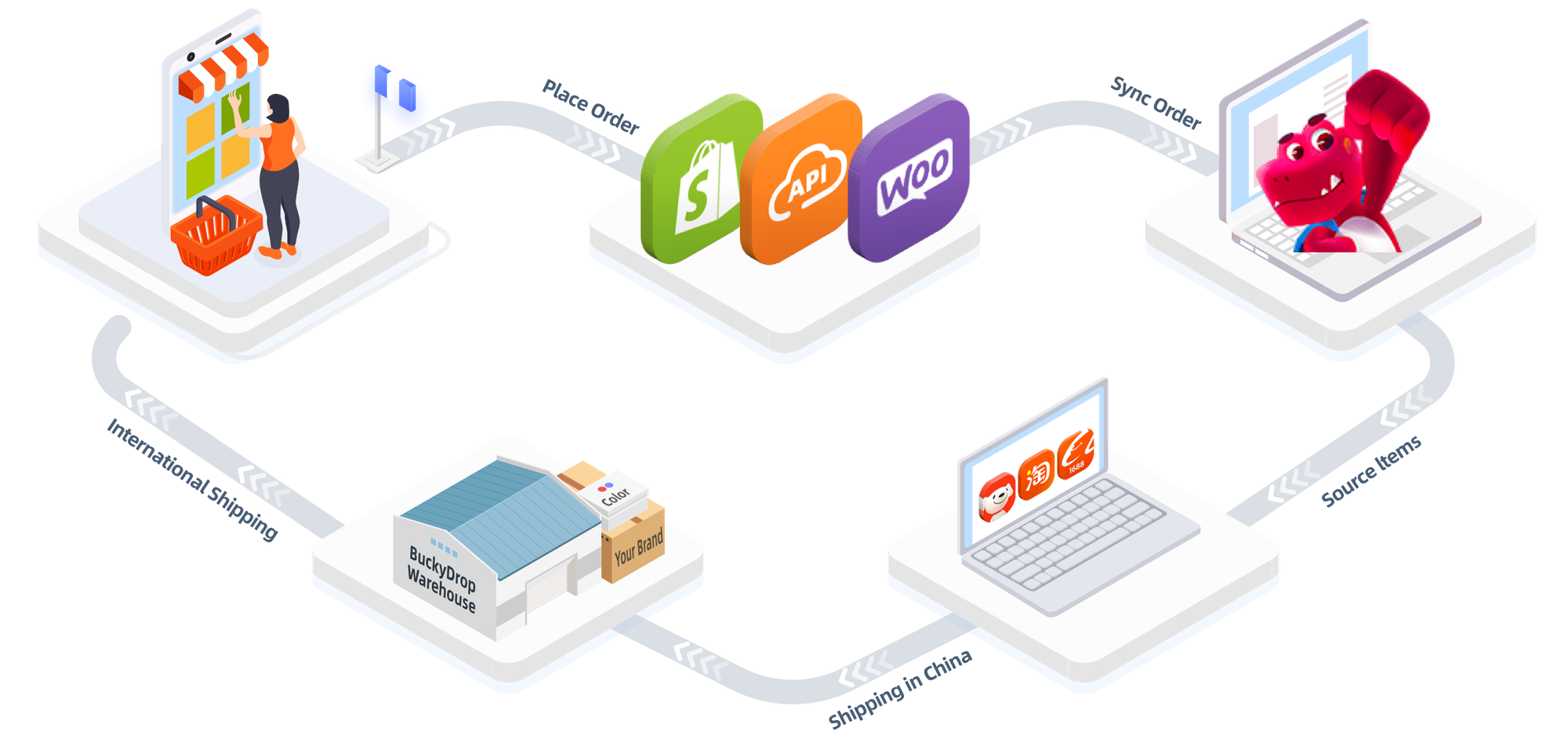
BuckyDrop should not be treated as the first step in niche research. It becomes relevant when you already have a product hypothesis and need to see whether the sourcing and fulfillment workflow can survive real orders.
Based on company materials and public listings, BuckyDrop supports China sourcing, Shopify and WooCommerce workflows, automated fulfillment, quality checks, logistics, and branded packaging. The BuckyDrop website describes plugin and API connection for syncing orders, inventory, fulfillment, and shipping tracking with Shopify, WooCommerce, and other ecommerce platforms. Its Shopify App Store listing describes access to China supply sources including 1688, Taobao, Alibaba, and AliExpress, along with private labeling, quality check, and order management. Its WordPress plugin listing describes sourcing products from Alibaba, 1688, Taobao, Weidian, Yupoo, and Poizon for WooCommerce stores.
Company-provided materials describe BuckyDrop as a China sourcing, automated fulfillment, warehousing, quality inspection, international logistics, and branded dropshipping platform for Shopify, WooCommerce, BuckyShop, and API-connected merchants. Those materials also state that BuckyDrop supports sourcing from Chinese platforms including 1688, Taobao, Tmall, Xianyu, JD, Weidian, Poizon, and others.
Sellers should still verify product cost, inspection scope, packaging requirements, shipping route, service fees, and support process before scaling. Pricing may vary depending on product category, service requirements, packaging needs, logistics route, and order workflow.
Who BuckyDrop Is Best For

BuckyDrop makes the most sense when your team is losing time to manual supplier orders, variant checks, tracking updates, package requests, and fulfillment exceptions.
It may be a good fit for:
· Shopify sellers testing products sourced from China
· WooCommerce sellers who need a more organized sourcing-to-delivery workflow
· Dropshipping sellers moving from random product testing toward niche stores
· Small ecommerce teams that need quality inspection, packaging support, or branded delivery options
· Sellers who want to test private label, branded packaging, hang tags, inserts, or product presentation before scaling
· Teams that need API-connected workflows for more customized operations
BuckyDrop’s public materials describe dropshipping services for sellers who need sourcing, fulfillment, logistics, and branding support from China. Sellers comparing dropshipping platforms should look beyond product import and check supplier-side visibility, inventory sync, tracking updates, quality inspection, packaging options, and support boundaries.
According to company-provided case materials, in a reported Japanese fashion team case, BuckyDrop supported branded hang tags, logo sewing, thank-you cards, branded labels, folding, and packaging. The reported result was a 20% increase in repeat purchase rate and a 5% decrease in return rate. Results may vary, and sellers should not treat a reported case as a forecast for their own category.
Source: company-provided customer case materials.
What to Verify Before You Commit
Before committing to a niche or supplier, run a controlled test and write down the numbers.
Track:
· Product cost
· Packaging cost
· Shipping cost
· First tracking update timing
· Delivery exceptions
· Defect reasons
· Refund requests
· Support tickets per order
· SKU and variant accuracy
· Customer comments on product quality
· Real cost per fulfilled order
Check whether SKUs and variants match cleanly between the supplier side and your Shopify or WooCommerce store. WooCommerce’s order fulfillment documentation shows how order fulfillment depends on order status and fulfillment workflow visibility, which matters when sellers start adding plugins, fulfillment providers, or shipping steps.
If 20 test orders create repeated manual fixes, do not scale ad spend yet.
Common Mistakes When Choosing Dropshipping Niches in 2026
The first mistake is choosing a broad category instead of a niche. “Home decor” is not a niche. “Renter-friendly wall storage for small apartments” is closer.
The second mistake is treating supplier price as profit. Real profit has to include shipping, packaging, payment fees, returns, replacement orders, chargebacks, support time, and ad spend.
The third mistake is ignoring fulfillment exceptions. If 10 orders create five manual interventions, the product is not operationally clean.
The fourth mistake is launching too many SKUs too early. More SKUs create more variant matching problems, more product page work, more supplier checks, and more support questions.
The fifth mistake is assuming “from China” means one workflow. A lightweight desk organizer, a lithium battery device, and a children’s toy have very different sourcing, compliance, and shipping requirements.
The sixth mistake is waiting until after Black Friday/Cyber Monday to test operations. Peak season punishes weak workflows. If tracking, packaging, or supplier stock fails under 20 orders, it will not magically improve under 200.
FAQ
What is the most profitable dropshipping niche in 2026?
There is no single most profitable niche for every seller. The best niche depends on your traffic source, product margin, shipping cost, refund risk, supplier depth, and ability to differentiate. For many North American small sellers, practical niches like pet routine accessories, small-space organization, hobby accessories, and desk setup products may be easier to validate than high-risk electronics or regulated products.
How do I know if a niche is too saturated?
A niche is not automatically too saturated because competitors exist. It becomes a problem when every store sells the same product, uses the same supplier photos, offers no brand angle, and competes only on price. Look for underserved buyer segments, bundle opportunities, better product education, or stronger packaging before giving up.
Should beginners choose low-ticket or high-ticket products?
Beginners usually learn faster with low-to-mid-ticket products that are lightweight, easy to explain, and not compliance-heavy. High-ticket products can work, but they increase refund pressure, chargeback risk, and customer expectations around delivery and support.
What should I test before sourcing from China?
Test supplier reliability, sample quality, packaging, shipping options, tracking update speed, variant matching, and customer support workload. Run a small 10 to 20 order test before scaling ad spend.
Is Shopify or WooCommerce better for dropshipping?
Shopify is often easier for sellers who want a hosted ecommerce workflow and app ecosystem. WooCommerce can work well for sellers who prefer WordPress control and plugin flexibility. Choose based on your team’s technical comfort, store requirements, and fulfillment integration needs.
Are battery-powered products good for dropshipping?
They can sell, but they require more validation. Battery-powered products may involve shipping rules, documentation, charging compatibility, defect risk, and higher customer support needs. Review current battery shipping guidance and verify with your logistics provider before scaling.
When should I use a sourcing and fulfillment platform?
Use one when manual ordering, tracking updates, supplier communication, SKU matching, or packaging requests start slowing your store down. If you are still testing random products with no niche direction, fix the strategy first.
What should I prepare before connecting a sourcing and fulfillment platform?
Prepare your niche hypothesis, target customer, product shortlist, preferred variants, packaging expectations, sample criteria, test order budget, and success metrics. Do not connect a platform just to import more products. Connect it when you are ready to test a real workflow.
Does BuckyDrop publish fixed pricing?
Pricing may vary by product, service, packaging requirement, logistics route, and order workflow. Verify current pricing and service scope directly with BuckyDrop before scaling.
Conclusion
Choose a niche only after it passes both market validation and fulfillment validation.
A good niche should attract buyers, leave margin after shipping and ads, avoid unnecessary compliance traps, and work inside your Shopify or WooCommerce order flow.
If you are preparing to source from China, test your next 10 to 20 orders before scaling. Measure three things:
1. How much manual fulfillment work disappears
2. How quickly tracking returns to the store
3. Whether your real cost per fulfilled order still works after packaging, shipping, refunds, and support workload
Ready to test a niche before you scale ad spend? Connect your Shopify or WooCommerce store with BuckyDrop and run your next 10 to 20 orders as a controlled fulfillment test.
Sources
· WooCommerce Order Fulfillment Documentation
· CPSC Online Sellers’ Safety Guide
· FDA Cosmetics Labeling Guide
· IATA Lithium Battery Guidance Document
· Shopify Chargeback Documentation
· BuckyDrop Shopify App Store Listing
· BuckyDrop WooCommerce Plugin Listing
· Source: internal company materials
· Source: company-provided customer case materials