China Sourcing Agent vs. DIY Sourcing: Cost, Quality & Risk
Scaling your ecommerce store? Compare China Sourcing Agents vs. DIY Sourcing. Learn how to manage costs, ensure product quality, and reduce operational risks with automated supply chain solutions like BuckyDrop for reliable dropshipping from China.
TABLE OF CONTENTS
Why Sourcing Strategy Matters When Dropshipping From China
DIY Sourcing: The Most Common Starting Point
The Hidden Risks of DIY Sourcing
China Sourcing Agent vs DIY Sourcing: Key Differences
A More Scalable Solution: Using Platforms Like Buckydrop
Conclusion
If you’ve ever tried dropshipping from China, you probably started the same way most sellers do—searching for a supplier online, negotiating a price, and asking them to ship orders directly to your customers. At first, it seems simple. You find a product, test it in your store, and wait to see if it sells.
But what happens when the orders actually start coming in?
Many sellers quickly discover that sourcing is more complicated than it looked in the beginning. A supplier might suddenly run out of stock. Processing time might stretch from two days to a full week. Sometimes the product sample looks great, but the bulk orders are slightly different. These small issues can quickly turn into refund requests, negative reviews, or frustrated customers.
If you’re running an ecommerce store, you may have already asked yourself a similar question: Should I continue sourcing products myself, or should I work with a China sourcing partner to manage the supply chain?
This is where the difference between DIY sourcing and structured supply chain support becomes clear. For sellers relying on dropshipping from China, the way you source products directly affects costs, product consistency, and delivery reliability. Understanding these differences is essential if you want your store to grow without constantly worrying about supplier problems.
Why Sourcing Strategy Matters When Dropshipping From China
If you run an ecommerce store, sooner or later you will face an important decision: how to manage product sourcing when dropshipping from China.
At the beginning, most sellers focus mainly on finding products and testing what sells. But as orders start increasing, sourcing decisions begin to affect several parts of the business, including product costs, shipping reliability, and overall customer experience.
For stores relying on dropshipping from China, supply chain stability gradually becomes just as important as marketing or product selection. A supplier that ships late, runs out of inventory, or delivers inconsistent product quality can quickly disrupt store operations.
And this is exactly the point where many sellers begin to reconsider their sourcing approach. Should you continue managing suppliers on your own, or would working with a sourcing partner provide a more stable solution?
DIY Sourcing: The Most Common Starting Point
Most sellers begin with DIY sourcing by contacting suppliers directly through platforms like Alibaba or 1688.
This process is simple:
1. Find a supplier
2. Negotiate pricing
3. Place orders manually
4. Ask the supplier to ship products directly to customers
For small stores testing products, this approach can work well. Many beginner sellers operate with fewer than 10 SKUs and relatively low order volume.
However, as stores grow, managing suppliers, shipping options, and China fulfillment arrangements manually can become increasingly time-consuming.
The Hidden Risks of DIY Sourcing
While DIY sourcing offers flexibility, several operational risks may appear once orders start increasing.
Supplier Reliability

Suppliers may unexpectedly run out of inventory or extend processing times. A product that normally ships within two days might suddenly take a week.
Product Quality Variations

Sample products often look perfect, but bulk orders may vary slightly in materials, packaging, or assembly quality.
Communication Barriers

Working across time zones and languages can slow down communication. When order problems occur, resolving them may take several days.
Shipping and Logistics Complexity
Another challenge is shipping management. Sellers often rely on suppliers to choose shipping methods, which may result in inconsistent delivery times.
Without structured dropshipping fulfillment services, tracking orders and coordinating logistics can quickly become difficult.
China Sourcing Agent vs DIY Sourcing: Key Differences
When deciding how to manage your supply chain, many sellers compare DIY sourcing with working with a sourcing agent. The differences usually become clearer once order volume starts growing.
Factor | DIY Sourcing | China Sourcing Agent | Integrated Platform (e.g., Buckydrop) |
Supplier Access | Sellers find suppliers themselves on marketplaces like Alibaba or 1688. | Agents help identify factories or reliable suppliers. | Access to a curated supplier network through one platform. |
Product Quality Control | Usually no inspection before products are shipped. | Basic quality checks may be performed before shipment. | Quality checks and supplier screening are often integrated into the sourcing process. |
Order Processing | Orders are handled manually with each supplier. | Agents coordinate orders and communication with suppliers. | Orders can be synced automatically from ecommerce stores. |
Shipping & Fulfillment | Shipping methods vary depending on each supplier. | Agents help consolidate shipments and manage logistics. | Centralized china fulfillment and shipping coordination. |
Operational Efficiency | Time-consuming as order volume increases. | Reduces some manual work but still requires coordination. | Automation tools help simplify dropshipping fulfillment services and order handling. |
Scalability | Difficult to manage when orders scale. | More stable than DIY sourcing but still partially manual. | Designed to support growing stores with integrated supply chain management. |
The comparison above highlights how sourcing methods differ across several operational areas. DIY sourcing can work well when order volume is low, but the differences become more noticeable as stores begin to scale.
In practice, most sellers evaluate sourcing options based on three key factors.
Cost
DIY sourcing may appear cheaper at first because there are no service fees involved. However, sellers still need to consider hidden operational costs. Time spent negotiating with suppliers, resolving shipping issues, or handling delayed orders can gradually increase the overall cost of running the store.
Quality Control
Product consistency can also become a challenge when working directly with multiple suppliers. Without inspection before shipping, sellers often discover quality issues only after customers receive their orders. A sourcing partner typically introduces an additional layer of product verification, which helps reduce this risk.
Operational Risk
As stores grow, relying on a single supplier or manually managing several vendors can create operational pressure. Inventory shortages, slower processing times, or supplier instability may affect order fulfillment. A more structured sourcing system helps reduce these risks by providing better coordination between suppliers, fulfillment, and logistics.
Key Insights
● DIY sourcing works well for early product testing but becomes harder to manage as order volume increases.
● Sourcing agents improve supplier coordination and product quality control.
● Integrated platforms like Buckydrop combine sourcing, fulfillment, and automation to support scaling ecommerce stores.
A More Scalable Solution: Using Platforms Like Buckydrop
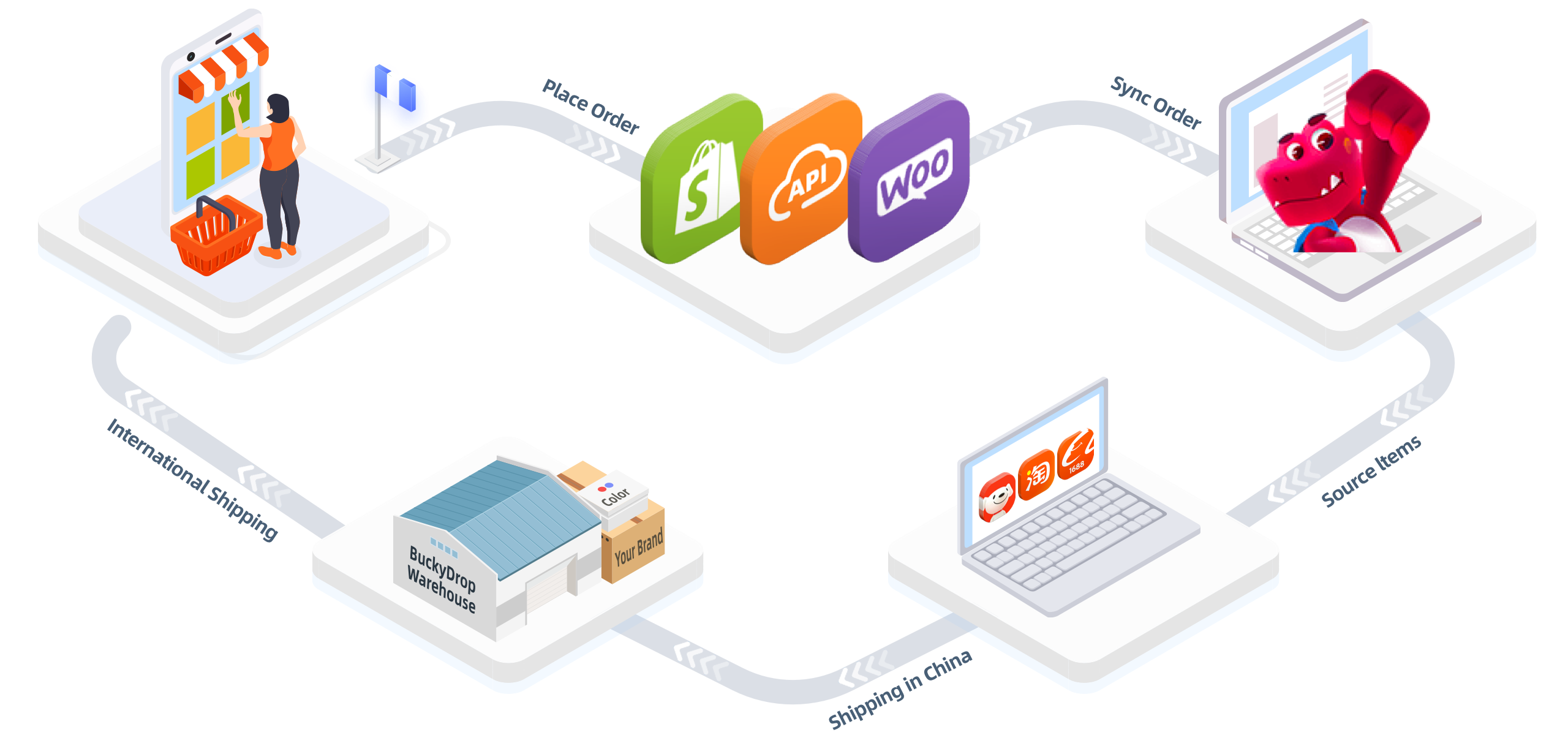
Traditional sourcing agents can help solve certain supply chain problems, but they often still rely on manual communication and coordination. As order volume increases, managing suppliers, logistics, and order processing through messages or spreadsheets can quickly become inefficient.
This is why many modern ecommerce sellers are turning to integrated supply chain platforms such as Buckydrop.
Instead of contacting multiple suppliers, negotiating shipping methods, and forwarding orders manually, sellers can manage sourcing, china fulfillment, and shipping coordination through a single system.
This type of structure helps address several common challenges sellers face when dropshipping from China.
Supplier reliability and sourcing stability
Many sellers struggle to find reliable suppliers, especially when working directly through marketplaces. Buckydrop connects stores with verified Chinese suppliers, helping reduce the risk of unstable inventory or inconsistent production.
Communication and coordination
Time zone differences and language barriers can slow down problem resolution when working directly with factories. With Buckydrop, sellers communicate through one platform instead of managing multiple supplier conversations.
Order processing and automation
Manually forwarding orders to suppliers becomes difficult as stores grow. Buckydrop synchronizes store orders automatically, allowing sellers to manage sourcing and order handling through a more streamlined workflow.
Logistics and fulfillment management
Shipping from different suppliers often leads to inconsistent delivery times and tracking issues. Buckydrop provides centralized logistics coordination and stable dropshipping fulfillment services, helping sellers manage shipments more efficiently.
For stores that have already found winning products and are starting to scale, this type of integrated infrastructure can significantly simplify operations. Instead of spending time solving supplier or logistics problems, sellers can focus more on marketing, product development, and customer experience while continuing dropshipping from China with a more stable supply chain.
Conclusion
DIY sourcing remains a practical option for new sellers testing products. It offers flexibility and low entry barriers.
However, as order volume increases, supply chain stability becomes more important. Issues such as supplier reliability, quality consistency, and shipping performance can directly affect customer satisfaction.
By working with sourcing partners or using structured platforms like Buckydrop, sellers can build a more stable supply chain and operate more efficiently when dropshipping from China.