Dropshipping Shipping Costs from China: How to Calculate the Real Cost Before You Sell

A product can look profitable on Taobao or 1688 and become unprofitable as soon as the first customer order is packed. For overseas Shopify, WooCommerce, and independent-store sellers, the urgent question is simple: how much will it really cost to deliver one order from China to the customer?
Dropshipping shipping costs are not one fixed number. The total can include the product, China domestic freight, purchasing or sourcing inputs, warehouse receiving, inspection, packaging, parcel processing, international transportation, route surcharges, and the cost of refunds or reshipments when delivery fails.
This guide shows how to calculate dropshipping shipping costs before setting a selling price or launching ads. It explains billable weight, packaging, route selection, delivery expectations, landed cost, and the difference between an estimate and the final charge. It also shows how to use the BuckyDrop Shipping Calculator and validate the result with one controlled order.
Do not price a product from the supplier cost alone. Open the BuckyDrop Shipping Calculator, enter a real destination and realistic parcel data, then check whether the product still leaves enough room for profit.
Quick Answer: How Much Does Dropshipping Shipping from China Cost?
There is no useful universal shipping price. The cost depends on the destination and postcode, product category, actual and volumetric weight, packed dimensions, quantity, warehouse, route, tracking level, delivery expectation, and applicable carrier or destination charges.
A quotation is useful only when it uses the same assumptions as the real order. A 300-gram estimate is misleading if protective packaging turns the final parcel into a larger billable-weight bracket. A low-cost route is also a poor comparison if it cannot accept the product or meet the store’s delivery promise.
The practical answer is to estimate one representative SKU with realistic data, include every fulfillment cost layer, and then compare the estimate with one completed test order before scaling.
Pain Point 1: The Product Price Is Not the Delivered Cost
Sellers often select a product because the supplier price appears to leave room for advertising and profit. The problem appears after shipping costs from China, domestic freight, inspection, packing, payment costs, platform costs, and refund risk are added.
Calculate the cost at customer-order level. A supplier may offer an attractive unit price, but a fragile, oversized, liquid, battery-powered, magnetic, branded, or restricted item can require different handling or routes. The shipping cost may become larger than the product cost.
Use this landed-cost model before publishing the product: product cost + China domestic freight + purchasing or service inputs + inspection and processing + packaging + storage where applicable + international shipping + payment/platform costs + expected refund or reship allowance.
The Real Per-Order Cost Formula
Real cost per delivered order = product + China domestic freight + sourcing/purchasing + receiving and inspection + packaging and parcel processing + international shipping + applicable destination costs + payment/platform costs + expected refund or reship allowance.
Pain Point 2: Estimated Weight and Billable Weight Are Not Always the Same

A shipping estimate usually begins with the information available before packing. The final parcel may have a different weight or size after protective material, outer packaging, consolidation, or product preparation is added. Carriers may also apply route-specific rules based on actual weight, volume, dimensions, or the greater of actual and volumetric weight.
This is why a seller should record both weight and parcel dimensions. Lightweight but bulky products can be expensive even when the scale weight is low. Oversized sides, irregular shapes, or protective packaging can also change route eligibility.
Ask the shipping agent when the estimate becomes final, which measurement source controls billing, how differences are settled, and whether warehouse photos or measurements are available. A transparent process explains the adjustment rather than presenting it as an unexplained charge.
Pain Point 3: The Cheapest Route May Be the Wrong Route

A good international shipping from China decision balances cost, delivery expectation, product eligibility, tracking quality, destination coverage, and the store’s customer promise. Express, standard, and economy routes can serve different products and margin structures.
Do not compare route names alone. Confirm what the quoted transit estimate covers, whether processing time is separate, how tracking events appear, what happens in remote areas, and whether the route accepts the product category. Availability can change by destination, parcel specification, carrier capacity, and policy.
Choose a route that the product margin can support and the customer promise can tolerate. A slightly cheaper route is not a saving if it creates more “Where is my order?” tickets, refunds, chargebacks, or reshipments.
Pain Point 4: A Shipping Quote Must Show What Is Included
The phrase dropshipping shipping fee can refer to different cost layers. One provider may quote only carrier transportation. Another may include parcel handling, basic packaging, tracking, or warehouse operations. A third may add service charges later. When comparing dropship fulfillment pricing, use the same SKU, destination, parcel assumptions, service scope, and exception rules for every quote.
Request a written cost breakdown. At minimum, separate product cost, domestic freight, sourcing or purchasing inputs, warehouse handling, inspection, value-added processing, packaging materials, storage, international transportation, route-related surcharges, and exception costs.
To calculate your current costs for using BuckyDrop, please review the service fee structure on the Pricing page and enter your package details into the Shipping Calculator. International shipping costs are calculated based on the applicable package details, shipping route, and carrier rates. Since prices, routes, and terms may change, be sure to check the latest Pricing page and Shipping Calculator before calculating your profit margins.
Pain Point 5: Quality and Packaging Problems Become Shipping Problems
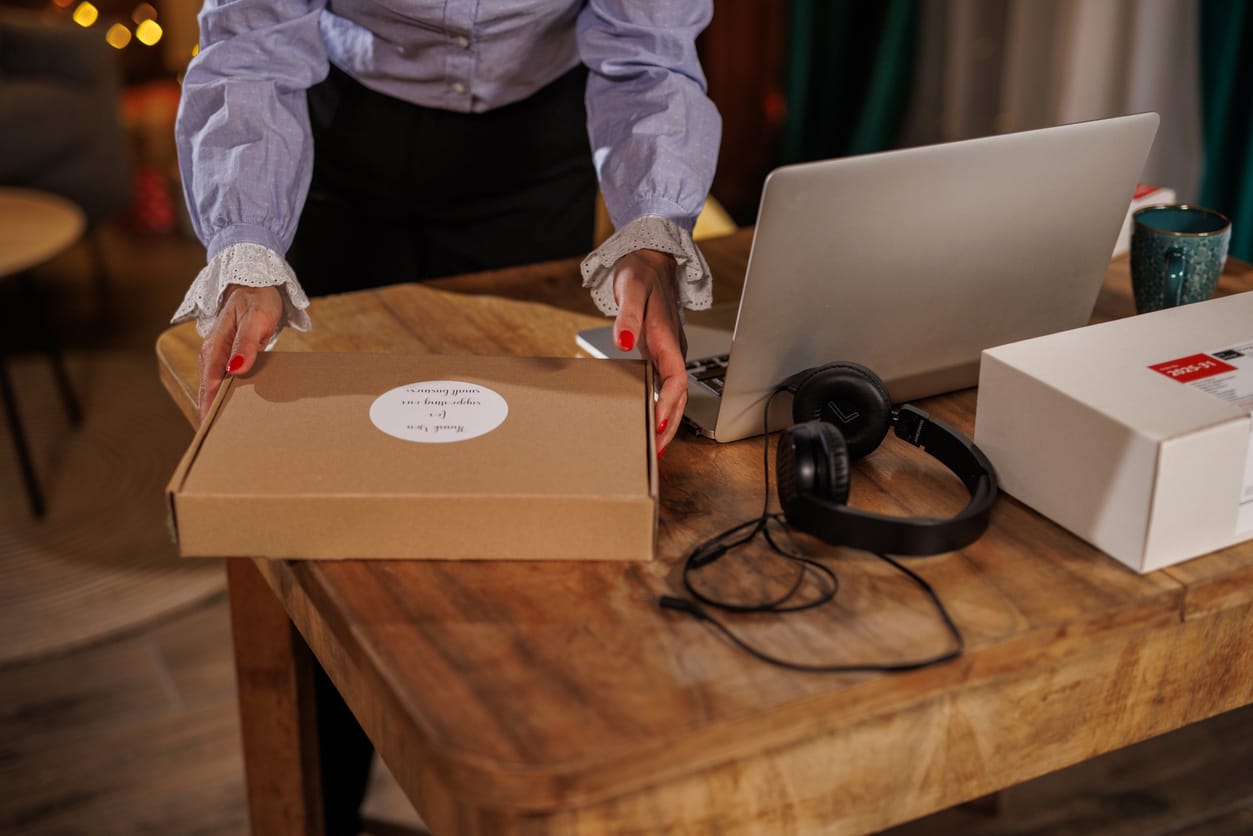
Shipping performance begins before the parcel reaches the carrier. The wrong variant, missing accessory, weak retail box, unsuitable outer packaging, or insufficient protection can turn a successful transit event into a customer complaint.
A China sourcing agent and fulfillment workflow should confirm the supplier item, receive it at the warehouse, apply written quality checks, prepare the requested packaging, and record the final parcel before handoff.
Inspection should be specific: SKU, color, quantity, measurements, visible condition, included parts, function where applicable, labels, and packaging. It can help identify specified or visible issues before shipping, but it does not guarantee all aspects of product performance or replace product compliance review.
Pain Point 6: Shipping Must Connect to Store Fulfillment

A practical dropshipping fulfillment workflow does more than move parcels. It connects customer orders to purchasing, warehouse receiving, inspection, packing, shipping, and tracking.
For Shopify and WooCommerce sellers, confirm whether orders sync correctly, every variant maps to the right supplier SKU, shipping rules use accurate product data, and tracking returns to the correct order. Independent stores should verify the current API scope and exception handling before implementation.
Manual copying may work for a few orders, but it becomes risky as SKU count and daily volume grow. A connected workflow reduces repeated entry and makes order status easier to audit, although sellers should still monitor exceptions and customer-facing delivery promises.
Test the complete path, not only the calculator. Create a BuckyDrop account, connect a test store, submit one representative product, and run it through purchasing, receiving, inspection, packing, shipping, and tracking.
Pain Point 7: Refunds, Reshipments and Exceptions Change the Real Cost
Most agent comparisons describe the normal path. Sellers also need to understand the failed path: supplier shortage, wrong variant, damaged inbound item, failed inspection, restricted route, address problem, unsuccessful delivery, returned parcel, delayed tracking, or unexpected carrier adjustment.
Ask who identifies the exception, where it appears, how quickly the seller is notified, what evidence is available, which options can be selected, and who bears each cost. The right answer may differ by failure type, but the process should be defined before volume grows.
Customs, duties, taxes, prohibited items, and product compliance depend on the product and destination. Confirm the applicable route terms and official destination requirements. A shipping agent cannot replace the seller’s legal, tax, customs, or product-compliance review.
Pre-Publish Shipping Cost Checklist
Cost check | Question before selling |
Destination data | Have you entered a real country, state or province, postcode, and customer address pattern? |
Packed parcel | Are estimated weight and dimensions based on the packed order rather than the bare product? |
Product eligibility | Have you identified battery, liquid, magnetic, branded, fragile, oversized, or restricted characteristics? |
Complete fee scope | Are product, domestic freight, sourcing, inspection, processing, packaging, storage, shipping, and exception costs separated? |
Route comparison | Do the compared routes meet the same delivery, tracking, eligibility, and customs assumptions? |
Margin decision | Does the selling price still cover the full delivered-order cost, payment costs, advertising, returns, and target margin? |
Store connection | Can order and tracking data return to the correct Shopify or WooCommerce order? |
Controlled test | Has one representative SKU completed the real workflow before advertising or catalog expansion? |
Turn Shipping Cost Into a Selling-Price Decision
The purpose of calculating a China dropshipping shipping cost is not to find the smallest transportation number. It is to decide whether the delivered order can support the planned selling price, advertising cost, payment fees, returns, and target margin.
Illustrative example: an $8 product with $1 China domestic freight, $1.50 in sourcing/inspection/parcel inputs, $6.50 international shipping, $0.75 payment or platform cost, and a $0.75 exception reserve has an estimated delivered-order cost of $18.50. At a $29.99 selling price, $11.49 remains before advertising, overhead, destination taxes, and profit.
These figures are examples, not market rates. Replace every value with the current data for the actual SKU, destination, route, packaging, store, and business model.
How to Reduce Shipping Costs Without Creating More Refunds

· Screen out products whose packed volume is too large for their selling price.
· Use packaging that protects the product without adding unnecessary volume or weight.
· Compare eligible routes with the same destination, parcel data, tracking requirement, and delivery promise.
· Combine multiple items only when they belong to the same customer order and consolidation lowers the real total cost.
· Maintain accurate product weight, dimensions, category, and variant data instead of relying on a generic estimate.
· Test the products most likely to create cost surprises: bulky, fragile, liquid, battery-powered, magnetic, branded, or unusually shaped items.
How BuckyDrop Helps Estimate and Validate the Real Shipping Cost
BuckyDrop connects product sourcing from Taobao, 1688, and other major Chinese marketplaces with store fulfillment. Shopify and WooCommerce orders can enter a workflow covering purchasing, supplier delivery to the BuckyDrop warehouse, receiving, quality checks, requested value-added services, storage, parcel processing, available international shipping choices, and tracking updates.
Use the BuckyDrop Shipping Calculator to enter the destination, province or state, postcode, estimated weight, parcel dimensions, warehouse, item category, and quantity, then compare the currently available shipping estimates. The calculator is a planning tool; the final parcel and carrier data determine the actual charge under the applicable route rules.
The value of the connected workflow is validation. A seller can compare the initial estimate with the packed parcel, selected route, final cost, tracking events, and customer-facing delivery result instead of building a margin model from an isolated transportation quote.
Run One Controlled Shipping Test Before You Scale
1. Choose one representative SKU, not the easiest product in the catalog.
2. Record destination, postcode, product category, estimated weight, dimensions, quantity, and packaging requirements.
3. Compare available route estimates in the BuckyDrop Shipping Calculator.
4. Define receiving, inspection, packaging, and exception requirements in writing.
5. Connect a Shopify or WooCommerce test store and map the correct product variants.
6. Complete one real order through purchasing, warehouse receiving, inspection, packing, shipping, and tracking.
7. Compare estimated and final cost, record the reason for any difference, and review the customer-facing delivery experience.
8. Scale only after the product, route, margin, tracking, and exception process meet the store’s requirements.
Create a BuckyDrop account, connect a test store, and submit one representative product.
Frequently Asked Questions
How much does dropshipping shipping from China cost?
There is no useful universal price. Cost depends on destination, postcode, product category, actual and volumetric weight, parcel dimensions, quantity, packaging, route, tracking, and applicable surcharges. Use a calculator with a real SKU and confirm the final warehouse measurements before setting a margin.
Why is dropshipping shipping from China sometimes more expensive than the product?
Carriers price the packed parcel and eligible route, not the supplier’s product price. A low-cost item can still be bulky, fragile, restricted, battery-powered, or expensive to deliver to a remote postcode. Compare delivered-order cost with selling price rather than comparing shipping with product price alone.
What is the difference between estimated and final shipping cost?
An estimate uses the information available before final packing. The final cost can change when the warehouse records the completed parcel and the carrier applies the route’s billing rules. Ask how adjustments are calculated and settled.
What is actual weight versus volumetric weight?
Actual weight is measured on a scale. Volumetric weight reflects the parcel’s occupied space. Depending on the route, the carrier may use actual weight, volume, dimensional rules, or the greater billable result. Always estimate with packed dimensions and verify the selected route’s current calculation rule.
What is the cheapest way to ship dropshipping orders from China?
There is no single cheapest route for every order. The answer changes with destination, parcel data, category, tracking, and delivery requirement. Compare only eligible routes, then include the cost of delays, refunds, failed delivery, and reshipments before choosing.
How long does dropshipping delivery from China take?
Transit estimates vary by destination, postcode, route, product eligibility, processing time, carrier capacity, and external conditions. Confirm whether the displayed estimate covers only carrier transit or also warehouse processing, and do not promise customers an unverified best-case time.
Can BuckyDrop connect shipping with Shopify and WooCommerce orders?
Yes. BuckyDrop connects Shopify and WooCommerce orders with purchasing, warehouse receiving, quality checks, parcel processing, international shipping options, and tracking updates. Test variant mapping and current workflow settings before scaling.
How should I compare dropship fulfillment pricing?
Use the same product, destination, postcode, quantity, packaging, weight, dimensions, route type, tracking requirement, inspection scope, storage assumption, and exception terms. If the assumptions differ, the quotes are not directly comparable.
Are customs duties and taxes included?
It depends on the route, destination, product, declared information, and applicable terms. Confirm the current route details and official destination requirements.
Conclusion: Calculate First, Test One Order, Then Scale
Reliable dropshipping shipping costs begin with a real SKU, a real destination, and realistic packed-parcel data. Product price alone cannot tell a seller whether an order will be profitable. The calculation must include domestic freight, fulfillment inputs, packaging, billable weight, route choice, international transportation, and expected exception costs.
BuckyDrop connects sourcing, warehouse operations, parcel processing, available shipping choices, and tracking in one workflow for Shopify and WooCommerce sellers. The calculator supports the first estimate; one controlled order reveals the packed parcel and actual workflow result.
Start with one representative product rather than migrating an entire catalog. Calculate the cost, register, run the order through the real process, compare estimated and final results, and scale only when the margin and delivery experience meet the store’s requirements.
Calculate first. Test the real workflow. Then scale. Create your BuckyDrop account, connect Shopify or WooCommerce, and submit one representative product.