Why Dropshipping Businesses Stop Growing After Early Wins?
Discover why dropshipping businesses stop growing after early success. Learn how ecommerce order automation and systemized operations can solve scaling bottlenecks in 2026.
Table of contents
Introduction
Early Dropshipping Success Feels Easy—Until It Doesn’t
Why Dropshipping Growth Stalls After Initial Success?
The Real Reason Growth Breaks: Operations, Not Marketing
What Scalable Dropshipping Businesses Do Differently?
Why Automation Becomes Essential as Order Volume Increases?
The Role of China Fulfillment in Scaling Dropshipping
How Integrated Systems Solve Dropshipping Growth Bottlenecks?
A Practical Checklist to Identify Why Your Store Has Stopped Growing
Conclusion
FAQ
Many sellers start dropshipping with a simple idea: launch a product, run ads, and get orders. And early on, it works. You get sales, maybe even your first profitable week.
Then things change.
Orders increase—but so do problems. Suppliers reply late. Tracking is unclear. Shipping slows down. Refunds start showing up. Growth begins to feel messy.
This is where most stores stall.
Early success proves demand, not scalability. As ecommerce grows, customer expectations rise with it. Faster delivery and reliability are no longer optional. Meanwhile, logistics complexity—especially last-mile delivery—can account for up to 53% of total shipping costs (Source: Wikipedia – Last Mile).
So what actually goes wrong?
Not your ads. Not your product. It’s your operations.
Without proper dropshipping order management or ecommerce order automation, manual workflows become bottlenecks. What worked at 10 orders breaks at 50.
And that’s exactly why most dropshipping businesses stop growing after early wins.
Early Dropshipping Success Feels Easy—Until It Doesn’t
The First Sales Phase: Why Everything Seems to Work
At the beginning, dropshipping feels almost too easy.
You launch a product, run a few ads, and orders start coming in. There’s no warehouse, no upfront inventory, and barely any setup. For many sellers, this is the phase where everything seems to click.
Manual handling still works at this stage. Copying orders to suppliers, checking messages, updating tracking—it’s manageable when you’re dealing with 5 or 10 orders a day.
And the early profits? They reinforce the idea that the system is working.
But here’s the problem: those profits are built on low volume. They don’t reflect how your operation performs under pressure. The cracks are already there—you just can’t see them yet.
The Illusion of a “Working” Business Model
One winning product can create a dangerous level of confidence.
You assume the model works, so you focus on scaling ads or testing more products. But behind the scenes, there’s still no real structure. No standardized workflow. No reliable dropshipping order management system.
Everything depends on manual coordination.
Ask yourself: if your orders doubled tomorrow, would your process still hold up? Or would it start to break?
For most sellers, this is where the illusion starts to fall apart.
Why Dropshipping Growth Stalls After Initial Success
Manual Order Processing Cannot Scale?
Manual workflows are fine—until they’re not.
Copy-pasting orders, sending details to suppliers, confirming shipments… it works at low volume. But as orders increase, delays start to stack up. A few missed messages, a few late confirmations—and suddenly fulfillment slows down.
Error rates also increase. Wrong variants, incorrect addresses, missed orders.
This is where many sellers realize they need ecommerce order automation. A proper automated order processing system or automated order management setup doesn’t just save time—it removes the risk created by human handling.
Because the issue isn’t effort. It’s scalability.
Supplier Fragmentation Creates Hidden Instability

Working with multiple suppliers seems flexible at first. You can compare prices, switch quickly, and chase better margins.
But over time, it creates chaos.
Different response times. Different quality standards. Different shipping processes.
You end up managing conversations across multiple chats, just trying to confirm whether orders have been shipped. One supplier replies in two hours. Another takes a day. Meanwhile, your customer is already asking for updates.
What looks like flexibility is actually instability.
Inconsistent Shipping Times Damage Customer Experience
Shipping is where small problems become visible.
When you dropship from China, variability is inevitable—but without structure, it becomes unpredictable. One order arrives in 7 days, another in 15. Tracking updates lag behind. Customers start to lose confidence.
And once that happens, it affects everything:
● Reviews drop
● Refund requests increase
● Conversion rates decline
Reliable china fulfillment isn’t just about cost—it’s about consistency. Without it, growth becomes fragile.
Lack of Order Visibility Leads to Reactive Operations
At some point, you realize you don’t actually know what’s happening with your orders.
Which ones are fulfilled? Which are delayed? Which suppliers are behind?
Without a centralized system, you’re always reacting. Answering customer messages. Following up with suppliers. Fixing problems after they happen.
This is where proper dropshipping order management becomes critical.
Because if you can’t see your operations clearly, you can’t control them. And if you can’t control them, you definitely can’t scale.
The Real Reason Growth Breaks: Operations, Not Marketing
Why Traffic and Ads Stop Translating Into Profit
At first, when sales slow down, most sellers assume it’s a marketing issue.
They tweak creatives. Increase ad spend. Test new audiences.
But here’s the reality: traffic is often still there.
What changes is performance.
Conversion rates drop. Refund rates increase. Customer trust starts to erode. And one of the biggest drivers behind that? Reviews. Studies show that 93% of consumers say online reviews influence their purchasing decisions (Source: Podium).
So even if your ads are working, negative feedback quickly cancels out that momentum.
And where do those negative reviews usually come from?
Not the product itself—but the experience around it.
How Poor Fulfillment Creates a Downward Spiral
This is where things start to compound.
A few delayed orders turn into customer complaints. Complaints turn into refunds. Refunds turn into negative reviews. And those reviews start affecting your store’s credibility and ad performance.
It’s a chain reaction:
Delays → complaints → refunds → lower ranking → declining sales
We’ve seen this pattern repeatedly. One common scenario: a seller scales quickly using multiple suppliers to maximize margins. At first, it works. But as order volume increases, quality becomes inconsistent. Shipping times vary. Communication slows down.
Eventually, the seller loses control.
The result isn’t just operational stress—it’s a full breakdown of growth.
What Scalable Dropshipping Businesses Do Differently?
They Implement Ecommerce Order Automation Early
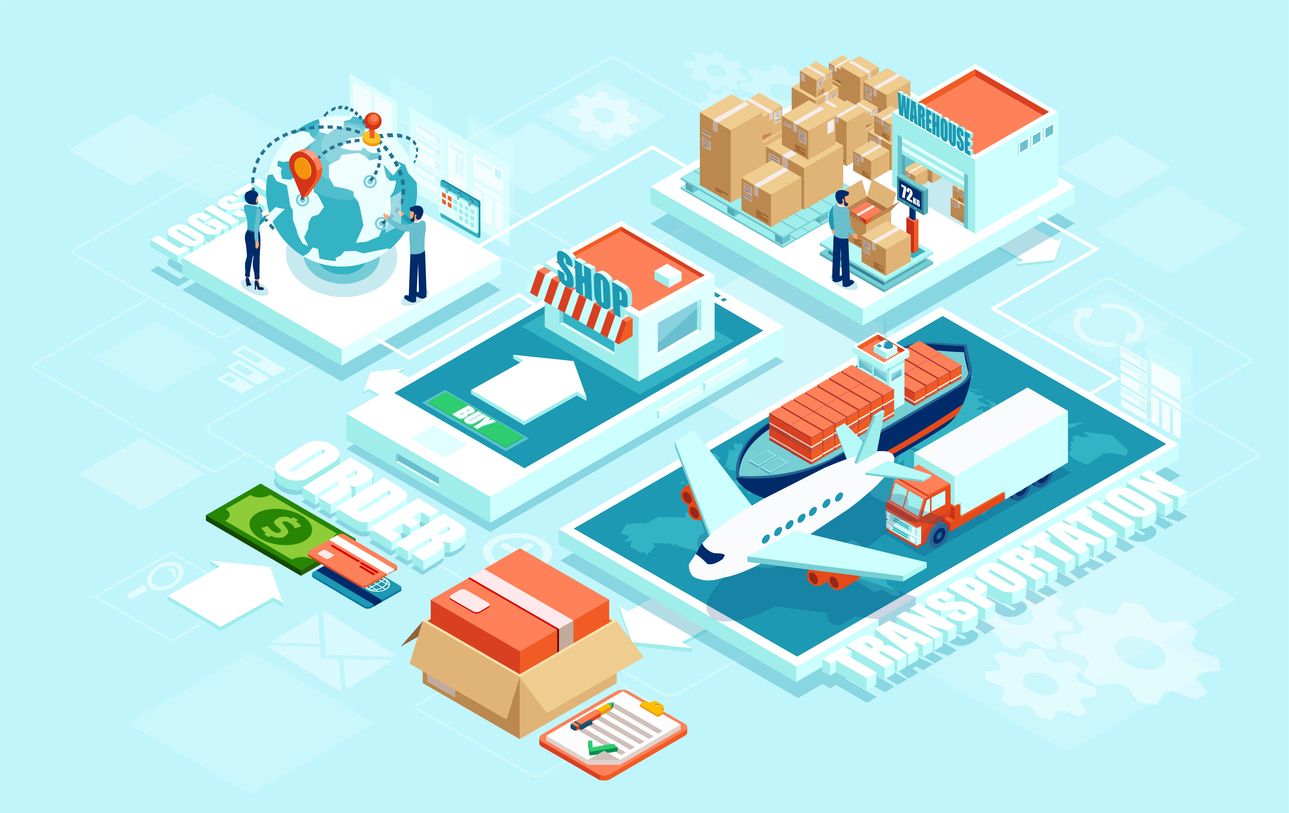
The first real shift is simple: they stop doing things manually.
Instead of copying and forwarding orders, scalable stores rely on ecommerce order automation. Orders move instantly through an automated order fulfillment system—no delays, no missed steps, no back-and-forth with suppliers.
This isn’t just about saving time. It’s about removing bottlenecks before they slow you down.
They Build a Centralized Dropshipping Order Management System
At some point, managing orders through chats and spreadsheets stops working.
Scalable sellers move everything into one system.
A single dashboard where they can:
● Track orders in real time
● Monitor fulfillment progress
● Spot delays before customers complain
That visibility changes how the business runs. Instead of constantly reacting, they stay in control.
They Rely on Structured Dropshipping Fulfillment Services
Handling multiple suppliers manually might work early on—but it doesn’t scale.
That’s why experienced sellers switch to structured dropshipping fulfillment services.
They’re not just outsourcing—they’re standardizing.This gives them:
● A more reliable supplier network
● Consistent product quality
● Predictable shipping timelines
Combined with order fulfillment automation, the backend becomes stable—and stability is what allows growth.
Platforms like Buckydrop are built for this stage, bringing sourcing, automation, and fulfillment into one system so sellers don’t have to manage everything manually.
They Transition From Product-Based Growth to System-Based Growth
Early growth often comes from a single winning product.
But that doesn’t last.
Scalable businesses stop chasing trends and start building systems—repeatable processes that support long-term growth. That means improving shipping speed, strengthening supply chains, and expanding into multiple SKUs instead of relying on one product.
You’ve probably seen this happen: a store starts to slow down, then restructures—better fulfillment, better branding, more product depth. Suddenly, sales stabilize again.
The difference?
One is driven by luck. The other is built on systems.
Why Automation Becomes Essential as Order Volume Increases?
The Limits of Manual Fulfillment
Manual fulfillment doesn’t fail immediately—it fails under pressure.
At 5–10 orders a day, copying details, messaging suppliers, and updating tracking feels manageable. But push that to 30, 50, or 100 orders, and everything slows down.
You start seeing:
● Time bottlenecks
● Missed messages
● Delayed confirmations
Each extra order adds friction. What used to take minutes now takes hours.
That’s the core issue—manual workflows don’t scale linearly. They compound.
How Automated Order Fulfillment Changes the Game

This is where automated order fulfillment makes a real difference.
Orders move instantly from your store to suppliers. No copying. No delays. No missed steps.
With proper automated order management, you get:
● Faster processing
● Fewer errors
● A system that scales with volume
And the impact is measurable. Automation can reduce order processing time by up to 80%, while significantly lowering human error rates (Source: McKinsey – Automation in Operations).
In simple terms: you’re no longer managing orders—you’re running a system.
The Role of China Fulfillment in Scaling Dropshipping
Cost Advantage vs Operational Complexity
There’s a reason most sellers dropship from China—the cost advantage is hard to ignore.
Lower product costs mean higher margins. More room to test products. More flexibility in pricing.
But that advantage comes with complexity.
Different time zones. Language barriers. Variable supplier standards. Longer shipping distances.
Without structure, managing dropshipping from China becomes a coordination problem, not just a sourcing decision.
Why Integrated China Fulfillment Matters

The solution isn’t to avoid China—it’s to manage it properly.
With structured china fulfillment, you get:
● Faster processing times
● Standardized workflows
● More reliable logistics
Instead of dealing with multiple suppliers independently, everything runs through a coordinated system.
So when you dropship from China, you’re not just chasing low cost—you’re building consistency.
And in scaling, consistency matters more than price.
How Integrated Systems Solve Dropshipping Growth Bottlenecks?
Connecting Sourcing, Orders, and Fulfillment
Most struggling stores don’t have a growth problem—they have a structure problem.
Sourcing happens in one place. Orders are handled somewhere else. Fulfillment is managed through scattered chats. Nothing is connected.
So every order requires coordination. Every issue takes time to trace.
That’s where integrated dropshipping services make the difference.
They connect sourcing, order processing, and fulfillment into a single workflow. Orders move automatically. Updates sync in real time. Suppliers operate within a structured system.
Instead of managing pieces, you manage one process.
Solutions like Buckydrop are built around this idea—bringing everything into one system so sellers aren’t stuck coordinating across multiple tools and conversations.
Reducing Errors and Improving Customer Experience
When your system is connected, problems don’t just improve—they drop quickly.
Fewer delays. Fewer mistakes. More predictable delivery.
And customers notice.
According to PwC, 84% of consumers say the delivery experience impacts their decision to shop with a brand again (Source: PwC – Future of Customer Experience).
That’s the real leverage of dropshipping fulfillment services.
Not just operational efficiency—but consistent, reliable customer experience.
Because once your backend is stable, scaling stops being risky—and starts becoming repeatable.
A Practical Checklist to Identify Why Your Store Has Stopped Growing
Operational Warning Signs
If your growth has slowed—or completely stalled—start here.
Look at what’s happening day to day:
● Orders are delayed more often than expected
● Suppliers take hours (or days) to respond
● Customers ask for updates you don’t have
● You’re constantly checking messages just to confirm fulfillment
Sound familiar?
These aren’t random issues. They’re signals. And they all point to the same thing: your operations aren’t keeping up with your growth.
System Gaps That Prevent Scaling
Now take it one step further.
Ask yourself:
● Do you have any real automation in place?
● Is there a centralized system managing your orders?
● Or are you still relying on manual coordination and scattered tools?
If the answer is “no” to any of these, that’s your bottleneck.
Without automation, every new order adds more work. Without centralized management, every issue takes longer to resolve. Without a structured fulfillment process, consistency becomes impossible.
And without consistency, growth doesn’t last.
Conclusion
Early success proves one thing: your product can sell.
But scaling proves something else entirely—whether your system can actually handle demand.
This is where most dropshipping businesses break. Not because they can’t get orders, but because they can’t process them efficiently.
That’s why automated order fulfillment is no longer optional. And why more sellers are turning to structured dropshipping fulfillment services to stabilize operations.
Platforms like Buckydrop bring this all together—combining sourcing, automation, and fulfillment into a single workflow, so growth doesn’t create chaos behind the scenes.
Because in the long run, growth isn’t driven by products alone.
It’s built on systems that don’t break when orders increase.
FAQ
What is dropshipping order management?
It’s how you handle orders from purchase to delivery—sending them to suppliers, tracking status, and updating customers. Without a system, it quickly becomes messy and error-prone.
Why do dropshipping businesses stop growing?
Because operations don’t scale. Manual processes, slow suppliers, and inconsistent shipping create bottlenecks that limit growth.
What is automated order fulfillment?
It’s a system that processes and sends orders to suppliers automatically, reducing delays and human errors.
How does ecommerce order automation improve scaling?
It removes manual work, speeds up processing, and keeps orders consistent—so you can handle more volume without chaos.
Do I need automation to run a dropshipping store?
At low volume, no. But once orders grow, automation becomes essential to avoid delays and mistakes.
Why is shipping from China challenging?
Longer distances, time zone differences, and supplier variability make coordination harder without a structured system.
What are dropshipping fulfillment services?
They connect sourcing, order processing, and shipping into one system, making operations more stable and predictable.
How do I know if my dropshipping setup can scale?
If you’re still managing orders manually, chasing suppliers, or lacking visibility, your system isn’t ready to scale.