15 Best Summer Dropshipping Products to Sell in 2026

For U.S. and Canadian sellers, summer is not one long season. It is a sequence of short buying windows: Memorial Day travel, June heat, July 4th outdoor plans, camping weekends, beach trips, lake days, and the early back-to-school transition.
That is why summer dropshipping products need more scrutiny than a regular evergreen item. A product can look promising in a TikTok comment section and still fail if the supplier runs out of stock, the package ships without clear tracking, or the first 20 orders create too many “Where is my order?” tickets.
Shopify describes dropshipping as a model where a seller uses a supplier that holds inventory and ships products for the seller. That makes product selection a fulfillment decision, not just a catalog decision. See Shopify’s official dropshipping fulfillment guide.
This guide is built for Shopify, WooCommerce, and small ecommerce sellers who need to test summer products quickly, protect margin, and avoid building a manual fulfillment queue during a short seasonal window.
It also shows where BuckyDrop can fit into the workflow. BuckyDrop is designed for sellers who want to source products from Chinese marketplaces and connect that sourcing workflow to Shopify, WooCommerce, or API-based order processing. BuckyDrop states in its public Shopify App Store listing that it offers 0-markup sourcing from China’s supply chain; sellers should still verify the full cost per fulfilled order, including service fees, packaging, shipping, inspection, and exception handling before scaling.
Quick Verdict
If you are testing products for summer 2026, start with products tied to an immediate buyer problem: heat relief, travel organization, outdoor comfort, pet cooling, car comfort, patio hosting, or family summer activities.
Do not choose products only because they look popular. Choose products that are easy to explain, light enough to ship economically, simple enough to match by SKU and variant, and safe enough to advertise without exaggerated claims.
When comparing dropshipping sites or the best dropshipping websites for seasonal testing, look past the size of the product catalog. Check supplier-side visibility, SKU matching, inventory updates, tracking return, and how out-of-stock products are handled when ads are running.
The best first tests are usually not the flashiest products. They are the ones where you can validate demand, fulfillment, tracking, and customer support workload with a small order batch.
How We Chose These Products

This list is not based on random “trending product” claims. It is based on practical ecommerce filters that matter when a North American seller is spending real money on TikTok ads, Meta ads, Google Shopping, or influencer content.
Google’s guidance on helpful, reliable, people-first content is a useful standard here: content should help people make a decision, not just repeat what already exists online.
For this article, a product had to pass most of these checks:
Selection Criteria | What It Means for Sellers |
Clear summer use case | The product solves a seasonal problem buyers already understand. |
Easy visual demonstration | The product can be shown clearly in a short video, product photo, or landing page. |
Manageable fulfillment risk | It is not too fragile, oversized, hard to package, or difficult to explain. |
Reasonable SKU complexity | The product does not create excessive size, color, model, or compatibility confusion. |
Margin room | There is enough room after product cost, shipping, payment fees, ad spend, and refunds. |
Supplier visibility | Sellers can check stock, variants, processing status, and fulfillment exceptions before scaling. |
Support impact | The product should not flood support with avoidable tracking, sizing, or expectation issues. |
The right product sourcing tools should help you compare suppliers, inspect product options, and avoid scaling blind.
Comparison Table: 15 Summer Products at a Glance
Product | Buyer Trigger | Best Fit | Main Risk | Verify First |
Portable neck fans | Heat relief outdoors | TikTok / Meta stores | Battery and quality issues | Charging, noise, battery rules |
Cooling towels | Sports and outdoor activity | Fitness / outdoor stores | Weak fabric or exaggerated claims | Fabric, size, packaging |
Pet cooling mats | Pet comfort in heat | Pet stores | Sizing and hygiene returns | Dimensions, material, cleaning |
Insulated tumblers | Hydration and travel | Lifestyle stores | Trademark and leak risk | Leak testing, IP risk |
Sand-free beach mats | Beach and picnic use | Travel / outdoor stores | Size and shipping cost | Folded size, weight, stitching |
Waterproof phone pouches | Pool and beach trips | Travel / general stores | Claim risk | Seal quality, compatibility |
Dry bags | Boating and camping | Outdoor stores | Waterproof claim accuracy | Closure, seams, capacity |
Packing cubes | Summer travel | Travel / family stores | High competition | Zippers, fabric, set sizes |
Car windshield sunshades | Hot car interiors | General / auto-adjacent stores | Fit issues | Dimensions, folding mechanism |
UV arm sleeves | Driving and outdoor work | Sports / outdoor stores | Sizing and UV claims | Fabric, sizing, documentation |
Outdoor solar lights | Patio and backyard use | Home / garden stores | Battery and weather resistance | Brightness, packaging, claims |
Bug-proof food covers | BBQ and patio meals | Home / kitchen stores | Low perceived value | Mesh quality, folding durability |
Inflatable pool loungers | Pool and lake use | Summer lifestyle stores | Leaks and returns | Valve, material, weight limits |
Collapsible cooler bags | Picnics and road trips | Family / travel stores | Bulky shipping | Capacity, insulation, zipper |
Reusable ice pop molds | Kids and summer snacks | Kitchen / family stores | Food-contact concerns | Safety documentation, cleaning |
15 Best Summer Dropshipping Products to Test in 2026
1. Portable Neck Fans
Portable neck fans sell because the problem is immediate. The buyer is hot at a theme park, outdoor event, commute, sports game, or job site.
They work best when the ad shows the before-and-after in a few seconds: heat, discomfort, fan on, visible relief. The risk is not demand; the risk is product quality. A weak battery, noisy motor, poor charging cable, or unclear safety documentation can turn a good ad into a refund queue.
This category is better for sellers willing to order samples and check the product before scaling. Do not make unsupported battery, cooling, or safety claims.
2. Cooling Towels
Cooling towels are lighter and simpler than electronic heat-relief products. They can fit fitness, golf, hiking, running, outdoor work, summer camps, and travel.
Because the item is non-electronic and easy to ship, the bigger risk is weak fabric quality or exaggerated cooling copy. Keep the positioning practical: summer workouts, outdoor chores, road trips, and hot-weather activities.
This is a good starter product for sellers who want lower SKU complexity. It also works well as a bundle item with water bottles, sports bags, or travel gear.
3. Pet Cooling Mats

A pet cooling product sells because the buyer is trying to keep a dog or cat comfortable in a hot apartment, car ride, patio, or crate.
This category can work well for pet stores, but the product page must be precise. Show exact dimensions, cleaning instructions, material details, and realistic use cases. Pet products can create return and hygiene issues, so the return policy should be clear.
Start with one or two sizes. Too many sizes can create variant mistakes and support tickets.
4. Insulated Tumblers and Water Bottles
Tumblers and bottles can move in summer, but this is not a copy-and-paste category. Avoid designs that look too close to established brands or protected trade dress.
The safer angle is use case: beach days, gym bags, road trips, school camps, desk hydration, and family outings. Bundles can include bottle brushes, straw lids, carrying straps, or replacement caps.
Before listing, verify leak resistance, packaging, capacity accuracy, and food-contact documentation. Do not assume a supplier photo proves product quality.
5. Sand-Free Beach Mats
Beach mats work because the pain point is simple: sand, wet grass, hot ground, and uncomfortable picnic setups.
This product can fit beach, camping, picnic, travel, and family stores. It is not hard to explain, but size matters. A mat that looks large in photos may disappoint if the measurements are unclear.
Show folded size, unfolded size, weight, material, and how many people it realistically fits. If the item becomes bulky after packaging, check whether shipping cost damages your margin.
6. Waterproof Phone Pouches
Phone pouches are classic summer accessories for pools, lakes, beaches, water parks, kayaking, and cruises.
The opportunity is clear, but so is the risk. Buyers may assume full underwater protection unless your copy is careful. If the pouch fails, the complaint is not about a cheap accessory; it is about a phone.
Use conservative language. Verify seal quality, phone size compatibility, lanyard strength, and supplier claim documentation before running ads.
7. Dry Bags
Dry bags fit a more outdoor-oriented customer: campers, boaters, kayakers, festival-goers, beach travelers, and families carrying wet towels or electronics.
They are often better as size sets than as a single low-ticket item. The main issue is waterproof claim accuracy. Unless the supplier can support a specific claim, keep your product copy focused on practical protection from splashes, wet gear, and outdoor storage.
Check roll-top closure, seams, material thickness, actual capacity, and packaging.
8. Packing Cubes
Packing cubes do not win on novelty. They win when the offer is specific: carry-on packing, kids’ camp bags, family road trips, weekend travel, or organized luggage for summer flights.
This is a low-risk product from a fulfillment perspective. It is lightweight, non-electronic, and easy to bundle. The challenge is competition, so your product page and ad angle must be sharper than “organize your suitcase.”
Check zipper quality, fabric thickness, set configuration, product photos, and packaging.
9. Car Windshield Sunshades
Hot cars create a real summer problem for commuters, parents, rideshare drivers, road-trippers, and anyone parking outdoors.
The risk is fit. “Universal” does not mean perfect. Product pages need dimensions and guidance so buyers understand whether the shade fits their vehicle type.
This can work for general stores and auto-adjacent audiences, but avoid vague claims. Check folding mechanism, storage pouch, material quality, and package size before scaling.
10. UV Arm Sleeves
UV arm sleeves can fit driving, cycling, running, golf, gardening, outdoor work, and sports parents sitting through weekend games.
This product is lightweight, but it behaves like apparel. Size, elasticity, fabric feel, and claim wording matter. Avoid unsupported UPF or protection claims unless the supplier provides documentation.
If your summer angle leans into apparel, compare this category with higher-SKU categories like dropshipping t shirts before committing to products with size-heavy return risk.
11. Outdoor Solar Lights
Solar lights can fit patios, gardens, campsites, balconies, and backyard hosting. They are visual, which helps with product pages and short-form content.
Quality is the deciding factor. Low brightness, weak batteries, fragile housing, or poor weather resistance can create complaints. Do not overstate waterproofing unless documentation supports it.
Check battery type, brightness, weather-resistance claims, packaging protection, and replacement policy.
12. Bug-Proof Food Covers
Bug-proof food covers are boring until a buyer is trying to keep flies off burgers, fruit, or snacks at a backyard dinner.
This product fits BBQs, picnics, patio meals, camping, and family gatherings. It works better as a practical add-on or bundle than as a high-ticket hero product.
Verify mesh quality, folding durability, sizes, and packaging. The product has low explanation risk, but weak materials can make it feel cheap.
13. Inflatable Pool Loungers
Inflatable loungers are highly visual and seasonally strong, but they are not beginner-friendly.
Leaks, valve defects, weight limits, misuse, and return requests can hurt margins. If you sell this category, samples are not optional. You should also write clear usage instructions and avoid unrealistic durability claims.
This product fits sellers with stronger creative and better support capacity. New sellers may want to start with lower-risk summer accessories first.
14. Collapsible Cooler Bags
Cooler bags sell around the trip, not just the product. Position them for soccer fields, beach parking lots, grocery runs, picnic lunches, road trips, and theme park days.
The main risk is shipping economics. A bag can look lightweight but still become costly if the packed size is large. Check insulation thickness, zipper quality, shoulder strap strength, capacity, folded size, and shipping weight.
This category can work for family, travel, picnic, and lifestyle stores.
15. Reusable Ice Pop Molds
Reusable ice pop molds fit families, kids, summer snacks, fruit recipes, and budget-friendly home treats.
They are usually better as a bundle item, email upsell, or content-led product than as the only hero product for paid ads. Food-contact documentation matters, so do not skip supplier verification.
Check material safety documentation, lid fit, cleaning ease, packaging, and color options.
Accessories can support summer campaigns, but jewelry dropshipping requires a different margin and supplier-verification process than beach mats, cooling towels, or pet cooling products.
What to Verify Before You Commit
Before you scale a summer product, verify the full order path, not just the supplier price.
If you plan to run Google Shopping or free listings, check product titles, prices, availability, images, variants, and product attributes against the Google Merchant Center product data specification. Product data accuracy matters because shoppers expect the product page, checkout, and listing information to match.
Use this checklist before increasing ad spend:
Area | What to Verify |
Product cost | Supplier price plus all service, inspection, packaging, and handling costs. |
Shipping | Route, destination coverage, package weight, estimated delivery window, and tracking availability. |
SKU matching | Size, color, model, plug type, capacity, bundle quantity, and variant naming. |
Inventory | Whether stock can be monitored before and during campaigns. |
Product quality | Sample quality, packaging, material, odor, battery function, leak risk, or food-contact documentation. |
Tracking return | Whether tracking returns to your store in a timeframe your customers can accept. |
Support workload | Likely “Where is my order?” tickets, sizing questions, refunds, and disputes. |
Refund exposure | What happens if the item arrives damaged, ships late, or is out of stock. |
For sellers dropshipping from China, the supplier price is only the starting point. Inspection, packaging, international shipping, tracking return, and exception handling can change your real cost per fulfilled order.
A practical cost-per-fulfilled-order check should include:
Product cost + service fees + inspection or packaging fees + international shipping + payment fees + expected refunds/support cost.
If the product still makes sense after that calculation, it is worth testing.
A Practical Summer Product Testing Workflow
Uploading 50 summer products usually creates 50 unfinished tests. Start with five to eight products tied to one buyer scenario.
For example, build a shortlist around “summer pet comfort,” “beach and travel accessories,” or “heat relief for outdoor activities.” A focused test is easier to merchandise, advertise, and measure.
Step 1: Pick one summer theme.
Choose a theme that matches your store audience. A pet store should not suddenly test pool loungers unless it has a clear reason.
Step 2: Source and compare suppliers.
Compare product cost, variants, packaging, supplier availability, and inspection options. Do not choose only by the lowest supplier price.
Step 3: Order samples or request inspection.
For electronics, inflatables, drinkware, food-contact products, pet products, and waterproof items, sample checks can prevent expensive support issues.
Step 4: Build the product page around the use case.
A cooling towel page should show hiking, outdoor work, youth sports, and summer travel. A supplier description is not enough.
Step 5: Test 10 to 20 real orders.
Measure order sync, supplier processing consistency, tracking visibility, customer questions, refunds, and cost per fulfilled order.
Step 6: Scale, fix, or kill.
Scale only if the product performs on both sides: customer demand and fulfillment reliability. If support tickets appear at 20 orders, do not assume they will disappear at 200.
WooCommerce’s own dropshipping documentation shows that supplier communication, order routing, and shipment information are part of the workflow. For Shopify, WooCommerce, and custom stores, that operational layer matters as much as the product idea.
If you are still comparing dropshipping platforms, start with your store setup, sourcing needs, product category, automation requirements, and customer support capacity.
Where BuckyDrop Fits
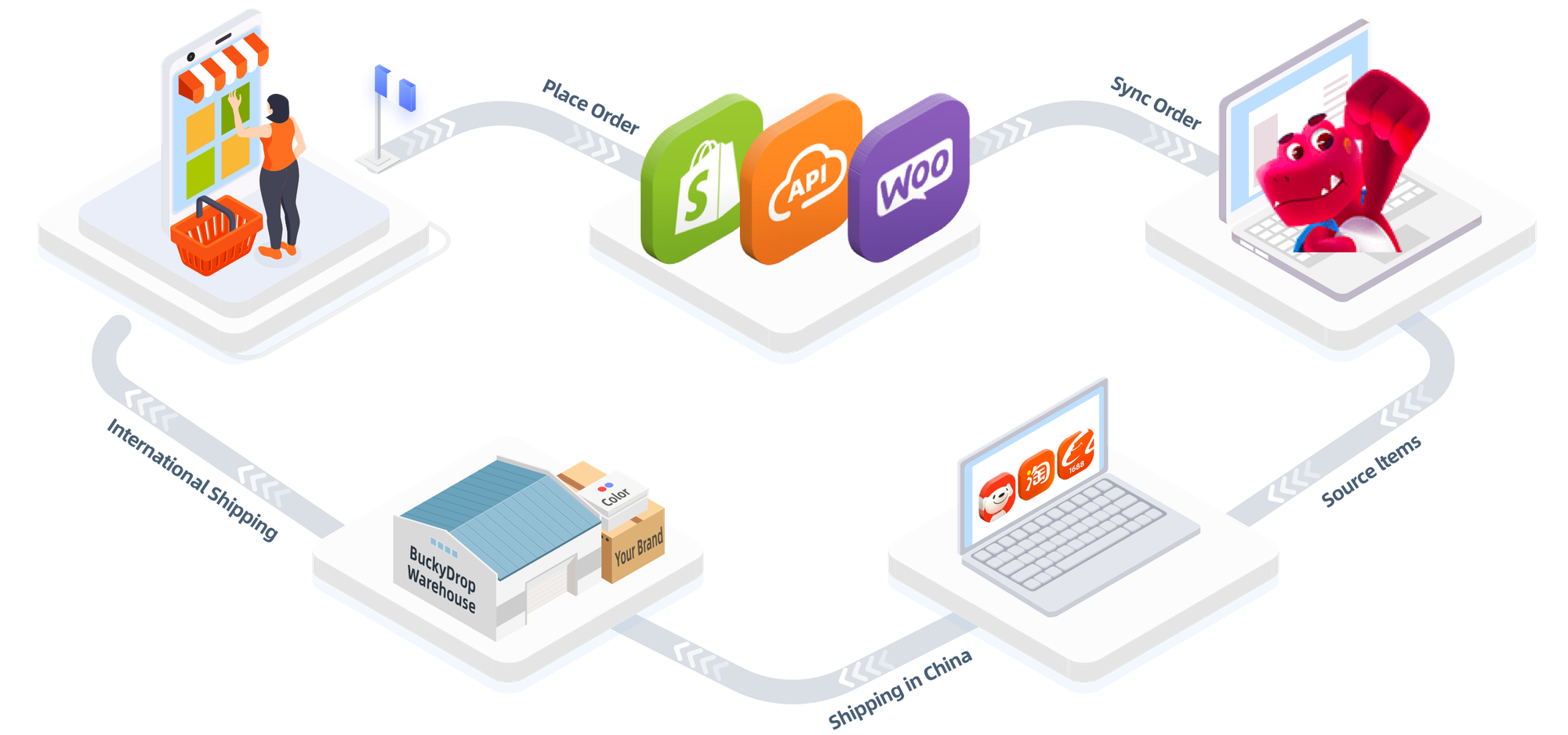
Based on public and company-provided materials, BuckyDrop is designed for sellers who want to source products from Chinese marketplaces and connect that sourcing workflow to Shopify, WooCommerce, or API-based order processing.
For a summer product test, that matters because the product listing is only one part of the job. You still need to confirm the supplier, match the correct SKU, check packaging, monitor inventory, fulfill orders, and return tracking to the store before support tickets start piling up.
BuckyDrop’s public Shopify App Store listing describes 0-markup sourcing, quality check, streamlined order management, private labeling, and 1:1 support. Sellers should verify exact costs, shipping routes, service scope, and delivery expectations before scaling.
For WooCommerce sellers, the public BuckyDrop WooCommerce plugin describes sourcing from Chinese marketplaces, product editing, quality control, branded custom packaging, and global logistics support.
For higher-volume teams, marketplaces, or custom operations, the BuckyDrop Solution API describes API workflows related to order sync, order status, parcel handling, and logistics tracking.
Sellers looking for an all in one dropshipping platform should still treat the first 10 to 20 orders as a workflow test, not a guarantee. Measure whether the process fits your product category, customer expectations, and support capacity.
Who BuckyDrop May Not Be For
BuckyDrop may not be the right workflow for every seller.
If you only sell domestic inventory, already use a local U.S. or Canadian 3PL, require fully local delivery windows, or do not plan to source from China, you may not need a China sourcing and cross-border fulfillment workflow.
It may also be too much for sellers who have not validated a product category yet and only want to run a one-day trend test. In that case, start with product research, sample checks, and a small order batch before connecting a broader fulfillment workflow.
Common Mistakes When Selling Summer Products
Launching too late.
Summer products need lead time. If you start sourcing in July, you may miss the best testing window.
Scaling before checking fulfillment.
A product that converts well can still fail if tracking is slow, stock is unstable, or variants are mismatched.
Copying supplier claims.
Do not repeat waterproof, cooling, UV, battery, or food-contact claims unless you can support them.
Ignoring shipping weight.
Beach mats, cooler bags, solar lights, and pool products can look cheap until packaging and shipping change the math.
Running ads without an out-of-stock plan.
Seasonal products can run out quickly. Prepare backup suppliers, pause rules, or customer communication before scaling.
Treating Canada the same as the U.S.
Canadian orders may have different shipping costs, taxes, delivery expectations, and customer support patterns. Verify before expanding campaigns.
FAQ
1. When should I start testing summer products?
For North American sellers, start research and supplier checks in late winter or early spring if possible. Many sellers should be testing by April or May so they have time to order samples, build product pages, test ads, and fix fulfillment issues before peak summer demand.
2. Are summer products too seasonal for small sellers?
Not always. Seasonal products can work well as short-window tests, bundle items, or niche expansions. The risk is scaling too late or putting too much ad spend behind a product before supplier stability, tracking, and support workload are tested.
3. Can I sell these products on Shopify and WooCommerce?
Yes, many of these products can be sold on either platform. The bigger issue is workflow: SKU matching, inventory updates, order sync, tracking return, and fulfillment exceptions. BuckyDrop has public Shopify and WooCommerce listings, but sellers should verify their own store setup before scaling.
4. Which products are riskiest for beginners?
Battery-powered products, inflatables, waterproof products, apparel-like sizing products, and food-contact items are higher risk. They can work, but beginners should test samples, check documentation, and avoid unsupported claims.
5. What should I check before sourcing from Chinese marketplaces?
Check product cost, supplier stability, available variants, inventory, package size, shipping route, quality inspection options, and tracking visibility. BuckyDrop states that it offers 0-markup sourcing, but sellers should still verify total fulfilled cost before scaling.
6. How much ad spend should I use for the first test?
There is no universal number. A practical operator approach is to test a small order batch first and measure click cost, conversion, supplier processing, tracking return, support tickets, refunds, and cost per fulfilled order.
7. Do I need branded packaging for summer products?
Not for every test. For the first 10 to 20 orders, reliable sourcing, accurate variants, and clear tracking matter more. Branded packaging makes more sense after a product shows repeatable demand and manageable support workload.
8. What is the biggest fulfillment risk with seasonal products?
The biggest risk is running paid traffic into a product with unstable stock, unclear tracking, or inconsistent supplier processing. At low volume, this creates support tickets. At higher volume, it can create refund pressure, PayPal disputes, and chargebacks.
9. Is BuckyDrop only for beginners?
No. Based on public and company-provided materials, BuckyDrop can fit beginners, existing Shopify/WooCommerce sellers, branded dropshipping sellers, and API users. The right fit depends on product category, sourcing needs, store setup, order volume, and support capacity.
Final Recommendation
The best summer product is not the one with the loudest trend signal. It is the one that passes a real operating test: clear buyer problem, acceptable margin, supplier stability, accurate SKU matching, visible tracking, and manageable customer support workload.
For 2026, start with products tied to obvious summer use cases: heat relief, travel, outdoor comfort, pet cooling, car comfort, patio hosting, and family activities. Pick five to eight products, source samples, test 10 to 20 orders, and calculate your real cost per fulfilled order before increasing ad spend.
Use your next 10 to 20 summer orders as a workflow test. Source the product, confirm the variant, inspect the sample or first batch, fulfill the order, sync tracking back to your store, and calculate the real cost per fulfilled order before you scale.
If you want to source from Chinese marketplaces and connect that workflow to Shopify, WooCommerce, or an API-based operation, start with BuckyDrop and measure whether the process fits your product category, customer expectations, and support capacity.
Start testing summer products with BuckyDrop
Sources
1. Shopify: Dropshipping Fulfillment Guide
2. Shopify Help Center: Dropshipping
3. Google Search Central: Creating Helpful, Reliable, People-First Content
4. WooCommerce Dropshipping Documentation
5. Google Merchant Center Product Data Specification
7. BuckyDrop Plugin Service Page
8. BuckyDrop Shopify App Store Listing
9. BuckyDrop WooCommerce Plugin
11. Source: internal company materials