Dropshipping Quality Control Guide: How to Avoid Bad Suppliers, Returns and Customer Complaints

Quick Answer
You do not need to inspect every order in exactly the same way.
The inspection level should match the cost and likelihood of failure. A simple, inexpensive accessory may only need sample approval and periodic checks. A fragile, electronic, personalized, or higher-value product may justify functional testing or full inspection.
Before increasing paid traffic:
1. Write measurable product and packaging requirements.
2. Approve representative samples, including important variants.
3. As a practical editorial benchmark, test 10 to 20 suitable orders.
4. Record problems by supplier, SKU, variant, and cause.
5. Increase inspection when the supplier, product, packaging, or order volume changes.
No inspection system catches every defect. The goal is to detect expensive, repeatable problems before they reach many customers.
What Dropshipping Quality Control Should Cover
Quality control is not limited to checking whether a product looks broken.
Your inspection standard should reflect what you promised on the product page. Depending on the product, that may include:
· Correct product, model, and quantity
· Correct size, color, or configuration
· Material and dimensions
· Main functions
· Included accessories
· Labels and instructions
· Custom printing or branding
· Inner and outer packaging
· Suitability for international transportation
A product can be usable and still create a valid complaint. The customer may have received the wrong color, a different material, missing parts, or damaged retail packaging.
For regulated products, warehouse inspection does not replace required testing, certification, labeling, or documentation. U.S. sellers and importers should review the CPSC Online Sellers’ Safety Guide before listing regulated consumer products.
Why Dropshipping Quality Problems Happen
Most complaints come from one of five areas.
Supplier changes

The supplier may change materials, subcontract production, switch packaging, or struggle during a busy season. A sample approved several months ago may not represent the next batch.
Product risk
Some products naturally require more control.
Electronics can fail functionally. Glass can break in transit. Apparel creates size and color disputes. Personalized goods may become unsellable after one printing error.
Batch inconsistency
The first sample may be prepared carefully, while later production uses a different finish, material, or component.
Sample approval should therefore be the beginning of monitoring, not the end.
SKU and variant errors
Sometimes the product is fine, but the customer receives the wrong size, color, quantity, or accessory.
These problems often come from poor mapping rather than poor manufacturing.
WooCommerce allows each variation to have its own price, stock, image, and other data. Your supplier mapping should preserve those distinctions. Review the official WooCommerce variable product documentation when setting up the workflow.
Packaging and workflow gaps
A product can leave the supplier in good condition and still arrive damaged because the box, protection, or internal packing was unsuitable for cross-border delivery.
At the same time, customer service may process every refund separately without reporting that several complaints came from the same supplier or SKU.
When complaint data does not reach the sourcing team, the same failure keeps repeating.
Classify Products by Risk
A simple risk model can help determine how much inspection is reasonable.
Risk Level | Typical Products | Suggested Control |
Low | Simple, low-cost, few variants, not fragile | Approve samples, check early orders, and run periodic random checks |
Medium | Several sizes or colors, visible finish requirements, multiple accessories | Confirm variants, inspect packaging, and sample new batches |
High | Electronic, fragile, personalized, regulated, or higher-value | Use stricter sampling, functional testing, compliance review, or full inspection |
This is an internal decision framework, not a universal industry standard.
Increase inspection when:
· The supplier changes
· A new variant is added
· Materials or packaging change
· Complaint patterns appear
· Order volume grows quickly
· A major promotion or Q4 peak period begins
How to Vet and Test Suppliers

Supplier ratings may help with initial screening, but they do not confirm whether the supplier can meet your exact product and fulfillment requirements.
A structured drop sourcing process should confirm:
· Exact materials and dimensions
· Supplier SKU codes
· Current product and packaging photos
· Included accessories
· Handling or production requirements
· Defect and wrong-item policies
· Whether third-party inspection is accepted
· Whether production may be subcontracted
· Whether specifications can be maintained across batches
Ask specific questions.
“Is the quality good?” will usually get a positive answer. “What material is used, what are the exact dimensions, and can you send current packaging photos?” gives you something you can verify.
Keep the answers in writing.
Test the exact product
A supplier may sell hundreds of unrelated products. A good experience with one item does not validate the next one.
Order the exact configuration your customers will receive.
For apparel, test important sizes or colors. For electronics, test the main functions, charging behavior, accessories, and instructions. For fragile products, inspect the package after transportation.
Before approving the SKU, check:
1. Does the product match the listing?
2. Did the correct variant arrive?
3. Did the packaging survive transportation?
4. Would a reasonable customer believe the product matched the store’s promise?
Testing 10 to 20 suitable orders is a practical operating benchmark, not an official requirement or statistical guarantee.
Where possible, spread the tests across several variants and delivery addresses. Review order sync, SKU accuracy, packaging, tracking, and customer-received condition.
Build a Practical Quality-Control Workflow

1. Write measurable specifications
“Good quality” cannot be inspected consistently.
Use criteria such as:
· Exact dimensions and acceptable tolerance
· Material requirements
· Approved color reference
· Required accessories
· Packaging method
· Acceptable surface variation
· Functional test procedure
· Branding position and size
The supplier or warehouse should be able to decide whether the product passes.
2. Approve a reference sample
Keep photos, measurements, packaging details, and test results.
If the supplier changes the material, packaging, or production source, request a new approval.
3. Start with controlled orders
Use a small fulfillment queue before increasing ad spend.
Test the full workflow: purchasing, variant matching, warehouse handling, tracking, packaging, and delivery condition.
4. Record problems clearly
Do not place every issue under “bad quality.”
Use categories such as:
· Wrong item
· Wrong variant
· Missing accessory
· Cosmetic defect
· Functional defect
· Incorrect customization
· Weak packaging
· Shipping damage
· Item not as described
This helps you identify whether the problem came from manufacturing, picking, packaging, or transportation.
5. Set pause rules
Decide what should stop new orders before another serious complaint arrives.
Possible triggers include:
· Repeated wrong variants
· Unapproved material changes
· Recurring functional defects
· Missing compliance documents
· Repeated packaging damage
· Refusal to provide inspection evidence
For U.S. orders, advertised shipping claims should match the seller’s reasonable fulfillment expectations. The FTC states that sellers should have a reasonable basis for shipping within the advertised timeframe or, if no timeframe is stated, generally within 30 days. Review the FTC Mail, Internet, or Telephone Order Merchandise Rule before publishing shipping promises.
Choose the Right Inspection Method
Inspection Method | Good Fit | Main Limitation |
Photo check | Appearance, color, packaging, and SKU confirmation | Does not reliably confirm internal defects |
Random inspection | Larger batches of stable products | Defects outside the sample may be missed |
Full inspection | Higher-value, personalized, or higher-risk orders | Adds handling time and cost |
Functional testing | Electronic or mechanical products | Requires a written test procedure |
Measurement check | Apparel, furniture, and size-sensitive goods | Requires agreed measuring points |
Packaging check | Fragile or presentation-sensitive products | Does not replace product inspection |
Larger batches may use formal acceptance-sampling methods. ISO 2859-1:2026 defines sampling plans indexed by an acceptance quality limit for lot-by-lot inspection. AQL helps determine whether a lot should be accepted or rejected; it does not promise that every unit is defect-free.
Track Supplier Performance
Without a supplier scorecard, several complaints may occur before anyone notices that they share one SKU or batch.
A basic scorecard can track:
· Product specification accuracy
· SKU and variant accuracy
· Packaging quality
· Processing consistency
· Communication and evidence
· Defect resolution
Useful product sourcing tools should support more than product discovery. They should help operators monitor supplier changes, purchasing status, stock exceptions, and recurring product issues.
Classify suppliers as:
· Approved: Currently meets your standards
· Monitor: Needs closer inspection
· Pause: New orders stop during investigation
· Replace: Cannot maintain requirements or resolve recurring failures
Review performance by product, not only by supplier. A company may perform well on one SKU and poorly on another.
Connect Quality Control With Store Operations
Reliable dropshipping order management should connect store orders with:
· Supplier purchasing
· SKU and variant matching
· Inspection status
· Stock exceptions
· Package processing
· Tracking return
· Complaint and refund records
For each product:
· Match every store variant to one supplier SKU.
· Prevent unapproved substitutions.
· Flag higher-risk products for inspection.
· Record the supplier and SKU connected to each complaint.
· Separate product defects from shipping damage.
· Update mappings after changing suppliers.
· Pause variants with repeated problems.
Shopify allows merchants to issue full or partial refunds from the order admin. Refunds may solve an individual customer issue, but they do not correct the supplier-side failure. See the official Shopify refund workflow.
Quality issues may also become payment disputes. Shopify lists defective, damaged, or not-as-described products among possible “Product unacceptable” chargeback reasons. Review Shopify’s chargeback reason guidance.
When Centralized Fulfillment Makes Sense

Supplier-direct shipping can still work when:
· The product is low risk.
· Order volume is manageable.
· The supplier has performed consistently.
· Variant complexity is limited.
· Packaging has been tested.
· The seller can obtain enough evidence.
A centralized workflow becomes worth evaluating when the team spends too much time chasing suppliers, fixing mappings, reviewing exceptions, or handling repeated customer complaints.
At that stage, dropshipping fulfillment services may help connect purchasing, warehouse receiving, inspection, package processing, and shipment visibility.
Where BuckyDrop fits
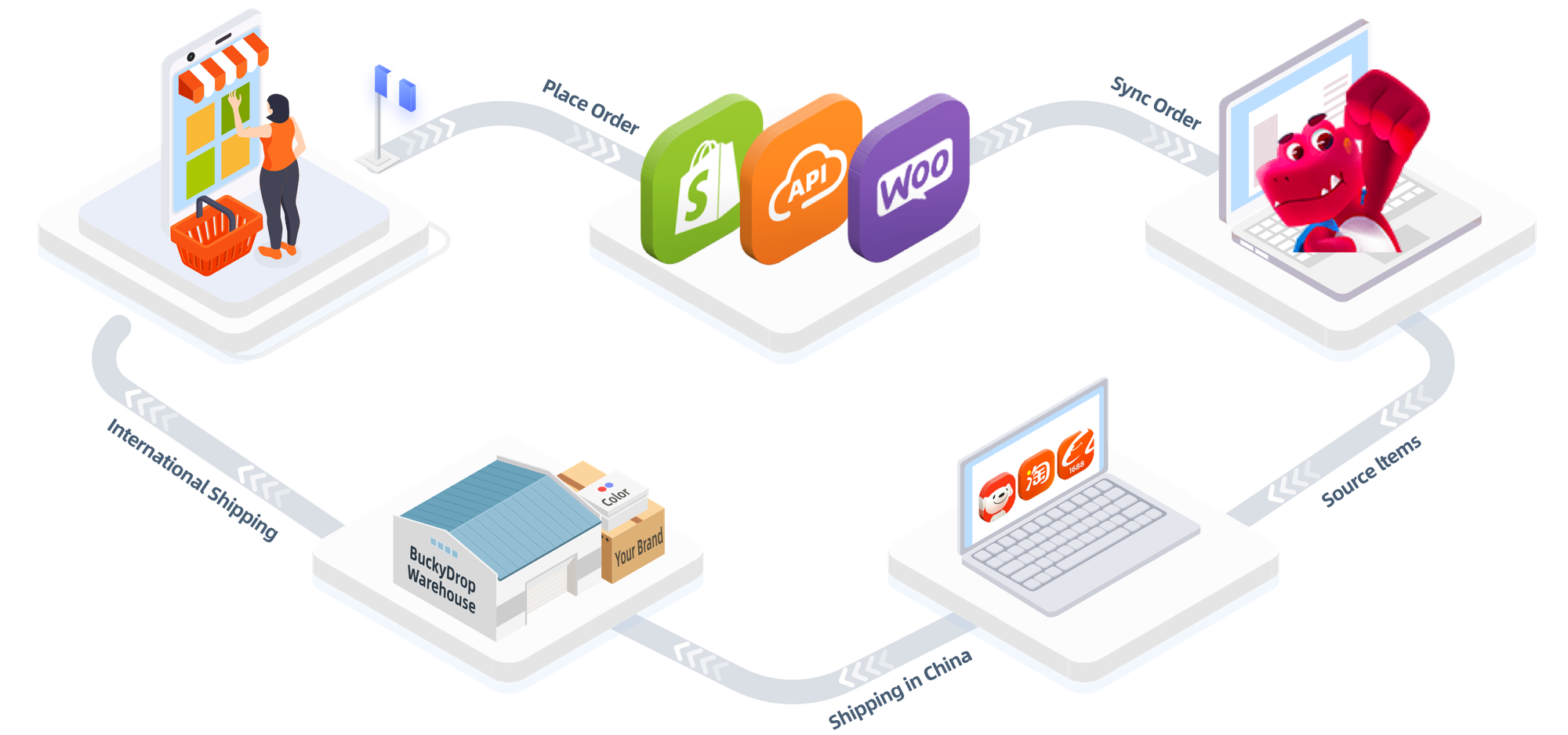
Based on its current public materials, BuckyDrop can sync Shopify and WooCommerce orders and support sourcing, purchasing, warehouse receiving, quality checks, package handling, and global shipping. Review how BuckyDrop works for the current workflow.
The inspection boundary is important.
BuckyDrop’s public services page states that newly purchased goods receive a rough quantity and quality examination when arriving at the warehouse. More detailed inspection, including defect notification and photos, applies when an inspection service is instructed. Sellers should confirm the current scope, pricing, evidence, and exception process before scaling. See the BuckyDrop services page.
A centralized China fulfillment workflow may be useful when products from several Chinese suppliers need to be received, checked, consolidated, and shipped through one process.
It may not be the best fit when:
· Inventory is already stored in the United States or Canada
· A domestic manufacturer handles reliable batch inspection
· Same-day domestic dispatch is required
· The product needs specialized laboratory testing
· Order volume does not justify another operational layer
· The seller has not defined what should be inspected
What to Verify Before You Commit
Before connecting a store or moving live orders, verify:
1. What is checked automatically?
2. What requires an additional inspection service?
3. What evidence will you receive?
4. Is an order paused when a defect is found?
5. Who pays for repurchasing, replacement shipping, or disposal?
6. How are Shopify or WooCommerce variants mapped?
7. When is tracking returned to the store?
8. Which purchasing, inspection, storage, and shipping fees apply?
9. Are regulated, fragile, branded, or battery-powered goods supported?
10. Can you test a limited order batch first?
Pricing and service availability may vary. Verify the current process with the provider before scaling.
Common Mistakes
The most common mistakes are usually simple:
· Approving one sample and never checking again
· Using vague instructions such as “check carefully”
· Ignoring packaging
· Combining every complaint under “bad quality”
· Increasing ad spend before testing fulfillment
· Keeping a supplier after repeated failures
· Treating warehouse inspection as a replacement for compliance testing
Each of these mistakes leaves the seller reacting to customer complaints instead of preventing repeat failures.
Frequently Asked Questions
How can I check quality if the supplier ships directly to the customer?
Order representative samples, request current product and packaging evidence, and run controlled customer-style orders. Higher-risk products may require a warehouse or inspection partner.
Is one sample enough?
Usually not. One sample verifies one product at one point in time. Test important variants and monitor later batches.
Should every order receive a full inspection?
No. Full inspection may be appropriate for personalized, fragile, higher-value, or higher-risk goods. Stable products may only need early-order checks and periodic sampling.
Will inspection slow down fulfillment?
It may add handling time. The impact depends on the inspection method, product category, warehouse workload, and provider process.
How should quality issues be tracked in Shopify or WooCommerce?
Record the supplier, SKU, variant, issue category, and refund outcome. Repeated problems should affect future purchasing and inspection decisions.
What if a supplier refuses inspection?
Treat it as a risk signal. Avoid scaling until the product can be verified through acceptable evidence or another supplier.
Can a provider guarantee zero defects?
No responsible provider should promise zero defects. Inspection can help identify problems, but results depend on the product, sampling scope, instructions, and batch variation.
Does BuckyDrop inspect every product in detail automatically?
Based on its current public materials, newly purchased goods receive a rough inbound examination. More detailed inspection applies when an inspection service is instructed. Verify the current scope and fees before scaling. (buckydrop.com)
Final Recommendation
Start by improving the process you already have.
Write clear product standards, test the supplier, place a limited batch of orders, and record every problem by SKU and cause. Keep supplier-direct fulfillment where the risk and visibility remain manageable.
When several suppliers, variants, and fulfillment exceptions create too much manual work, test a centralized workflow with a small number of suitable orders.
Measure:
· SKU and variant accuracy
· Inspection evidence
· Tracking return
· Fulfillment exceptions
· Replacement costs
· Real cost per fulfilled order
Then decide whether the workflow gives you enough control to expand.
Scale Your Business Today
- Visit our website: BuckyDrop | All-in-One Auto Dropshipping Platform
- Get started for free now: Register with BuckyDrop
- Add BuckyDrop to Shopify: BuckyDrop Shopify App
Sources
3. CPSC Online Sellers’ Safety Guide
4. FTC Mail, Internet, or Telephone Order Merchandise Rule