How to Start Digital Dropshipping Successfully?
Transform your supply chain with BuckyDrop's automated dropshipping. Future-proof your warehouse and scale globally.
Let’s be honest: moving bulk pallets of inventory is getting harder every quarter. Between shrinking wholesale margins and skyrocketing freight costs, traditional B2B suppliers are feeling a squeeze that isn't going away. Recent market analysis shows that traditional wholesale growth is cooling as the global dropshipping market surges toward a projected $476.1 billion by 2026 (Source: Statista). The days of landing one massive distributor and coasting for the fiscal year are largely over.
But there is a massive opportunity sitting right inside your warehouse, gathering dust. Thousands of digital retailers, brand builders, and "solopreneurs" are desperately searching for reliable, high-quality suppliers to plug directly into their stores. They have the marketing budget, the creative talent, and the customer traffic. You have the infrastructure and the inventory.
Connecting those two assets is the essence of digital dropshipping. It’s not just about shipping single items to end consumers; it’s about turning your warehouse into a seamless, automated backend for global sellers.
If you are a manufacturer or distributor looking to secure your margins for the next decade, here is the best way to start dropshipping, pivot your operations, and become the go-to sourcing partner for high-volume digital retailers.
1. Stop Selling Products; Start Selling "Data Kits"
I've personally audited hundreds of supplier catalogs over the last few years, and the number one reason traditional manufacturers fail in the digital space has nothing to do with their physical products. They fail because of their data.
Handing a modern digital retailer a blurry PDF and a static Excel spreadsheet is an operational death sentence. If you want your products listed on the best dropshipping websites, your inventory needs a flawless digital footprint.
Before you ship a single box, you need to provide your retail partners with what I call a "Data Kit." In the world of shopify dropship stores, a product doesn't exist until it is "digitally packaged." Your kit must include:
Ready-to-Deploy Visual Assets: Clean, white-background images are the bare minimum for Google Shopping. What actually drives sales on a shopify dropshipping platform are lifestyle photos and short, 10-second TikTok-style video clips demonstrating the product in use. If you don't provide these, the retailer has to wait for a sample, hire a photographer, and edit the footage—delaying your sales by weeks.
Localized, Benefit-Driven Copy: Stop listing descriptions like "ABS plastic, 12v, 500g." Professional dropshipping sites need copy that focuses on the end-user. If you sell a posture corrector, don't talk about the velcro; talk about the relief from back pain.
The Live Inventory Feed: This is absolutely non-negotiable. If a retailer spends $1,000 on Facebook ads to sell an item that you are actually out of stock on, they lose money, their customer gets angry, and they will drop you as a supplier instantly.
Pro Tip: I once worked with a factory that couldn't get any traction with Western retailers. They spent a small amount to hire a local model to shoot their top 20 SKUs in a modern home setting, packaged those assets into a shared Google Drive, and handed the link to prospective retailers. Their daily order volume quadrupled in a month. They didn't change the product; they changed the accessibility of the data.
2. The API Mandate: Integrating with the Shopify Ecosystem
Over 2 million merchants run their businesses online, and the vast majority are looking for a flawless shopify dropshipping platform integration. If your warehouse software cannot "talk" directly to their storefronts, you simply do not exist to them.
Modern retailers are exhausted by manual uploads. They are actively abandoning suppliers who require them to email daily order sheets. Instead, they flock to drop shipping platforms that offer real-time syncing.
Case Study in Action: A mid-sized home goods supplier was struggling to move inventory through traditional B2B channels. They were manually processing orders via WeChat and email. They eventually took their top 100 products, connected their inventory to an automated order processing system, and allowed retailers to import products with one click. Within six months, their daily order volume grew from 30 manual orders to over 800 automated ones.
You need "invisible" fulfillment. The moment a customer clicks "Buy" in London or New York, the shipping label should print in your warehouse in real-time. This is what separates a tier-one supplier from a legacy factory.
3. Mastering "Blind Shipping" and Brand Protection

If you are handling dropshipping from China (or any major manufacturing hub), you have a distinct pricing advantage. But you also face a massive trust deficit.
Retailers are terrified that their customers will find out the product came directly from a factory, bypassing their brand image. Your dropshipping fulfillment services must protect the retailer's brand at all costs. This means mastering "Blind Shipping."
To execute this properly, your warehouse team must adhere to strict protocols:
Zero Factory Branding: No factory invoices, no business cards, and absolutely no domestic promotional flyers in the box.
Customized Packing Slips: Your dropshipping order management software should allow you to print packing slips featuring the retailer’s logo and support email, not yours.
Premium Packaging Options: Move away from cheap, yellow tape. Offer custom polymailers or branded boxes for your top-tier retail partners.
By offering these white-label services, you elevate yourself from a basic drop sourcing contact to a premium logistics partner. You stop competing purely on the lowest unit price and start competing on the quality of your fulfillment infrastructure.
4. Proactive Sourcing: Becoming a Strategic Asset

Most suppliers wait for retailers to tell them what to make. The most successful digital suppliers act as an extension of the retailer's business.
Because you are on the ground near the manufacturing centers, you have access to trends weeks before they hit Western social media. You should be using your own product sourcing tools to identify emerging winners.
When you notice a spike in demand for a specific material or design, package that insight and send it to your retail partners. Say, "We are seeing a massive uptick in eco-friendly travel gear. We have secured 2,000 units of this new SKU. Here are the data kits; you have first rights to sell it."
This transforms you from a disposable dropshipping china vendor into an indispensable business partner. They will stop looking for the best platform for dropshipping because they will already be integrated with you.
5. Ruthless Automation: Surviving Volume Spikes
The blessing and the curse of the digital model is extreme virality. A retail partner might sell 5 units on Tuesday and 5,000 units on Wednesday because a single influencer video went viral.
Manual data entry will break your business during a volume spike. You must invest in serious ecommerce order automation. Your internal systems—or the best dropshipping software you choose to integrate with—must handle order routing without human intervention.
The Golden Metric: In this industry, lead time is your reputation. Lead time is the exact window between the end-customer paying on the website and the courier scanning the package in your facility. If it takes you more than 72 to 96 hours to upload an active tracking number, your retail partner's payment gateway (like Stripe or PayPal) will flag their account, and they will leave you immediately.
Your operational goal must be a 24-hour lead time. If you can consistently hit that metric, retailers will beg to work with you, and they will gladly pay a premium per unit for the privilege. This is the core of order fulfillment automation.
6. Navigating International Logistics and Compliance
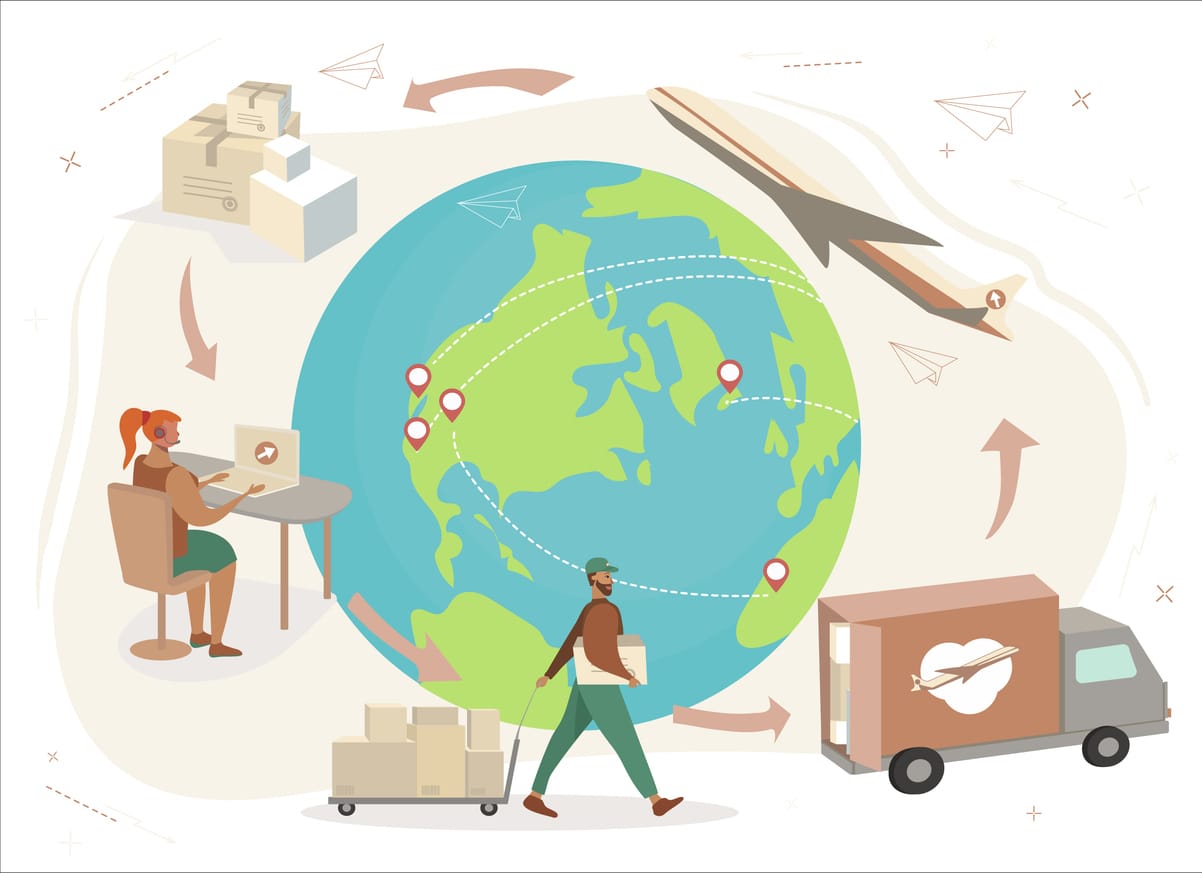
Selling one container to a single port is easy. Shipping 1,000 individual parcels to 30 different countries is a logistical minefield.
To prove your competence as a top-tier supplier, you must understand international customs compliance, particularly the EU’s Import One-Stop Shop (IOSS) regulations. Retailers are actively seeking dropship platforms and suppliers who know how to transmit IOSS data digitally so their end-customers don't get hit with surprise customs fees at their front door.
Furthermore, your dropshipping fulfillment services must offer tiered shipping options:
Service Tier | Estimated Delivery | Best Used For | Strategic Advantage |
Economy Lines | 10–15 Days | Low-ticket items (<$15) | Maximizes margins for high-volume, low-cost goods. |
Priority/Special Lines | 5–9 Days | Mid-to-high ticket items | The "Sweet Spot": Reliable air freight that maintains high merchant ratings. |
Express Couriers | 3–5 Days | Electronics & Luxury | Premium service (DHL/FedEx) for high-value or time-sensitive orders. |
7. Managing the Inevitable: Returns and Defect Rates
Here is a reality most generic guides skip: international returns are a logistical nightmare. To build ultimate authority, you need a crystal-clear, automated protocol for things that go wrong.
The "No-Return" Refund: For items costing less than $15, it is often cheaper to simply refund the retailer or ship a free replacement rather than paying for return international shipping and warehouse restocking fees.
Photographic Proof: Implement a software-backed system where retailers must submit photographic proof of damaged goods to trigger an automated reshipment.
Defect Allowances: Professional suppliers often build a 1-2% defect allowance into their pricing model. Communicating this upfront builds immense trust. It shows you operate in reality, not theory.
When you handle problems systematically, retailers realize that your dropshipping services are a safety net for their brand reputation.
8. The Technology Stack: Build vs. Partner
By now, the requirements are clear. You need API connections, real-time inventory syncing, ecommerce order automation, white-label fulfillment, and complex international logistics routing.
You have two choices. You can spend hundreds of thousands of dollars and years building this custom software infrastructure from scratch.
Or, you can partner with an established network.
This is where the true scale of digital fulfillment is unlocked. By plugging your warehouse into an established dropshipping infrastructure, you bypass the technical headache. You list your inventory, set your base costs, and the software handles the rest—translating your product data, syncing it to thousands of retail storefronts globally, and routing the orders back to your packing stations.
The Bottom Line: Future-Proofing Your Supply Chain
Transforming into a digital supplier isn't about changing what you manufacture; it’s about changing how you connect.
Stop fighting for shrinking wholesale contracts. Digitize your catalog, hook into a shopify dropship ecosystem, automate your fulfillment, and become the silent, reliable engine behind hundreds of successful retail brands.
If managing the API integrations and cross-border logistics sounds like a distraction from your core business, you don't have to build it yourself.
Partner with dedicated dropshipping services designed to bridge the gap between traditional suppliers and modern digital retailers. By registering as a verified supplier on a platform like BuckyDrop, you instantly plug your inventory into an ecosystem built for order fulfillment automation. We handle the storefront integrations, the global shipping lines, and the technology. You focus on what you do best: supplying the products that the world wants to buy.
The digital transition is not a future trend; it is the current reality of global trade. The suppliers who secure their digital infrastructure today will be the ones dominating the best dropshipping websites lists tomorrow.