Which Shipping Method Should I Choose for Dropshipping?
Struggling with unpredictable dropshipping delivery times? Learn why choosing a shipping system is more important than a shipping method. Discover how automated order fulfillment and smart routing can reduce delays by 40% while keeping your profit margins stable.
Table of contents
Why Choosing the Right Dropshipping Shipping Method Is More Complex Than It Seems?
The 3 Main Types of Dropshipping Shipping Methods Explained
What Most Sellers Miss — Shipping Method vs Shipping System?
How a Modern Shopify Fulfillment System Optimizes Shipping Automatically?
Case Study — Improving Delivery Time Without Increasing Costs
Pitfall Avoidance Checklist — Common Shipping Mistakes to Avoid
How to Choose the Best Shipping Strategy for Your Store?
Where Platforms and Tools Make the Difference?
Conclusion
FAQ
Which shipping method should you choose for dropshipping—and why do delivery times still feel unpredictable even when you think you’ve made the “right” choice?
If you’re running a Shopify store, you’ve likely experienced this: one order arrives in under a week, while another takes nearly twice as long. Same product, same supplier—yet completely different outcomes. That inconsistency doesn’t just confuse customers; it directly affects refunds, reviews, and repeat purchases.
The issue isn’t simply about speed or cost. It’s about how your dropshipping order management system handles different scenarios in real time. Relying on a single method often leads to inefficiencies, especially when scaling across regions.
That’s why more sellers are turning to auto dropshipping and ecommerce order automation—not to replace control, but to improve it.
So instead of asking which shipping method is best, the better question is:
How can your system choose the best option automatically, every time?
Why Choosing the Right Dropshipping Shipping Method Is More Complex Than It Seems?
Delivery Time vs Cost — A False Trade-Off
Imagine you’re running Facebook ads for a winning product. Orders start coming in, and to keep customers happy, you switch to a faster shipping line. Delivery improves—but then you check your numbers. Your margin drops from $12 to $6 per order. So you go back to a cheaper method. A week later, emails start piling up: “Why is shipping taking so long?” This back-and-forth is common. According to McKinsey, customers care as much about reliability as speed. The challenge isn’t fast vs cheap—it’s balancing both without losing control.
Why Static Shipping Choices Fail at Scale?
Let’s say your store starts scaling. You’re shipping to the US, UK, and Germany. At first, using one shipping method feels simple. But soon, problems appear. Orders to the US arrive in 7 days, while EU customers wait 12–15 days. Same product, different experiences. Reviews start reflecting that inconsistency. You try to fix it manually, but it becomes messy fast. One method simply can’t handle global demand. It’s like using one delivery route for every city—you’ll always be inefficient somewhere. Scaling isn’t about doing the same thing more—it’s about adapting per region.
The Hidden Cost of Poor Dropshipping Order Management?
Now picture this: you wake up to 50 new orders. You manually assign shipping, copy tracking numbers, and double-check addresses. It works—until you miss one detail. A wrong shipping method gets selected, tracking is delayed, and the customer complains. Multiply that by 100 orders a day, and small mistakes turn into serious problems. This is where dropshipping order management breaks down without structure. Sellers who switch to automated order systems notice the difference immediately—fewer errors, faster processing, and fewer support tickets. The less you rely on manual steps, the more consistent your delivery becomes.
The 3 Main Types of Dropshipping Shipping Methods Explained
Standard International Shipping
This is the most common starting point for sellers.
● Typical delivery time: 7–15 days
● Lower upfront cost
● Widely used when dropshipping from China
It’s accessible and cost-effective—but not always predictable.
Delivery times can vary depending on location, customs clearance, and logistics performance. That variability is often what leads to customer uncertainty.
Still, for early-stage stores or lower-ticket products, it remains a practical option—especially within established china fulfillment networks.
Expedited Shipping Options
If you want to improve delivery speed, this is usually the next step.
Orders arrive faster, customers are happier—but your costs increase.
And if your pricing doesn’t adjust, your margins take the hit.
This is where many sellers get stuck:
● Faster delivery improves experience
● But higher cost reduces profitability
So the question becomes: how often can you afford to prioritize speed?
Local Warehouse Fulfillment (3–7 Days)
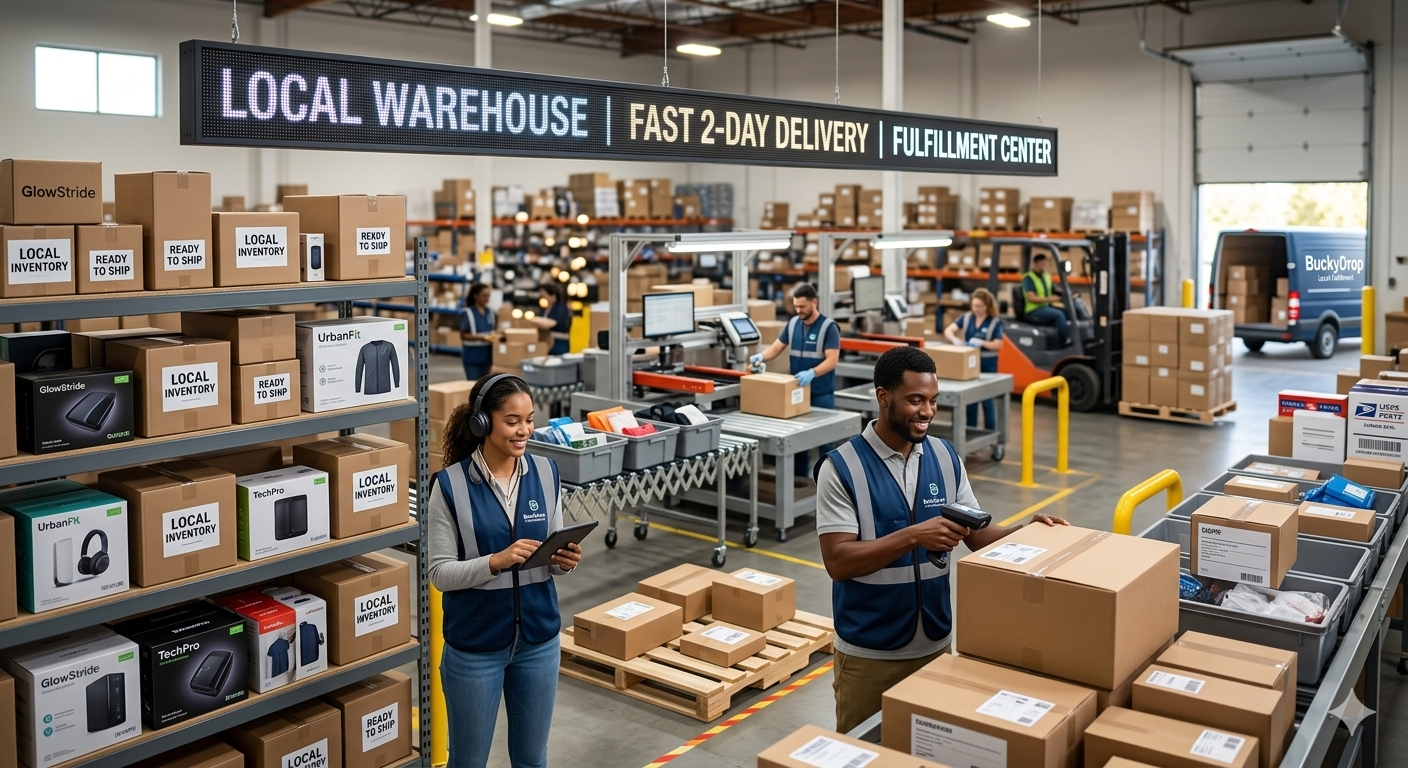
Now imagine your product is already stored closer to your customer.
Instead of shipping internationally every time, orders are fulfilled locally.
● Delivery time: 3–7 days
● More consistent timelines
● Better customer experience in key markets
For stores targeting regions like the US or UK, this can significantly improve conversion rates.
But here’s the key: not every product needs this setup.
Experienced sellers typically use local warehouses for:
● High-performing products
● Stable, proven SKUs
While the rest still rely on dropship from China models.
It’s not about replacing one method
It’s about combining them strategically
What Most Sellers Miss — Shipping Method vs Shipping System?
Why “Best Shipping Method” Is the Wrong Question?
If you’re still asking, “Which shipping method is best?”, you’re looking at the problem too narrowly.
Because the answer changes every time:
● Different destination
● Different product
● Different customer expectation
There is no single best option—only the best decision for each individual order.
And making that decision manually, every time, isn’t scalable.
How Auto Dropshipping Systems Work?
This is where things shift.
Instead of relying on one fixed method, modern stores use auto dropshipping systems to handle decisions automatically.
Here’s what happens behind the scenes:
An order comes in.
● The system evaluates: Destination
● Cost constraints
● Delivery expectations
Then it selects the most suitable shipping method automatically.
No manual selection. No guesswork.
This is where automated order management and an automated order processing system come into play.
You’re no longer reacting after problems occur—you’re preventing them at the routing stage.
Solutions like BuckyDrop are designed around this logic:
● Multiple shipping methods integrated into one system
● Automated routing that balances delivery time and cost
● Real-time synchronization with your Shopify backend
The result isn’t just faster shipping
It’s a system that keeps your fulfillment predictable as you scale
How a Modern Shopify Fulfillment System Optimizes Shipping Automatically?
Multi-Method Integration
If you’re selling into multiple markets, using one shipping method across all orders quickly becomes inefficient. A product shipped to the US might arrive in 5–7 days using local inventory, while the same item sent to Europe could take twice as long if routed incorrectly. Modern systems solve this by integrating multiple shipping methods into one workflow. Instead of manually switching options, the system applies the most suitable route based on destination and cost structure. This is how order fulfillment automation improves consistency—by matching each order with the most appropriate delivery path rather than forcing a single method to handle everything.
Automated Order Routing (Source One Auto Logic)
Once order volume increases, manual decision-making becomes a bottleneck. Imagine handling 70–100 daily orders and checking shipping options one by one—it’s not sustainable. With automated order fulfillment, routing decisions happen instantly. When an order is placed, the system evaluates destination, delivery time expectations, and available logistics channels before assigning the optimal route. This reduces human error and shortens processing time. In real operations, this is what allows fulfillment dropshipping models to scale, because decisions are standardized and consistent rather than dependent on manual judgment under pressure.
Real-Time Tracking Synchronization
Tracking visibility is often underestimated until problems appear. When tracking numbers are uploaded late or manually, customers start asking questions, and support workload increases. A synchronized system removes this issue by pushing tracking data directly into Shopify as soon as it is generated. This creates a consistent post-purchase experience where customers can monitor their orders without contacting support. According to industry reports from Shopify, clear tracking visibility significantly reduces customer inquiries and improves satisfaction. In practice, this means fewer interruptions and more time focused on growth rather than handling order updates.
Global Logistics Network Advantage
Relying on a single shipping line works until conditions change. During peak seasons or regional disruptions, delays become unavoidable if there are no alternatives. A system connected to multiple logistics partners allows orders to be rerouted dynamically when needed. For example, if one carrier slows down in Europe, another route can be used without affecting the entire operation. This flexibility is what makes dropshipping fulfillment services more stable over time. Instead of reacting to delays after they happen, the system adapts in advance, maintaining delivery consistency even when external conditions shift.
Case Study — Improving Delivery Time Without Increasing Costs
Let’s make this real.
A Shopify seller was dealing with inconsistent delivery times. Some customers received orders in under a week, while others waited nearly two. Complaints were increasing, and switching to faster shipping across the board would have cut deeply into margins.
What changed?
They introduced:
● ecommerce order automation
● Automated routing logic
● Multi-method shipping strategy
Instead of using one shipping method, orders were routed based on destination and cost.
The result
● Delivery time reduced by 40%
● Profit margins remained stable
● Customer complaints dropped significantly
This wasn’t about switching to expensive shipping—it was about smarter routing.
That’s where solutions like BuckyDrop stand out. By combining sourcing, routing, and fulfillment into one system, sellers gain control without adding complexity.
Better system = better outcomes
Pitfall Avoidance Checklist — Common Shipping Mistakes to Avoid
Before you scale further, ask yourself:
1. Are you using the same shipping method for every destination?
2. Are you choosing the cheapest option without considering delivery consistency?
3. Are you still relying on manual processes instead of automated order management?
4. Is your tracking not synced automatically with Shopify?
5. Are you missing opportunities to use local warehouses for key markets?
6. Are you scaling ads before stabilizing fulfillment?
7. Are you handling orders manually instead of using dropship fulfillment services?
If you answered “yes” to more than two, your system—not your product—is likely the bottleneck.
Fix the system first, then scale
How to Choose the Best Shipping Strategy for Your Store?
Match Shipping Method to Product Type?
Not every product needs the same shipping approach.
● Low-ticket items → cost-sensitive → standard shipping works
● High-ticket products → higher expectations → faster delivery matters
Think of it like this: you wouldn’t ship a premium product the same way you ship a $5 item.
The shipping strategy should match the product value
Align Shipping with Target Market Expectations
Customers in the US or UK expect faster delivery than some other regions. If your shipping doesn’t match that expectation, conversion rates drop—no matter how good your product is.
For example:
● US market → 3–7 days is competitive
● EU market → predictable 5–10 days works
● Global → flexible approach needed
One global strategy rarely works—adapt to your market
Use Automation to Balance Cost and Delivery
This is where most sellers struggle.
Trying to manually balance cost and speed for every order isn’t realistic. That’s why the best source auto approach relies on systems, not decisions.
With automation:
● Orders are routed automatically
● Costs are controlled
● Delivery remains consistent
This is what modern dropshipping services are moving toward—less manual work, more structured systems.
Automation doesn’t remove control—it improves it
Where Platforms and Tools Make the Difference?
Role of a Shopify Dropshipping Platform?
A strong shopify dropshipping platform doesn’t just connect products—it connects your entire fulfillment flow.
From order creation to shipping and tracking, everything runs in one system.
Integration is what turns separate tasks into a process
Why the Right Dropship App Matters?
If you’re still copying orders manually or updating tracking one by one, your growth will always hit a ceiling.
The right dropship app removes those repetitive tasks:
● Orders flow automatically
● Shipping is assigned automatically
● Tracking updates automatically
Less manual work = more scalable business
Choosing Among the Best Shopify Apps for Dropshipping?
Not all tools are built the same. When evaluating the best Shopify apps for dropshipping, focus on what actually impacts operations:
● Automation (order processing & routing)
● Shipping flexibility (multi-method support)
● Tracking synchronization
Platforms like BuckyDrop bring these together into one system—connecting sourcing, fulfillment, and shipping into a single workflow.
Conclusion
Most sellers think shipping issues come from choosing the wrong method. In reality, the problem is inconsistency. One order arrives in five days, another in twelve—that gap is what hurts trust, refunds, and repeat purchases.
👉 Shipping success = predictability + control
Sellers don’t lose money on shipping costs. They lose money when delivery outcomes are unreliable.
So instead of switching methods, the focus should shift to systems. Are your delivery times predictable? Are you still making manual decisions for every order?
👉 Growth comes from automation, not more effort
With automated order fulfillment, dynamic routing, and real-time tracking, your store becomes stable and scalable. That’s where systems like BuckyDrop make the difference—connecting everything into one controlled workflow.
FAQ
1. What is the best source auto shipping method for dropshipping?
There isn’t a single best method. The most effective approach is using a system that automatically selects the best shipping option based on destination, cost, and delivery expectations.
2. How does auto dropshipping improve delivery consistency?
Auto dropshipping systems remove manual decisions and apply predefined logic to every order, ensuring shipping methods are selected consistently across different regions.
3. What is an automated order processing system in dropshipping?
It’s a system that handles order routing, shipping selection, and tracking updates automatically, reducing manual work and minimizing errors.
4. How does ecommerce order automation reduce errors?
By eliminating manual input, automation reduces the chances of incorrect shipping choices, delayed processing, and missing tracking updates.
5. What is the role of china fulfillment in shipping speed?
China fulfillment provides cost-effective sourcing and shipping options, but delivery speed depends on how shipping methods are selected and optimized.
6. Can I use multiple shipping methods in one Shopify store?
Yes, and it’s often necessary. Using multiple methods allows you to balance delivery time and cost across different regions.
7. What are dropshipping fulfillment services?
They are services that handle sourcing, warehousing, packing, and shipping, allowing sellers to focus on marketing and growth.
8. How do I choose the best dropship app?
Focus on systems that offer automation, flexible shipping options, and real-time tracking integration rather than just product sourcing.
9. What is automated order fulfillment and why does it matter?
It ensures orders are processed and shipped without manual intervention, improving speed, accuracy, and scalability.
10. How does dropshipping from China affect delivery time?
Delivery time varies depending on shipping method and routing strategy. With the right system, sellers can maintain competitive delivery times while controlling costs.