Best Products to Source from 1688 for Dropshipping
Quick Verdict
For an initial test, prioritize products that are:
· Compact and inexpensive to ship
· Difficult to break
· Easy to inspect against written specifications
· Less exposed to sizing and compatibility returns
· Free from batteries, ingestible ingredients, and complex safety claims
· Capable of being differentiated through bundling, packaging, positioning, or content
Good starting categories include desk organizers, travel pouches, small home-storage products, generic craft supplies, packaging accessories, non-powered tech accessories, and selected pet lifestyle products.
These are categories to investigate—not guarantees that every SKU is compliant or profitable. The exact product still needs a sample inspection, landed-cost calculation, intellectual-property review, and real-order test.
Alibaba Group describes 1688 as a Chinese domestic wholesale marketplace. Because it is designed primarily around China’s domestic wholesale ecosystem, overseas sellers should not assume that every supplier can communicate in English, ship one unit internationally, remove Chinese promotional materials, synchronize inventory, or return tracking information to a Shopify store.
Those capabilities must be confirmed separately.
For sellers considering 1688 dropshipping, the product listing is only the beginning of the workflow.
How These Product Categories Were Evaluated

The comparison below is an editorial screening framework for initial product research. It is not a legal, customs, product-safety, or demand forecast.
Each category was evaluated against seven operational questions:
1. How expensive is the product likely to be after packing and transportation?
2. Can a warehouse inspect it using measurable specifications?
3. Is it likely to generate fit, sizing, or compatibility returns?
4. Could damage or product failure create a safety concern?
5. Does it require batteries, formulas, certifications, or regulated claims?
6. Can the seller differentiate the offer without copying protected designs?
7. Can the supplier or fulfillment partner process the product consistently?
The right product sourcing tools should improve supplier-side visibility and order control. A large catalog alone does not solve poor specifications, unstable inventory, or an unmanaged fulfillment queue.
Product Category Comparison
Product Category | Shipping Complexity | Return Exposure | Relative Compliance Risk | Differentiation Potential | Suggested Initial Model |
Desk and cable organization | Low | Low | Lower | High | Small-order test |
Travel organizers | Low | Low | Lower | High | Direct test or China warehouse |
Small home storage | Low to medium | Low to medium | Lower | Medium | China warehouse |
Hair and beauty accessories | Low | Medium | Moderate | High | Sample-led test |
Journaling and craft supplies | Low | Low | Lower to moderate | High | Small-order test |
Small-business packaging accessories | Low | Low | Lower | High | Consolidated small batch |
Passive phone and tech accessories | Low | Medium | Moderate | Medium | China warehouse |
Selected pet lifestyle accessories | Low | Medium | Moderate | High | Sample-led test |
“Lower” risk does not mean “no regulatory requirements.” Requirements depend on the exact product, materials, intended user, marketing claims, packaging, and destination.
1. Desk and Cable Organization
Potential products include:
· Cable clips
· Non-powered cord sleeves
· Under-desk storage pouches
· Pen and document organizers
· Laptop stands without powered components
· Headphone holders
These products are relatively straightforward to inspect. A specification sheet can define dimensions, material thickness, surface finish, adhesive type, included hardware, and packaging.
They also have fewer reasons for customers to return them than apparel or technical electronics.
The main problems are usually avoidable: weak adhesive, unstable construction, inaccurate dimensions, scratched surfaces, or misleading weight-capacity claims.
Test adhesive products on several common surfaces. Do not publish a load-bearing or ergonomic claim simply because it appears in the supplier listing.
Best for: Remote-work, student, creator, or small-office stores.
Not ideal for: Sellers who cannot produce original product photography or explain exact dimensions.
2. Travel and Packing Organizers
Packing cubes, toiletry bags, shoe pouches, passport wallets, luggage straps, and cable organizers are lightweight and easy to bundle.
A single packing cube is easy for competitors to compare on price. A coordinated weekend-travel set gives the store more room to differentiate through color selection, organization guides, packaging, or niche positioning.
Inspect:
· Zippers and stitching
· Fabric weight
· Odor
· Colorfastness
· Internal seams
· Actual dimensions
· Performance after compressed shipping
Avoid advertising RFID protection, waterproofing, security, or material-performance benefits unless those claims have been tested and documented.
Best for: Travel, family organization, digital-nomad, and business-travel stores.
Not ideal for: Stores relying entirely on generic supplier photos and undifferentiated single-item offers.
3. Small Home-Storage Products

Drawer dividers, fabric baskets, shelf organizers, hanging pouches, and remote-control holders can fit broad home-organization niches.
Most complaints in this category start with size. The organizer looked large in the product image but arrived too small for the customer’s drawer, shelf, or cabinet.
Publish measurements in inches and centimeters. Show the product next to familiar objects, and photograph the actual sample rather than depending entirely on supplier-rendered images.
For fabric products, test whether the item returns to its intended shape after compressed transportation.
Best for: Home organization, apartment living, dorm, and small-space stores.
Not ideal for: Sellers who cannot manage dimensional expectations on the product page.
4. Hair and Beauty Accessories
Potential candidates include hair clips, headbands, cosmetic bags, reusable applicator holders, and non-powered salon organization products.
These products let a seller build beauty-related content without importing a cosmetic formula. That does not eliminate risk. Materials, coatings, sharp edges, small components, age targeting, and marketing claims still matter.
Check spring tension, hinge durability, glue residue, edges, coatings, color consistency, material declarations, and packaging warnings.
Avoid creams, serums, adhesives applied to the body, powered styling products, and products making therapeutic claims unless the necessary compliance process is already in place.
Best for: Fashion, beauty-accessory, salon, and gift stores.
Not ideal for: Sellers who want to move into cosmetics or health claims without category-specific compliance resources.
5. Journaling and Craft Supplies
Generic stamps, blank labels, washi tape, storage cases, paper-craft tools, and journaling kits can be inexpensive to test and easy to demonstrate through Meta, TikTok, Pinterest, or creator content.
The main commercial risk is intellectual property.
Do not source products featuring unlicensed characters, logos, sports teams, entertainment properties, copied illustrations, or artwork taken from independent creators.
A safer strategy is to organize collections around color, technique, material, or use case.
Best for: Hobby, journaling, education, gift, and creator-led stores.
Not ideal for: Sellers who depend on recognizable characters or copied trends to generate demand.
6. Small-Business Packaging Accessories

Potential products include:
· Ribbon
· Blank product-display cards
· Generic thank-you cards
· Tissue paper
· Unbranded tags
· Sticker dispensers
· Packaging organization tools
These products can serve Etsy sellers, local retailers, subscription-box companies, market vendors, and small ecommerce brands.
Packaging buyers may reorder, but they also compare cost per unit closely. Sending one low-value pack from China for each customer order can erase the advantage of the 1688 price.
This category usually becomes more workable through consolidated purchasing or small-batch inventory.
Best for: B2B microbrands and stores with a repeat-purchase audience.
Not ideal for: Single-item direct shipping where international transportation is a large share of the order value.
7. Passive Phone and Tech Accessories
Phone stands, tablet sleeves, webcam covers, device pouches, cable organizers, and non-powered mounts are generally easier to evaluate than chargers, batteries, power banks, and wireless devices.
Compatibility is the main source of refunds.
A stand that blocks a camera, fails with a thick phone case, or does not support the advertised device size becomes a return even when the product is not technically defective.
Confirm:
· Device dimensions
· Camera and port placement
· Case-thickness limits
· Mounting-surface requirements
· Included screws or adhesive
· Weight and angle limitations
Best for: Desk setup, creator, remote-work, and device-accessory stores.
Not ideal for: Sellers who cannot maintain accurate compatibility tables as new device models are released.
8. Selected Pet Lifestyle Accessories

Lower-complexity candidates may include pet bandanas, toy-storage bags, grooming gloves, feeding-mat organizers, and non-safety-critical travel pouches.
Avoid beginning with products where failure could injure an animal, such as load-bearing restraints, vehicle safety devices, heated products, ingestible goods, or poorly documented chew products.
Sizing is another source of refund pressure. List actual neck, chest, and product measurements rather than relying only on “small,” “medium,” and “large.”
Best for: Lifestyle-oriented pet stores with strong educational content.
Not ideal for: Sellers looking for safety-critical products or items that require veterinary, nutritional, or therapeutic claims.
Products Beginners Should Approach Carefully
The following categories can be sold legally when the correct requirements are met, but they create more compliance, fulfillment, or support exposure:
· Batteries, power banks, chargers, and electrical devices
· Children’s products and toys
· Cosmetics, supplements, food, and pet ingestibles
· Medical or therapeutic products
· Safety equipment and load-bearing products
· Fragile glass or ceramic products
· Large or oversized items
· Apparel with complex sizing
· Branded, copied, or character-based products
· Products making waterproof, protective, health, or performance claims
The US Consumer Product Safety Commission provides an Online Sellers’ Safety Guide for businesses that manufacture, import, or sell consumer products.
A supplier listing, test report screenshot, or statement that a product is “certified” should not be treated as sufficient evidence without reviewing the underlying documentation and confirming that it applies to the exact product being purchased.
Calculate the Real Cost per Fulfilled Order
Use this formula before approving a product:
Supplier price
· China domestic freight
· sourcing or warehouse charges
· inspection
· repacking and labeling
· international transportation
· duties, taxes, customs, and carrier charges
· payment and currency-conversion costs
· store or marketplace fees
· replacement and refund reserve= estimated cost per fulfilled order**
Illustrative Example
The numbers below are hypothetical and are not a BuckyDrop quote, supplier quote, or shipping rate.
Cost Component | Illustrative Amount |
1688 product price | $4.00 |
China domestic freight | $0.80 |
Inspection and handling | $0.70 |
Repacking | $0.40 |
International transportation | $6.50 |
Duties, customs, and carrier reserve | $1.60 |
Store and payment costs | $1.30 |
Replacement and refund reserve | $1.20 |
Estimated cost per fulfilled order | $16.50 |
At a $29 retail price, the remaining $12.50 is not profit. It still needs to cover advertising, creative production, apps, customer support, chargebacks, overhead, and owner compensation.
The supplier price represented less than one-quarter of the fulfilled-order cost in this example.
That is why a “high-margin” 1688 product can become unworkable after paid traffic begins.
Choose the Right Fulfillment Model
Direct Supplier Fulfillment
Direct fulfillment may work for an early test when the supplier confirms:
· One-piece purchasing
· International address processing
· Neutral packaging
· Reliable variant handling
· Usable tracking
· A clear policy for defects and incorrect items
Place real test orders before directing customer traffic to the product.
China-Based Sourcing and Fulfillment

A China warehouse or sourcing partner may be useful when the seller needs supplier purchasing, consolidation, inspection, repacking, SKU matching, or international dispatch.
A structured China fulfillment workflow can reduce the number of orders sitting in a manual purchasing queue, but the seller still needs to understand fees, cut-off rules, inventory exceptions, and responsibility for errors.
North American 3PL
A US or Canadian 3PL becomes more attractive after demand is repeatable and the business needs local inventory, more predictable last-mile handling, or a domestic return address.
The tradeoff is inventory exposure.
Do not move hundreds of units into a 3PL because a product generated a few profitable Meta or TikTok orders. First confirm that the product survives real fulfillment, support, and return conditions.
Where BuckyDrop Fits
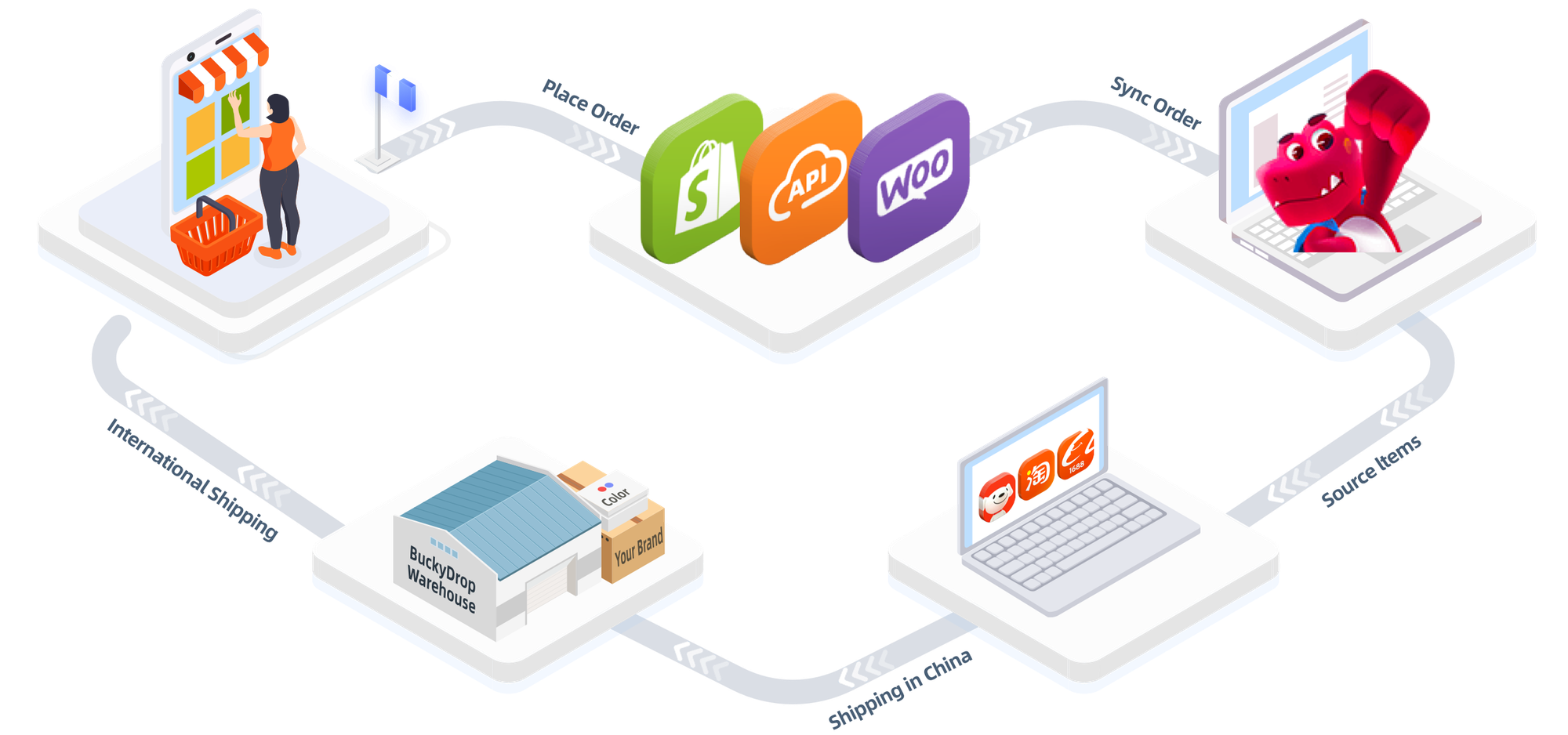
Based on its public materials, BuckyDrop connects with Shopify and WooCommerce and supports a workflow that can include order synchronization, sourcing from Chinese marketplaces, quality checks, value-added handling, package processing, international shipping, and tracking updates.
Sellers can review the documented BuckyDrop fulfillment workflow and its Shopify and WooCommerce connection guide before connecting a live store.
This positioning is most relevant to sellers who:
· Source from 1688, Taobao, or other Chinese marketplaces
· Need a China-side purchasing and fulfillment layer
· Want to connect Shopify or WooCommerce orders to that workflow
· Need product inspection or packaging options
· Are willing to test real orders before scaling
BuckyDrop may not be the right fit for a seller who only wants US domestic suppliers, already has a mature procurement and China-warehouse stack, or expects a fulfillment provider to assume responsibility for product compliance, intellectual property, or retail demand.
A connected workflow can help reduce manual order handling. It cannot turn an unverified product into a low-risk product.
Manual Workflow vs. Connected Workflow
Operational Step | Manual Process | Connected BuckyDrop Workflow Based on Public Materials |
Customer order | Staff reviews each store order | Shopify or WooCommerce orders can sync to the BuckyDrop admin |
Supplier purchasing | Staff copies product and address data | Product sourcing can be managed in the connected workflow |
SKU matching | Checked manually for each order | Product-source links can support order processing |
Warehouse intake | Limited visibility | Goods can move through warehouse receipt and quality checks |
Packaging | Depends on individual supplier | Package processing and optional value-added services can be selected |
Tracking | Staff copies tracking into the store | Tracking updates are supported in the fulfillment workflow |
Exceptions | Often discovered through customer complaints | Seller should confirm how stock, QC, and shipping exceptions appear in the system |
Verify the exact automation scope for your setup before scaling. Shopify sellers can also review BuckyDrop’s Shopify App Store listing for current installation details and public merchant feedback.
What to Verify Before You Commit
1. Compare Samples from More Than One Supplier

Check:
· Material
· Dimensions
· Unit weight
· Surface finish
· Color consistency
· Odor
· Stitching or assembly
· Included components
· Packaging
· Functional performance
The lowest supplier price does not necessarily produce the lowest fulfilled-order cost.
2. Create a Measurable Specification Sheet
Avoid instructions such as “good quality” or “strong packaging.”
Document:
· Required measurements and tolerances
· Material or composition
· Color reference
· Unit weight
· Included parts
· Labeling requirements
· Packaging dimensions
· Inspection method
· Acceptable and unacceptable defects
3. Test the Full Store Workflow
Place one order to a US residential address and one to Canada.
Confirm that:
· The correct SKU and variant reach the purchasing workflow
· The shipping address transfers correctly
· An out-of-stock item creates a visible exception
· The parcel receives a usable carrier scan
· Tracking returns to the correct store order
· Customer notifications display accurate information
· A failed order does not remain hidden in a manual queue
During Q4 and Black Friday/Cyber Monday, supplier and warehouse delays can waste paid traffic before a parcel enters the international network. Do not promise fixed tracking or delivery times unless the selected route and provider publish that commitment.
4. Define Responsibility for Exceptions
Get written answers to these questions:
· Who pays if the supplier sends the wrong variant?
· What happens when inspection finds a defect?
· Who is responsible before carrier acceptance?
· What evidence is needed for a replacement?
· How are invalid or stalled tracking numbers handled?
· When do storage or processing charges begin?
· What happens if a supplier becomes out of stock?
A promise to “handle after-sales problems” is not an operating policy.
5. Use 10–20 Orders as an Operational Test
Ten to twenty orders will not prove long-term product demand.
They can reveal whether the workflow is ready for more volume.
Measure:
· SKU accuracy
· Time to a usable tracking event
· Fulfillment exceptions
· Customer support contacts
· Damage or defect reports
· Refund and replacement costs
· Cost per fulfilled order
Increase ad spend only after these numbers make sense.
North American Compliance and IP Risks
US sellers and importers remain responsible for offering compliant products. Applicable requirements depend on the product category, materials, age group, intended use, packaging, and marketing claims.
The CPSC guide is a starting point, not a replacement for category-specific testing or legal advice.
For Canadian orders, Health Canada’s commercial consumer-product import guide explains the obligations that may apply to businesses importing consumer products and cosmetics.
Canadian businesses should also review the CBSA commercial importing resources for classification, valuation, duties, taxes, release procedures, and other government requirements.
For intellectual property, check product names, packaging, logos, and visible designs before creating the listing. The USPTO trademark search resources can support an initial US trademark review, but a database search does not replace a complete trademark, copyright, design, or patent analysis.
Frequently Asked Questions
Can 1688 suppliers ship directly to customers in the United States or Canada?
Some may be able to, but sellers should not assume that international one-piece fulfillment is included. Confirm address handling, packaging, tracking, customs documentation, delivery exceptions, and responsibility for incorrect orders.
Do I need a sourcing or fulfillment partner?
Not necessarily. A partner becomes more useful when the supplier does not support international fulfillment or when you need consolidation, inspection, repacking, product-source linking, or store order synchronization.
Is 1688 always cheaper than Alibaba.com or AliExpress?
Not after every cost is included. Compare product specifications, China-side freight, minimum order quantities, inspection, repacking, international transportation, duties, taxes, payment costs, and replacement responsibility.
Can BuckyDrop connect with Shopify?
BuckyDrop provides a Shopify connection workflow, and its app is publicly listed in the Shopify App Store. Review current installation details and test product linking, order sync, inventory exceptions, and tracking before scaling.
Can BuckyDrop connect with WooCommerce?
BuckyDrop’s public beginner guide includes a WooCommerce connection process. Compatibility can depend on the store configuration, plugins, permissions, and workflow, so test the complete process with real orders.
WooCommerce also publishes its own dropshipping extension documentation, which illustrates how supplier notifications and tracking workflows can operate within WooCommerce. A general WooCommerce dropshipping feature does not automatically mean native 1688 support.
How many orders should I test?
Use 10–20 orders as an initial operational test. This can identify SKU, tracking, packaging, and exception problems, but it does not prove long-term product demand or profitability.
How should cross-border returns be handled?
Define the policy before launch. For some low-value orders, international return shipping can approach or exceed the product value. Depending on the issue, a replacement, partial refund, local return, or refund without return may be more practical.
The correct approach depends on product value, defect evidence, fraud risk, payment-provider rules, and applicable consumer law.
Can I list the same products on TikTok Shop or Amazon?
Possibly, but each marketplace has separate product, shipping, seller-of-record, packaging, tracking, and compliance rules. Verify the current marketplace policy for the product and destination before listing it.
Final Recommendation
The best products to source from 1688 for dropshipping are not simply the products with the lowest unit price.
They are the products your business can inspect, ship, explain, support, and replace without destroying the contribution margin.
Start with one compact, non-powered product. Compare samples from at least two suppliers, create a written specification, calculate the complete cost per fulfilled order, and test the workflow before increasing Meta or TikTok spending.
Test the Workflow Before You Scale
Connect your Shopify or WooCommerce store with BuckyDrop and use your next 10 to 20 orders as a controlled operating test.
Measure five things:
1. SKU and variant accuracy
2. Time to usable tracking
3. Fulfillment exceptions
4. Customer support workload
5. Actual cost per fulfilled order
Scale only after those numbers make sense.
Sources
1. US Customs and Border Protection: Ecommerce Guidance
2. US Customs and Border Protection: International Mail and De Minimis Guidance
3. Alibaba Group: Official 1688 Overview
4. US Consumer Product Safety Commission: Online Sellers’ Safety Guide
5. Shopify: Dropshipping Guide
6. WooCommerce: Dropshipping Extension Documentation
7. Health Canada: Commercial Consumer-Product Import Guide
8. Canada Border Services Agency: Import Commercial Goods
9. USPTO: Trademark Search Resources