Can you recommend popular shoe brands suitable for dropshipping?
Selling big-brand shoes will get your Shopify store banned. Discover the compliant footwear niches that actually make money, plus the BuckyDrop hacks to survive multi-SKU sizing & high freight costs.
Can you recommend popular shoe brands suitable for dropshipping? While global names like Nike or Adidas have massive consumer demand, selling trademarked brands without explicit authorization is a fast track to payment gateway freezes and store bans. For independent Shopify entrepreneurs, the real profit isn't in famous logos—it is in factory-original styles, legally sourced regional brands, and private-label-ready footwear.
Unlike risky replicas, these compliant categories provide the structural stability that footwear e-commerce demands: reliable SKU inventory synchronization, accurate international size charts, and verifiable pre-shipment quality control. Because every combination of color and size constitutes a separate selling unit (SKU), managing a shoe storefront is notoriously complex. To scale volume without drowning in stockouts or a 30% refund rate, modern Shopify workflows utilize specialized sourcing platforms like BuckyDrop to seamlessly bridge the gap with Taobao and 1688 supply chains.
What Makes a Shoe Brand Suitable for Dropshipping?

A shoe brand is suitable for dropshipping only when the supply chain can support how footwear is sold: by size, color, style, and repeat availability. A shoe may look popular online, but if common sizes sell out quickly, the seller is not building a stable business. They are taking inventory risk.
For Shopify sellers, four standards matter most:
1. SKU Stability
Footwear is a multi-SKU category. Size 8 black, size 9 black, and size 8 beige are separate selling units. If inventory is not synchronized by variant, overselling becomes likely.
A serious Shopify dropship workflow needs real-time or frequent updates for each size and color, not just a product page import.
2. Size Accuracy
Shoes create return pressure quickly when the fit is wrong. Sellers should verify foot length, insole length, EU/US conversion, and size-chart accuracy before increasing ad spend, especially when using Chinese dropshipping channels.
Pro Tip: Don't just look at foot length. Chinese shoe factories build footwear using physical molds called "lasts." Standard domestic lasts in China are anthropometrically optimized for Asian foot morphology, which is statistically narrower and flatter than Western foot structures. Even if the length matches a US Size 9 perfectly, a Western consumer will frequently experience painful pinching across the toe box. Always ask your supplier if the style uses an "export last." If not, adjust your store’s sizing engine to automatically recommend that US/EU buyers with average-to-wide feet size up by one full EU size to mitigate a guaranteed 20%+ return rate.
3. Supplier Continuity
Trending shoes often sell out in popular sizes and neutral colors. Suitable products should have stable suppliers or backup supplier options. BuckyDrop supports Taobao / 1688 sourcing and alternative supplier matching to reduce stockout disruption.
4. Pre-Shipment Control
Inspection is essential. Sellers should check size, color, product consistency, sole quality, stitching, and packaging condition before shipment.
In short, the best shoe brands for dropshipping are not simply famous names. They are products with stable supply, accurate sizing, clear specifications, inspectable quality, and repeat-order potential. BuckyDrop helps sellers manage these details with better sourcing and fulfillment control.
Recommended Shoe Brand Types for Dropshipping
For independent Shopify sellers, the right question is not “Which famous shoe brand can I dropship?” but “Which footwear category can I source legally, replenish consistently, and fulfill with acceptable return risk?”
Footwear is a high-variant category. One style may include multiple colors, sizes, materials, and packaging requirements. A product that looks profitable on the front end can quickly become difficult to manage if popular sizes sell out, supplier photos do not match the actual product, or sizing complaints increase after delivery. For this reason, sellers should avoid building a shopify dropship strategy around unauthorized big-brand products.
Major brands such as Li-Ning, ANTA, Nike, Adidas, and New Balance require verified supply channels, resale authorization, and strict authenticity control. Without those conditions, the risk is not only poor fulfillment—it can also involve trademark disputes, counterfeit claims, payment holds, customer chargebacks, and Shopify store compliance issues.
A more practical approach is to use well-known brands as market references. Their product lines show where demand is moving: lightweight walking shoes, retro sneakers, comfort clogs, casual sports shoes, outdoor-inspired footwear, and soft everyday shoes. Sellers can then source legally available factory-original or private-label-ready alternatives that meet similar consumer needs without relying on protected brand names.
1. Factory-Original and Private-Label Footwear
This is usually the most practical category for long-term dropshipping. The seller is not depending on another company’s trademark. Instead, the focus is on product function, design, price range, and customer experience.
Suitable product directions include:
· Lightweight walking shoes
· EVA clogs
· Casual sneakers
· Platform sandals
· Indoor slippers
· Kids’ casual shoes
· Outdoor-inspired daily footwear
From a market perspective, this category works because consumers often buy these products for practical reasons: comfort, convenience, seasonal use, outfit matching, or daily wear. Brand recognition helps, but it is not always the deciding factor. A clear product page, accurate size guide, strong lifestyle images, and stable fulfillment can be more important for a small Shopify store.
The procurement standard should be strict. Before scaling, sellers need to confirm size accuracy, material consistency, outsole quality, stitching, odor control, packaging condition, and supplier stock depth. Factory-original footwear is only suitable when the supplier can support repeat orders across common sizes and colors.
2. Retro Canvas and Casual Shoes
Retro canvas shoes, low-top sneakers, slip-ons, and minimalist casual shoes are suitable for dropshipping because they are easy to explain and easy to style. They fit common buying scenarios—such as school, commuting, travel, streetwear, weekend outfits, and everyday casual wear—making them top-performing items on any best platform for dropshipping.
The main risk is product consistency. Low-cost canvas shoes may have weak glue bonding, thin soles, inaccurate sizing, uneven stitching, or color differences between supplier photos and real products. These details decide whether the product creates repeat orders or refund requests.
For this category, sellers should check:
· Sole bonding strength
· Fabric thickness
· Insole length
· Stitching quality
· Glue marks
· Color consistency
· Packaging protection
· Supplier stock by size and color
Retro casual footwear is suitable for testing, but it should not be scaled blindly. A low price does not compensate for high return pressure.
3. Trend-Inspired Comfort Footwear
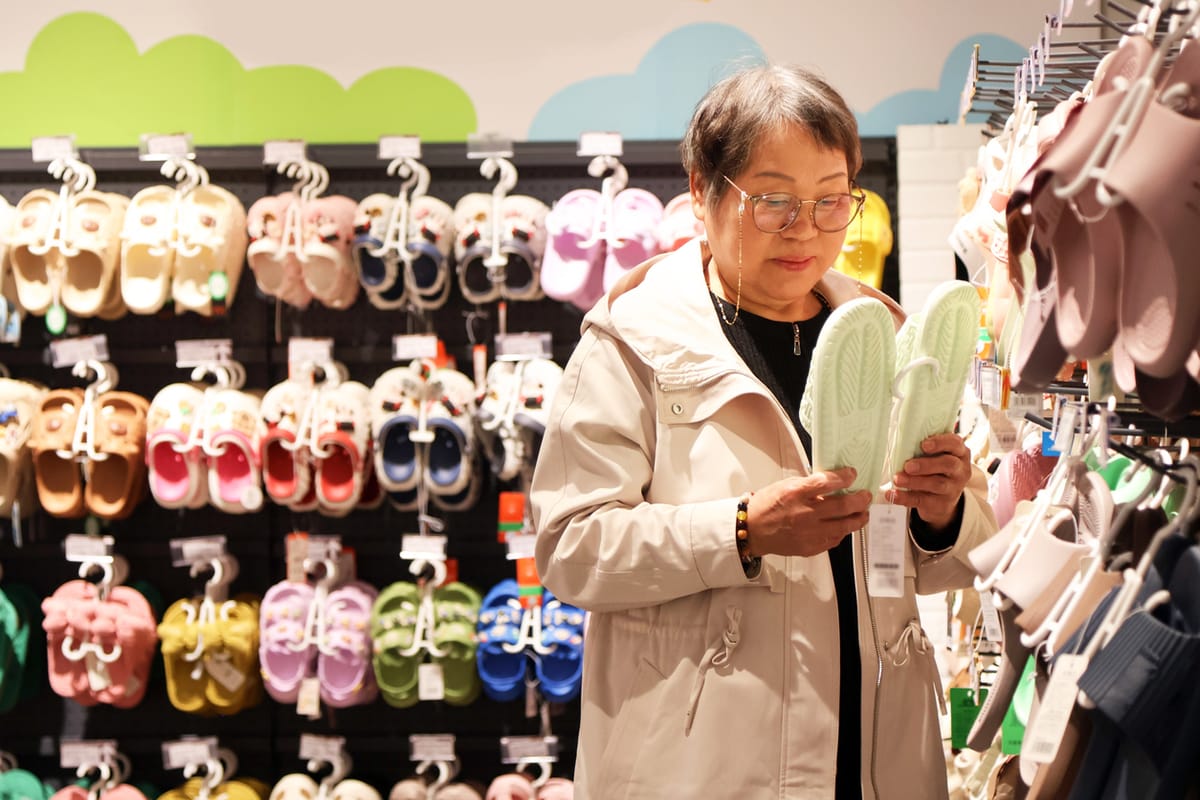
Trend-inspired footwear can perform well when it solves a clear use-case problem. This includes comfort clogs, soft slippers, lightweight sandals, Mary Jane-style casual shoes, minimalist sneakers, and casual walking shoes.
These products are not sold only by brand name. They are sold by scenario: home comfort, travel, summer wear, office casual, weekend errands, or standing for long periods. That makes them useful for Shopify sellers who rely on product storytelling, short-form video, and lifestyle positioning.
The advantage is flexibility. Sellers can test different angles without being locked into one brand identity. For example, the same product may be positioned around comfort, travel, casual fashion, or seasonal gifting.
However, trend-inspired footwear has one major risk: fast inventory movement. When a style becomes popular, common sizes and neutral colors often sell out first. Sellers need variant-level inventory synchronization, not just a product import function. If size 7 beige is gone but size 9 black remains, the Shopify store must reflect that accurately, which is exactly why choosing the best dropship app for shopify is critical for this niche.
4. Chinese Domestic Brands & Private-Label Collaborations
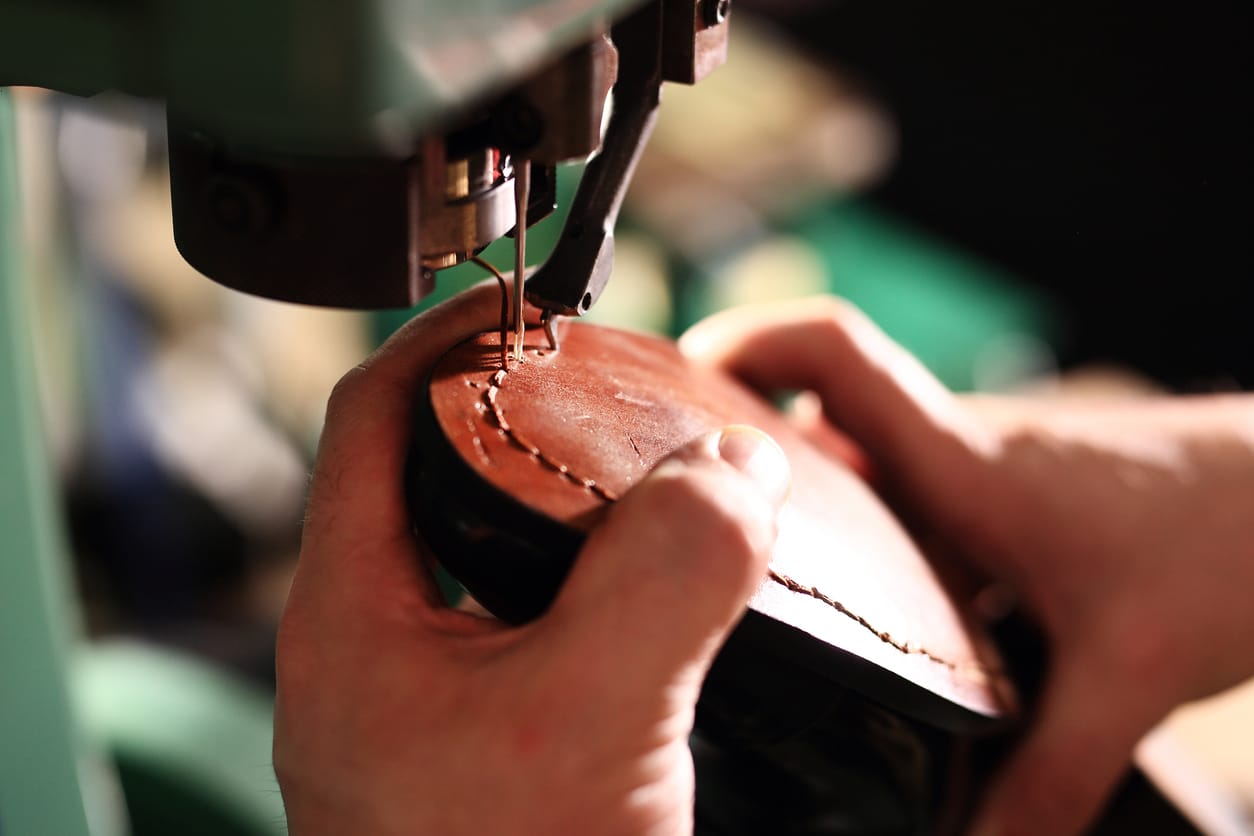
Selling established Chinese mega-brands (like Anta or Li-Ning) without explicit authorization will trigger the same intellectual property (IP) bans as Western trademarks. However, the professional way to leverage Chinese domestic brands is through authorized distribution or White-Label (ODM) partnerships.
Many regional Chinese factories hold their own domestic registered trademarks but actively welcome international dropshippers as overseas distributors. Alternatively, they offer "white-label" versions of their top-selling regional styles, allowing Shopify merchants to legally laser-engrave their own logos (Private Labeling) directly onto the insoles.
Why BuckyDrop Matters for Shoe Dropshipping?
Shoe dropshipping usually fails in the logistics and supply chain details long after the ad budget is spent. A product may look exceptional in marketing creatives, but the business will collapse if the supplier runs out of a key size variant, ships the wrong color, uses fragile packaging, or sends shoes with structural defects. These are operational vulnerabilities, not marketing problems.
BuckyDrop transforms these high-risk operational bottlenecks across Taobao/1688 sourcing, automated purchasing, and cross-border fulfillment through three critical control layers:
1. Advanced Multi-SKU Inventory Synchronization
Footwear is a complex multi-SKU product category; a single shoe style can easily span 30 separate size and color combinations. Standard dropshipping apps lack the variant-level agility required to prevent overselling.
Pro Tip (Real-World Case Study):
We recently audited a mid-sized Shopify store scaling a line of retro sneakers, spending $1,200 a day on TikTok Ads. Because their previous shopify dropshipping platform lacked real-time, variant-level stock updates, their ad creative for "Size 9 White" kept running for 72 hours after the 1688 supplier completely ran out of stock. This single synchronization blind spot resulted in 84 unfulfillable orders, $3,100 in instantly burned ad spend, and an immediate merchant account limitation due to sudden refund surges. BuckyDrop eliminates this risk by supporting automated, near-instantaneous inventory synchronization for complex shoe SKUs, ensuring your Shopify storefront reflects actual factory availability.
2. Pre-Shipment Quality Inspection and Batch Control
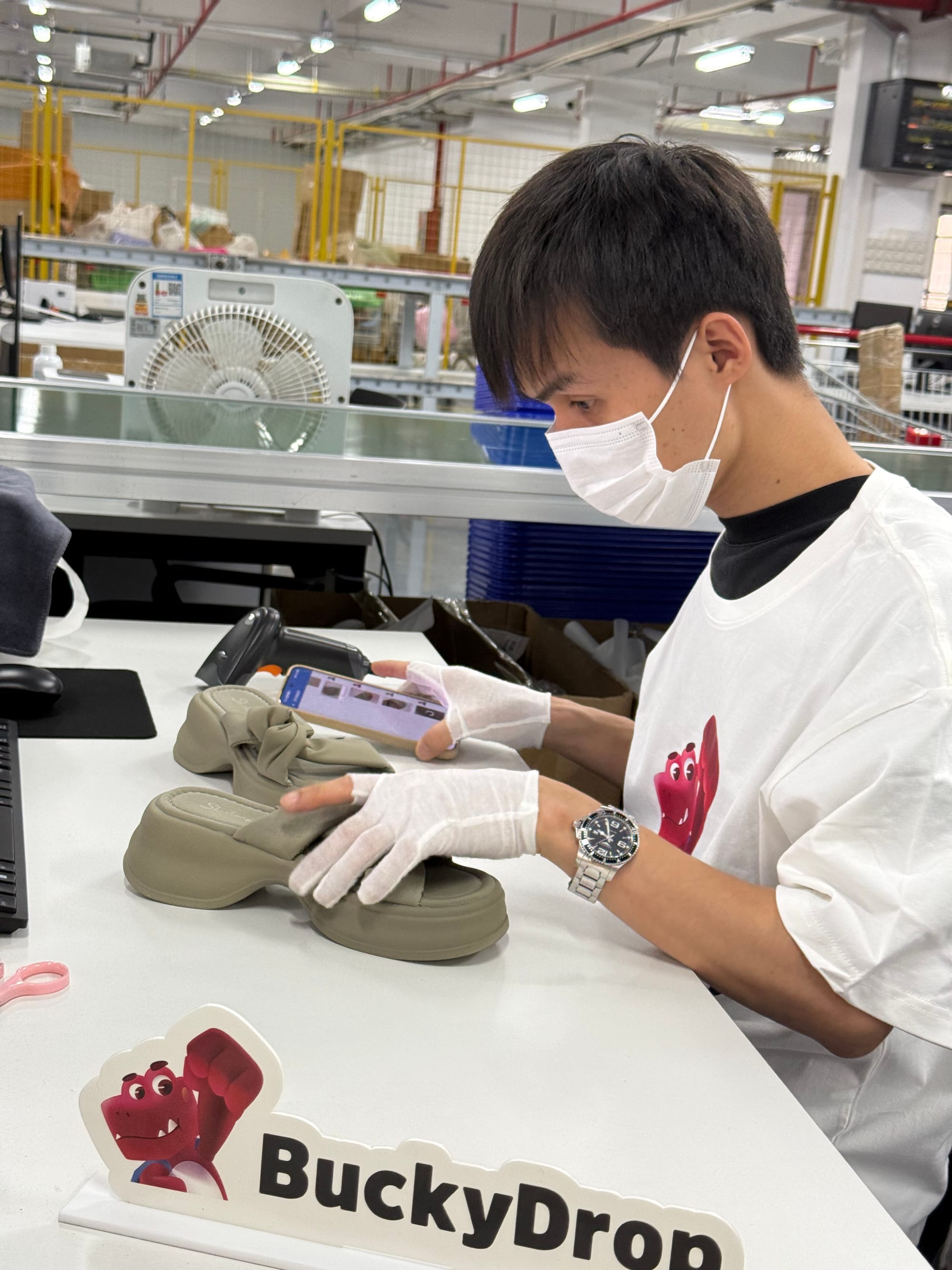
Footwear quality must be verified before the parcel leaves China, as reverse logistics for cross-border dropshipping are economically unviable. Essential inspection vectors include size label accuracy, left-and-right pair matching, stitching alignment, sole-bonding flexibility, and adhesive residue.
Pro Tip: In high-volume Chinese footwear manufacturing, top-selling styles often face severe "batch variance" when primary suppliers outsource production overflow to secondary, tier-2 workshops to meet sudden demand. This introduces invisible defects, such as lower-grade sole glue that fails in hot weather. When scaling past 20 orders a day on a single shoe style, relying on standard one-off samples is dangerous. Merchants must leverage BuckyDrop’s quality control infrastructure not just for basic order processing, but to enforce strict pre-shipment inspections and verify sole-bonding integrity on every incoming batch.
3. Packaging Optimization and Freight Rationalization
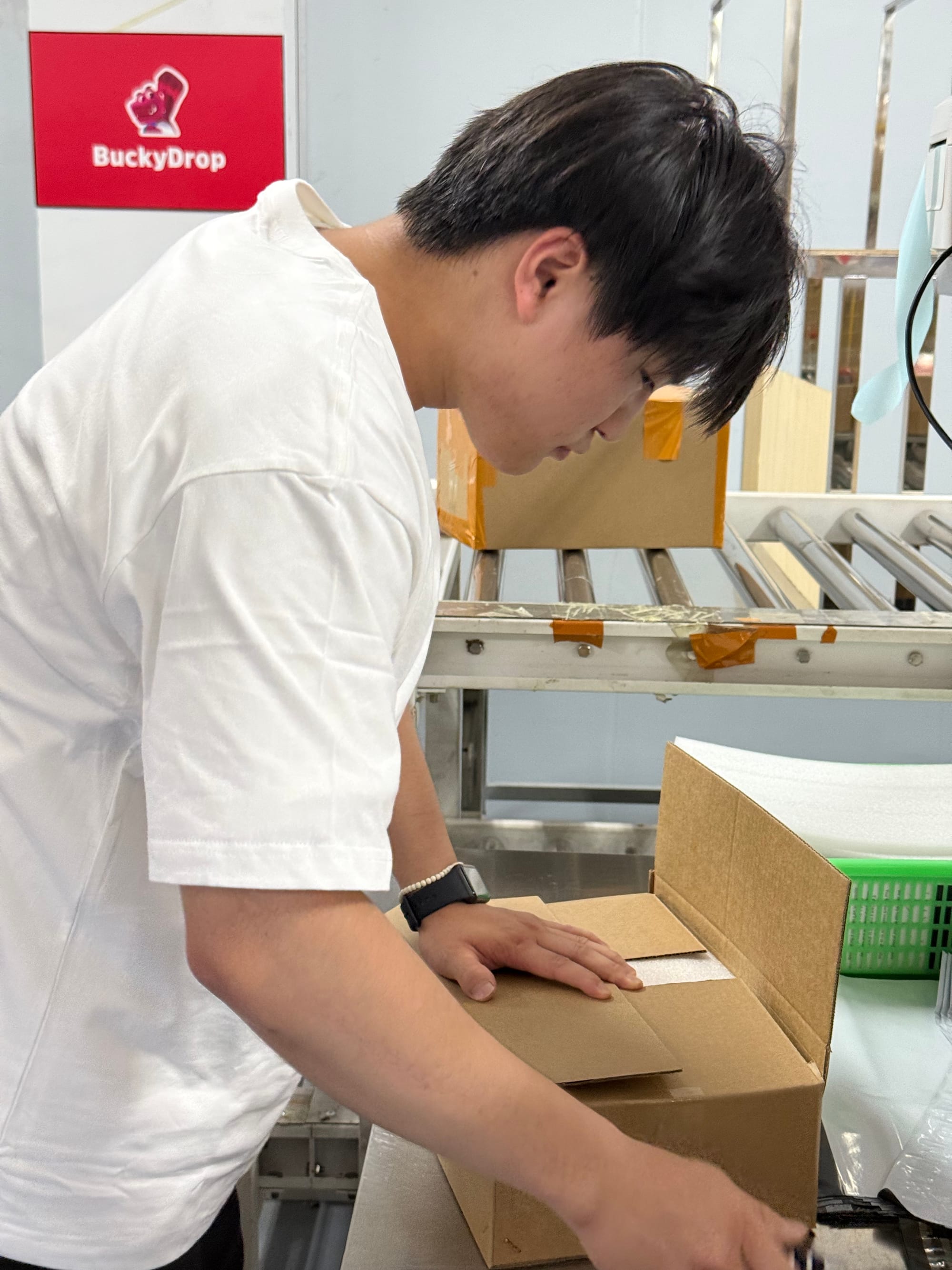
Footwear packaging directly influences both customer satisfaction and your baseline profitability. However, standard factory shoe boxes are frequently crushed during transit, leading to deformed products and immediate customer complaints.
Pro Tip:
Original cardboard shoe boxes are the silent killer of dropshipping margins because international air freight lines charge based on volumetric weight (the physical space a package occupies), rather than its actual weight. Shipping a rigid factory box means you are paying premium air freight rates to ship trapped air, which can double your logistics costs. The professional workaround is to utilize BuckyDrop’s packaging handling and shipping route optimization to instruct the warehouse to discard the factory box entirely. Instead, have the agent insert structural plastic shoe tree inserts or heavy-duty cardboard horns inside the footwear to maintain its architecture, wrap the pair tightly in high-density bubble sleeves, and ship them in optimized poly-bags. This single fulfillment adjustment shrinks the package profile, slashing international shipping fees by 35% to 50% while ensuring the shoes arrive in pristine condition.
Pitfall Avoidance Checklist
Before dropshipping shoe brands, check these points:
1. Avoid famous global brands without authorization.
Unauthorized branded footwear can create trademark, counterfeit, payment, and store compliance risks.
2. Do not follow trends blindly.
Check supplier stock depth, available sizes, color coverage, and reorder stability first.
3. Control size and color inventory.
Footwear overselling usually happens at the SKU level. Size 8 black may sell out while other variants remain available.
4. Test before scaling.
Start with low order volume. Review sizing, packaging, supplier response, inspection results, and customer feedback.
5. Do not trust supplier photos alone.
Verify material, sole quality, stitching, color, glue marks, labels, and packaging.
6. Use clear size guidance.
Foot-length-based sizing is safer than vague US/EU conversions.
7. Choose more than a product-import tool.
The best platform for dropshipping shoes should support sourcing, QC, purchasing, packaging, supplier backup, and fulfillment. BuckyDrop’s dropshipping services and dropshipping software are built around these operational needs.
How to Choose the Right Shoe Category for Your Shopify Store?
Store Type | Better Footwear Direction | Why |
Fashion store | Retro sneakers, sandals, Mary Jane-style shoes | Strong visual appeal |
Comfort-focused store | Walking shoes, EVA clogs, slippers | Practical daily demand |
Kids’ store | Casual children’s shoes | Repeat purchase potential |
Outdoor lifestyle store | Lightweight outdoor-inspired shoes | Clear use scenario |
Private-label store | Factory-original casual footwear | Better brand control |
Start with 3–5 products, not a large catalog. Test supplier response, inventory stability, inspection results, packaging condition, and customer feedback before increasing ad spend.
For Shopify app dropshipping, choose a dropship Shopify app that manages more than product upload. BuckyDrop is relevant for sellers comparing the best dropshipping apps for Shopify because it supports sourcing, SKU inventory, QC, packaging, and fulfillment.
FAQ
1. What shoe brands are suitable for dropshipping?
Brands or product lines with stable supply, clear sizing, legal sourcing access, and manageable packaging are more suitable than unauthorized famous brands.
2. Can I dropship Nike, Adidas, or other famous sneaker brands?
Only with proper authorization and legitimate supply documents. Otherwise, avoid them.
3. Are Chinese shoe brands suitable for dropshipping?
Yes, if supplier legitimacy, stock stability, size accuracy, and product specifications are verified.
4. What shoe products are easier for beginners to test?
Slippers, EVA clogs, canvas shoes, lightweight walking shoes, and casual sneakers.
5. Why is inventory synchronization important for footwear?
Because every size and color is a separate SKU. If one variant sells out, the store must update quickly to avoid overselling.
6. Is BuckyDrop only a dropship app?
No. It supports sourcing, Shopify product sync, purchasing, quality inspection, packaging, supplier matching, and fulfillment.
7. How can I reduce return risk when dropshipping shoes?
Use accurate size charts, inspect products before shipping, test low-volume orders, and avoid exaggerated claims.
8. What should I check before scaling a shoe product?
Check supplier stability, size accuracy, inventory depth, packaging condition, shipping performance, and customer feedback.
Conclusion
Popular shoe brands can attract attention, but successful shoe dropshipping depends on control: legal sourcing, accurate sizing, stable inventory, inspection, packaging, and fulfillment. For Shopify sellers, the safer path is not chasing famous logos without authorization, but testing footwear categories with clear demand and manageable supply risk. BuckyDrop helps sellers source from Taobao / 1688, synchronize size and color inventory, inspect products, manage packaging, and process fulfillment before scaling. If you are ready to test shoe products with better operational control, start with BuckyDrop and move suitable products toward purchase.