The Ultimate Dropshipping Guide 2026: Essential Tips for Buyers & Sellers
Is dropshipping still profitable in 2026? Build a sustainable Shopify business with BuckyDrop. Master sourcing, QC, and automated fulfillment to scale with ease.

Is Dropshipping Still Worth It in 2026?
In 2026, dropshipping is an e-commerce fulfillment model where independent sellers offer products to consumers without purchasing or handling inventory upfront. Instead, when an order is placed on a storefront like Shopify, a cross-border sourcing partner or China fulfillment supplier ships the product directly to the end customer.
While the model remains highly profitable, success in 2026 requires shifting from simple marketing to strict supply chain control. Based on 30 years of experience working with independent e-commerce sellers—and in recent years, heavily with U.S.-based Shopify operators—this guide outlines how to navigate modern cross-border logistics, automate order processing, and meet rising buyer expectations for transparent tracking and quality packaging. (Source: Shopify Help Center)
That definition is correct, but it does not show the messy part.
What happens if the supplier runs out of black size 8? What happens if the product photo looks premium, but the actual item feels cheap? What happens if tracking does not update and the buyer sends three emails in one week?
That is the real dropshipping test.
For buyers, dropshipping should feel simple: they order a product, receive clear tracking, and get what they paid for. For sellers, it is much more complicated. They need product sourcing tools, supplier checks, Shopify product sync, inventory visibility, packaging control, shipping route selection, and after-sales discipline.
That is where BuckyDrop fits into the conversation. BuckyDrop connects 1688 / Taobao sourcing integration, Shopify product synchronization, automated purchasing, quality inspection, packaging, fulfillment, supplier inventory synchronization, alternative supplier matching, and global shipping support in one workflow.
In plain English, it helps sellers control what happens after the order is placed.
And in 2026, that is where the money is protected—or lost.
What Buyers and Sellers Actually Need?
A buyer and a seller look at dropshipping from completely different sides of the window.
The buyer sees the product page. The seller sees the supplier page, stock level, order record, warehouse status, packaging request, shipping route, and tracking update.
When the system works, the buyer never thinks about those moving parts. When it fails, the buyer feels every one of them.
Perspective | What They Care About | What Usually Breaks | What a Strong Workflow Should Do |
Buyer | Correct item, clear tracking, safe packaging, fair support | Wrong item, vague delivery status, damaged package | Verify product details, update tracking, protect packaging |
New seller | Low inventory risk, simple testing, manageable startup cost | Choosing products without supplier checks | Test product, supplier, QC, and shipping before scaling |
Shopify seller | Product sync, order accuracy, fulfillment visibility | SKU mismatch, late tracking, manual order errors | Connect product data, order data, and fulfillment status |
Large-SKU seller | Stock visibility and supplier flexibility | Out-of-stock variants across many items | Use supplier inventory synchronization and backup sourcing |
Cross-border seller | Shipping route, compliance, labeling, delivery consistency | Cheap route causes delays or customs issues | Match route to product type, destination, and tracking needs |
This is why the phrase best way to start dropshipping should not be answered with a product category.
The better answer is process.
A product may look like a winner, but if the supplier cannot keep stock, the item fails inspection, or the shipping route creates delays, the store absorbs the damage.
One large-SKU ecommerce store reported that BuckyDrop’s supplier stock synchronization helped prevent frequent out-of-stock situations caused by rapidly changing inventory levels. That case matters because inventory risk grows with every SKU you add. Ten products are manageable. Five hundred products can become a daily stock-control problem.
Shopify’s fulfillment documentation explains fulfillment as the process of preparing and delivering customer orders. (Source: Shopify Help Center)
That means fulfillment is not just “shipping.” It is the operational bridge between the sale and the customer’s experience.
If that bridge is weak, the buyer may never come back.
How to Start Dropshipping Without Inventory Risk?
There is no such thing as zero-risk ecommerce.
But there is a smarter way to start.
I usually recommend a low-volume validation process before scaling. Think of it like testing a kitchen before opening the restaurant for a full Friday night crowd. If the kitchen cannot handle ten meals correctly, it will not handle 200.
For sellers using Shopify, this means testing more than the product page. You need to test the whole order path.
Start with product selection. Can the product be explained clearly to buyers? Are the photos realistic? Is the margin strong enough after product cost, shipping, packaging, payment fees, and after-sales risk?
Then check the supplier. Does the supplier maintain stock? Are variants clear? Can the same item be purchased repeatedly? Is there an alternative supplier if the main one runs out?
Then run trial orders. Do not trust product photos alone. Inspect the item. Check color, material, size, packaging, and visible defects. If the product disappoints you in a test order, it will disappoint buyers at scale.
One ecommerce business recommended validating products, suppliers, and fulfillment workflows at lower order volumes before scaling aggressively. That is the right lesson. Early testing costs less than late refunds.
This is where BuckyDrop adds practical value. Sellers can use 1688 dropshipping and dropshipping from taobao for product discovery, then use BuckyDrop to process product information, sync items to Shopify, handle purchasing, perform quality inspection, manage packaging, and ship globally from China fulfillment operations.
Shopify also provides inventory tools that help sellers track stock levels and product variants. In dropshipping from China, inventory visibility becomes even more important because stock often sits with outside suppliers, not in your own warehouse.
Without inventory synchronization, you are driving with fogged-up windows.
You might move forward, but you cannot see what is coming.
Expert Pro-Tip (The "First-Leg" Bottleneck): Most sellers optimize solely for international transit times (e.g., Shanghai to New York) but completely ignore domestic China logistics (the "first leg" from the 1688 factory to your fulfillment warehouse). A cheap factory located in a remote province can add 4 to 5 days of domestic transit before your order even clears an international sorting center. When sourcing, choose suppliers located within the core logistics hubs of Guangdong, Zhejiang, or Jiangsu to shave days off your delivery windows.
Dropshipping from China: 1688, Taobao, and Supplier Checks
China sourcing still has a strong place in ecommerce because 1688 and Taobao offer deep product variety. Sellers can find apparel, shoes, home products, accessories, beauty tools, pet items, consumer gadgets, and seasonal goods.
But product access is not the same as business readiness.
Taobao dropshipping can help sellers spot consumer-facing products and style trends. 1688 is often stronger for supplier-style sourcing. But neither platform removes the need for supplier checks.
A product listing may show attractive photos, but what is the actual material? Does the color match the listing? Are the size charts accurate? Can the supplier fulfill repeat orders? Does the packaging survive international shipping?
These questions decide whether Chinese dropshipping becomes a growth channel or a customer service headache.
A growing online store highlighted the value of BuckyDrop’s supplier sourcing support, quality inspections, and alternative supplier matching. That case reflects what I have seen for years: product selection gets the attention, but supplier stability keeps the business alive.
Here is a practical supplier-check framework.
Checkpoint | What to Confirm | Why It Matters |
Stock stability | Can the supplier support repeat orders and key variants? | Prevents avoidable refunds and cancellations |
Product accuracy | Do color, size, material, and model match the listing? | Reduces complaints and returns |
Supplier backup | Is there an alternative supplier for the same or similar product? | Reduces stockout risk |
Packaging condition | Can the item be packed safely for cross-border delivery? | Protects the buyer’s first physical impression |
Shipping suitability | Is the product suitable for the destination route? | Avoids delays, restrictions, and tracking issues |
BuckyDrop supports AI-assisted sourcing and product information processing. That matters because product data from 1688 or Taobao often needs cleanup before it belongs on a U.S.-market Shopify page. A Chinese supplier title may contain factory shorthand, awkward translation, unnecessary keywords, or unclear specifications.
Copying that directly into a store is like serving food straight from the delivery box.
You need to prepare it first.
Cross-border ecommerce also brings compliance pressure. U.S. Customs and Border Protection notes that ecommerce growth creates challenges related to high-volume trade and non-compliant goods. (Source: U.S. Customs and Border Protection)
So if you want to dropship from China, do not ask only, “Is the product cheap?”
Ask, “Can this product be sourced, checked, packed, shipped, tracked, and supported after delivery?”
That question saves money.
Shopify Dropshipping Workflow and Automation
A Shopify store looks simple from the buyer’s side.
Product page. Add to cart. Checkout. Confirmation email.
Behind the scenes, every order triggers a chain of work. Product data must match the supplier item. The correct variant must be purchased. The supplier must have stock. The item must pass inspection. Packaging must be applied. A shipping route must be selected. Tracking must return to the store.
That is why sellers search for a shopify dropshipping platform, dropshipping order management, and automated order fulfillment. They are not just looking for a dashboard. They are trying to reduce the number of manual steps between checkout and delivery.
Manual order handling can work at the beginning. You copy an order, message a supplier, place a purchase, wait for tracking, and update Shopify.
Fine.
Now imagine doing that with 80 orders in a day.
That is where mistakes start.
One ecommerce operation using BuckyDrop emphasized automated order downloads, inventory management, and fulfillment workflows. The result was fewer manual processing errors and better scalability.
Shopify’s developer documentation explains that fulfillment resources are used for shipping-related actions such as tracking and delivery updates. (Source: Shopify Developers)
For sellers, the practical meaning is simple: tracking data must move cleanly, because customers expect visibility.
BuckyDrop supports one-click Shopify product sync, automated purchasing, QC, packaging, fulfillment, and tracking workflows. For 1688 dropshipping shopify setups, this matters because the seller needs sourcing data, Shopify product data, order data, inventory data, and fulfillment data to stay aligned.
Here is the operational difference.
Manual Workflow | BuckyDrop-Supported Workflow |
Seller copies product information by hand | Product information can be processed and synced to Shopify |
Seller checks supplier stock manually | Supplier stock synchronization helps reduce blind spots |
Seller places each purchase manually | Automated purchasing can begin after orders are placed |
Seller relies on supplier claims | QC can check product condition before shipment |
Seller handles packaging requests separately | Packaging and private-label options can be managed in the workflow |
Seller chooses shipping by guesswork | Smart route recommendations help balance speed, compliance, and cost |
Seller updates tracking manually | Fulfillment and tracking can be managed through connected order handling |
This is not about removing seller responsibility.
It is about removing repeated handoffs where mistakes usually happen.
That is what sellers should expect from serious dropshipping platforms. If a tool only imports products, it has not solved the real operating problem.
Fulfillment, QC, Packaging, and Shipping Standards
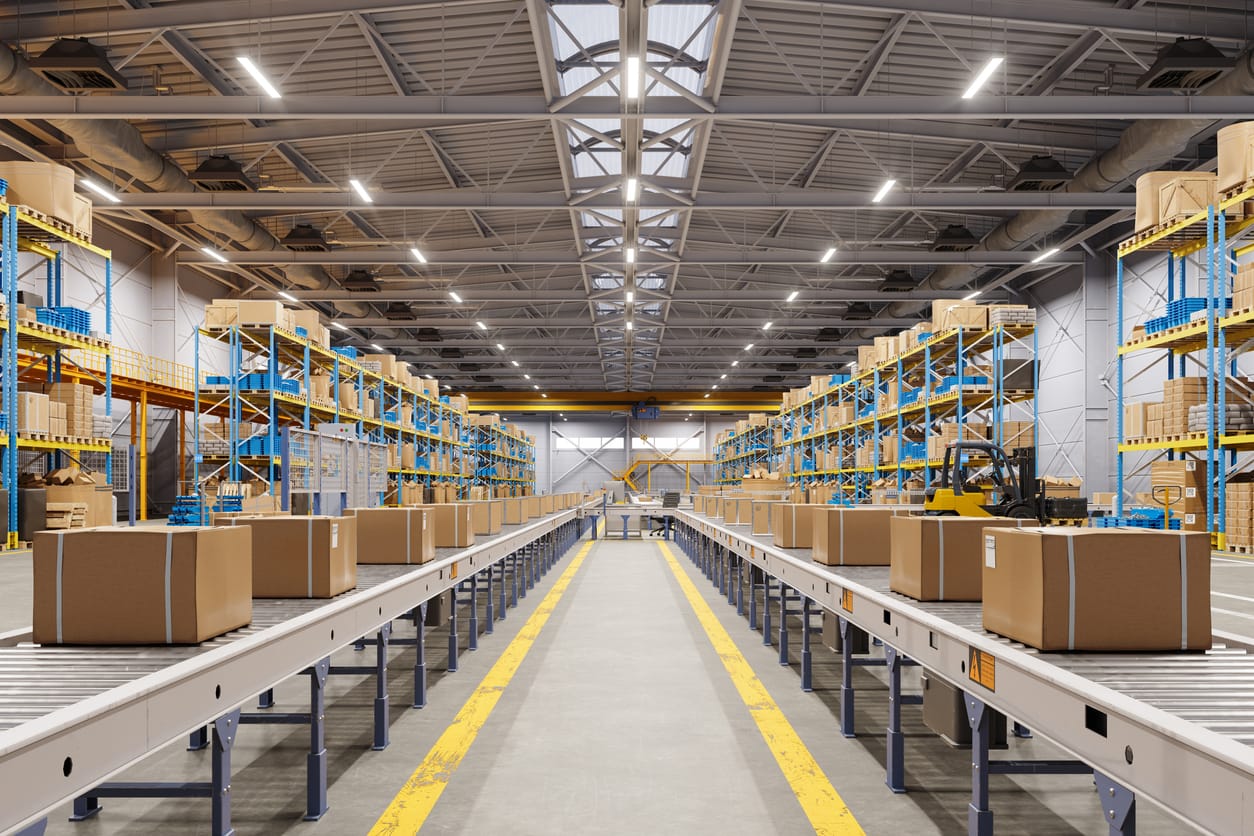
The buyer does not see your sourcing spreadsheet.
The buyer sees the product and the package.
That is why fulfillment dropshipping depends on quality inspection, packaging, labeling, route selection, and tracking. A good product can still feel careless if it arrives crushed, mislabeled, or impossible to track.
For sellers, QC is not a luxury. It is a filter.
Before an item ships, someone should check the obvious points: correct product, correct variant, visible defects, quantity, packaging condition, and shipping readiness. This does not guarantee perfection, but it catches issues before they become customer complaints.
Packaging matters for the same reason. If you are building a Shopify brand, the package is the first physical handshake with the customer. Small-batch branded packaging can help a store feel more intentional, even before it reaches large order volume.
BuckyDrop supports custom packaging and private-label branding services, including small-batch branded packaging. That is useful for sellers who do not want every order to feel like it came from an anonymous supplier.
Labeling and product identification also matter. GS1 maintains global standards for barcodes and identification keys used across supply chains. (Source: GS1)
Sellers do not need to become barcode engineers, but they should understand the basic principle: product and package information should be structured, accurate, and consistent.
Shipping requires the same discipline.
The cheapest shipping option is not always the best operational choice. A route must fit the product type, destination country, package weight, tracking requirement, and compliance risk. The World Customs Organization’s cross-border ecommerce framework focuses on standards that support legitimate trade, customs control, safety, and security. (Source: World Customs Organization)
That is why BuckyDrop’s smart shipping route recommendations matter. The goal is not just to ship. The goal is to choose a route that balances delivery expectations, compliance, and logistics cost.
An international Shopify store used BuckyDrop’s warehousing, packaging, and shipping support to improve fulfillment consistency across multiple markets. That is the point of a mature China dropship workflow: fewer surprises when order volume grows.
Dropshipping Mistakes to Avoid Before Scaling
Most dropshipping failures are not mysterious.
They usually come from scaling before the workflow is ready.
A seller sees early sales and immediately increases ad spend. But the supplier has unstable stock. The product quality has not been checked. The packaging is weak. The shipping route is slow. Tracking updates are inconsistent. A week later, customer emails pile up.
That is not growth.
That is pressure without structure.
Before scaling, sellers should watch for these mistakes.
First, do not trust product photos as proof. Photos are sales material. A test order and inspection tell you more.
Second, do not depend on one supplier. If that supplier runs out, changes price, or stops responding, your store stalls. Alternative supplier matching helps reduce this risk.
Third, do not ignore inventory synchronization. Large-SKU sellers especially need visibility because stockouts can spread across many variants at once.
Fourth, do not process orders manually for too long. Manual work feels cheaper until it creates errors, delays, and missed tracking updates.
Fifth, do not treat packaging as an afterthought. Customers judge the store by what arrives at their door.
Sixth, do not choose shipping only by price. Cheap routes can become expensive when they trigger complaints, unclear tracking, or long delays.
Finally, do not scale until you understand after-sales risk. Track refund reasons, delivery complaints, product mismatch issues, and replacement requests. The data tells you whether the product is truly ready.
One reverse case from the available material is worth repeating: an ecommerce business recommended validating products, suppliers, and fulfillment workflows at lower order volumes before scaling aggressively.
That advice is not conservative.
It is how experienced sellers protect cash flow.
If you are comparing options and wondering about the best platform for dropshipping, do not focus only on product quantity. Look at workflow control: sourcing, inventory synchronization, QC, packaging, shipping, and tracking.
That is also the right way to evaluate whether a provider truly functions as an all in one dropshipping platform, instead of just another product-import tool.
FAQ and Final Recommendation
1. What is dropshipping?
Dropshipping is a retail fulfillment method where sellers offer products without holding inventory, and suppliers or fulfillment partners ship orders after customers buy. Shopify explains that dropshipping lets sellers sell without handling inventory or shipping.
2. What is the best way to start dropshipping in 2026?
The safest approach is to test the full workflow before scaling. That means checking product demand, supplier stability, inventory visibility, Shopify sync, QC, packaging, shipping route, tracking, and after-sales response.
3. Is dropshipping from China still practical?
Yes. It can still work if sellers manage sourcing, supplier checks, quality inspection, packaging, inventory synchronization, and shipping compliance. It becomes risky when sellers rely only on supplier links and manual order handling.
4. What is the difference between 1688 dropshipping and Taobao dropshipping?
1688 is often used for supplier-style sourcing, while Taobao is useful for finding consumer-facing products and trends. Both require product checks, supplier validation, and fulfillment control.
5. Can I use BuckyDrop for Shopify dropshipping?
Yes. BuckyDrop supports Shopify product synchronization, order downloads, automated purchasing, quality inspection, packaging, fulfillment, inventory management, and tracking workflows.
6. How does BuckyDrop reduce stockout risk?
BuckyDrop supports supplier inventory synchronization and alternative supplier matching. This helps sellers reduce the risk of accepting orders for products or variants that suppliers cannot fulfill.
7. Does BuckyDrop support automated order fulfillment?
Yes. After orders are placed, BuckyDrop can support purchasing, QC, packaging, fulfillment, shipping, and tracking updates. That helps reduce manual work and processing errors.
8. Does BuckyDrop support custom packaging?
Yes. BuckyDrop supports custom packaging and private-label branding services, including branded packaging for small-batch orders.
9. What should buyers care about when ordering from a dropshipping store?
Buyers should care about accurate product information, clear delivery expectations, trackable shipping, safe packaging, and responsive after-sales support.
10. What should sellers compare when choosing dropshipping platforms?
Sellers should compare sourcing access, Shopify integration, inventory synchronization, automated order fulfillment, QC options, packaging support, alternative supplier matching, shipping route recommendations, and tracking visibility.
11. Is BuckyDrop an all in one dropshipping platform?
If by all in one dropshipping platform you mean a connected workflow for sourcing, Shopify sync, purchasing, QC, packaging, fulfillment, inventory synchronization, supplier matching, and global shipping, then BuckyDrop fits that role.
12. What is the biggest mistake new dropshipping sellers make?
The biggest mistake is scaling ads before testing the supply chain. A product is not ready to scale until sourcing, stock, QC, packaging, fulfillment, shipping, tracking, and after-sales response have been tested.
For buyers, a good dropshipping experience should feel simple: the right product, clear tracking, safe packaging, and fair support. For sellers, that simple buyer experience requires serious backend control. If you want to build a shopify dropship workflow around 1688 and Taobao sourcing, automated order fulfillment, supplier inventory synchronization, QC, custom packaging, China fulfillment, and global shipping, BuckyDrop gives you a practical way to test products first and scale only after the workflow holds up. Start with controlled validation, protect the customer experience, and use BuckyDrop to build a dropshipping process that can handle real orders instead of supplier guesswork.