Best Automated Order Management Software for Small Businesses
Compare the best automated order management software for small businesses. Learn how to choose the right OMS for Shopify, WooCommerce, dropshipping, inventory sync, fulfillment, shipping, and branded packaging.
A small ecommerce business rarely collapses because the first order comes in. It starts to crack when the tenth, fiftieth, or hundredth order arrives and the backend cannot keep up.
Take a typical U.S. Shopify seller running TikTok or Meta ads. The campaign works. Orders start coming in over the weekend. But behind the store, the owner is still copying order details into a spreadsheet, checking supplier stock manually, placing purchase orders one by one, waiting for tracking numbers, and answering “Where is my order?” emails before the supplier has even shipped.
That is not a marketing problem. That is an order management problem.
For small businesses, automated order management software should not just collect orders. It should help move each order from checkout to fulfillment, shipping, tracking, and exception handling with fewer manual steps. Capterra’s order management software category describes OMS tools as systems that manage orders from acceptance to shipment and often connect with inventory, payment, marketing, and customer relationship workflows.
For dropshipping sellers, especially those sourcing from China, the bar is even higher. The software has to connect the store with suppliers, procurement, quality checks, packaging, logistics, and customer-facing tracking. Shopify’s automated dropshipping guide describes automation tools as software that helps sellers handle sourcing, fulfillment, and tracking with less manual work.
This guide compares the best automated order management software for small businesses and explains where BuckyDrop fits for Shopify and WooCommerce sellers who need China sourcing, automated dropshipping fulfillment, and branded packaging support.
Quick Verdict
The best automated order management software depends on where your fulfillment bottleneck is.
If your main issue is shipping labels, carrier rates, and tracking numbers, a shipping tool like ShipStation may be enough. If your issue is basic inventory control, Zoho Inventory or a similar inventory tool may work. If your business already sells across multiple marketplaces and warehouses, platforms like Cin7 or Linnworks may be a better fit.
But if your bottleneck is China sourcing, supplier coordination, purchasing, quality inspection, repacking, branded packaging, and international dropshipping fulfillment, BuckyDrop makes more sense than a basic shipping app or inventory tool.
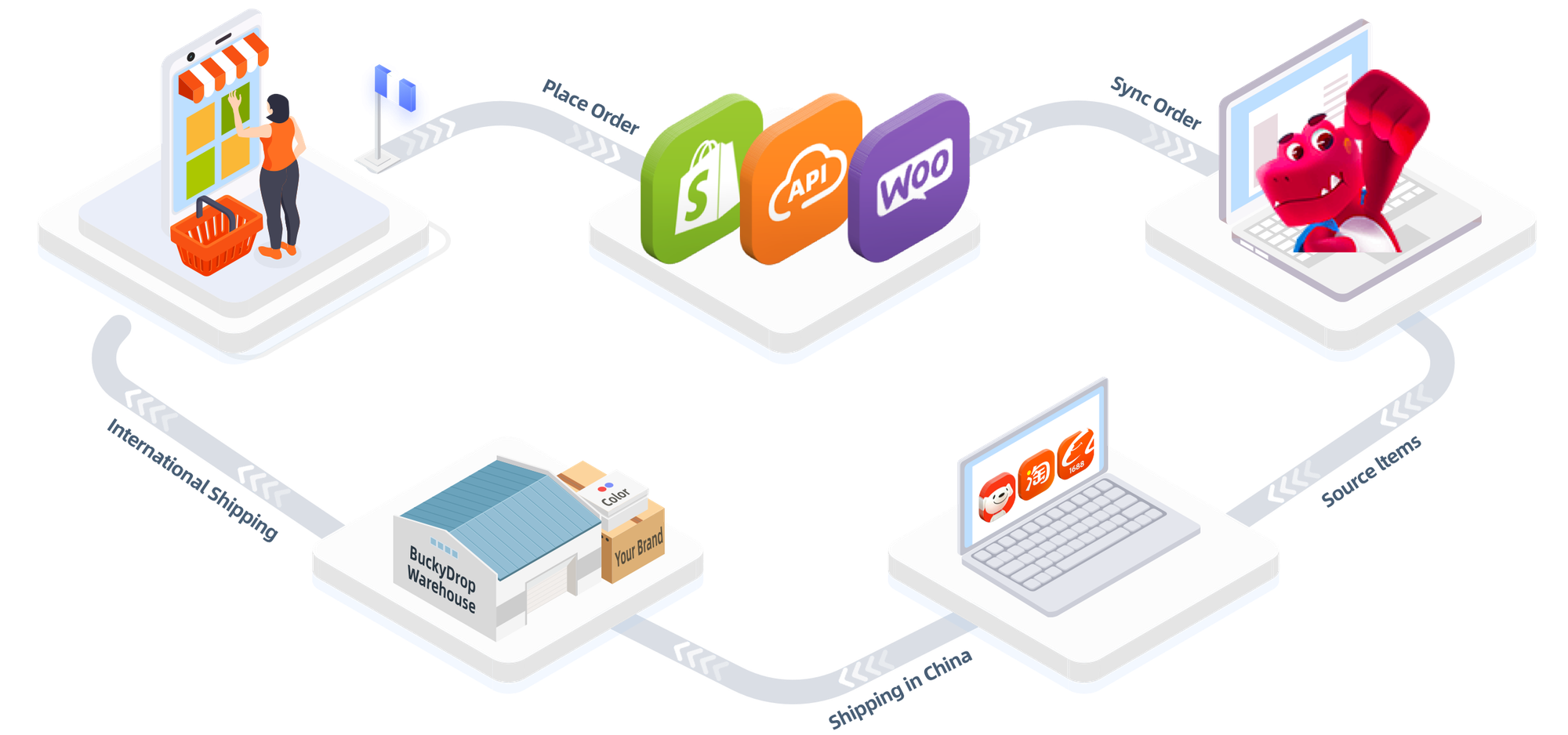
BuckyDrop positions itself as a China-based auto-fulfillment dropshipping solution. Its public materials list sourcing, warehousing and processing, auto-fulfillment, delivery, logistics tracking updates, Shopify and WooCommerce connection, API access, and one-on-one support as core parts of the platform.
BuckyDrop should not be compared with ShipStation one-to-one. They solve different problems. ShipStation is mainly a shipping workflow tool. BuckyDrop is closer to a China sourcing and fulfillment operating layer for dropshipping sellers.
What Is Automated Order Management Software?
Automated order management software helps a business manage the order lifecycle after a customer checks out.
In a small ecommerce operation, this usually includes order import, inventory sync, fulfillment routing, shipping updates, customer tracking, returns, cancellations, and exception handling. A good system should help the seller see where every order stands: paid, processing, packed, shipped, delayed, canceled, refunded, or returned.
TrustRadius’s order management software category lists common OMS capabilities such as automated order processing, centralized multichannel order management, real-time order tracking, inventory management, purchase order generation, shipping integrations, returns and exchanges, analytics, dashboards, and ERP/accounting/ecommerce integrations.
The mistake many sellers make is thinking order management means “orders show up in a dashboard.” That is too shallow. A dashboard does not solve the operational problem if the seller still has to message suppliers manually, confirm stock, place purchases, request tracking, and update customers by hand.
A real order management system should reduce manual work at the points where mistakes usually happen: product availability, SKU matching, order routing, fulfillment status, tracking updates, and customer communication.
How We Evaluated the Software
We evaluated each platform based on how useful it is for a real small business, not just how many features it lists on a pricing page.
The main criteria were ecommerce integration, inventory sync, fulfillment automation, supplier workflow, shipping visibility, support quality, pricing structure, scalability, and dropshipping fit. For BuckyDrop specifically, we also looked at whether the platform supports the parts that generic OMS tools usually do not cover well: China product sourcing, procurement, warehouse receiving, quality inspection, branded packaging, and cross-border logistics.
This evaluation approach follows a people-first content principle. The article is meant to help the reader make a purchasing decision, not simply repeat software category descriptions. Google Search Central’s helpful content guidance recommends clear sourcing, useful analysis, expertise, and content written primarily for people rather than search engines.
This matters because not every “order management” product is built for the same type of seller. A U.S. boutique shipping from its own stockroom, a Canadian WooCommerce seller using multiple suppliers, and a Shopify dropshipping brand sourcing from 1688 or Taobao do not need the same system.
When Small Businesses Need Order Management Automation

A seller can usually survive with manual processes at the beginning. Five orders a day can be handled with spreadsheets, supplier messages, and manual tracking updates. But once order volume grows, manual work starts creating hidden costs.
The warning signs are easy to spot. Orders are copied by hand. Inventory is checked after the customer has already paid. Tracking numbers are delayed. Customer support is full of “Where is my order?” messages. The team cannot quickly tell which orders are stuck, which supplier caused the delay, or which product is out of stock.
For North American sellers, late fulfillment can become more than a support issue. It can lead to PayPal disputes, Shopify chargebacks, negative reviews, and wasted ad spend from TikTok or Meta campaigns.
Shopify’s automated dropshipping guide cites a 2025 SellersCommerce survey of 3,161 dropshipping store owners: 48% flagged supplier reliability as a significant issue, and 64% named shipping delays as their biggest pain point. Source: Shopify automated dropshipping guide
A practical rule is this: if your team spends more than 20% of the workday copying order data, checking stock, chasing tracking numbers, or updating customers manually, automation should be seriously evaluated.
Monthly Order Volume | Practical Recommendation |
0-100 orders/month | Basic store tools may be enough if you have a simple workflow. |
100-500 orders/month | Inventory sync, tracking automation, and supplier workflow become important. |
500-1,000 orders/month | You need stronger exception handling, batch processing, and reliable support. |
1,000+ orders/month | API access, dedicated support, warehouse workflow, and automation rules become more important. |
Dropshipping sellers may need automation earlier because every order can involve supplier stock, purchasing, QC, packing, shipping, and tracking.
Best Automated Order Management Software Comparison Table
Software | Best For | Main Strength | Main Limitation | Best Fit |
BuckyDrop | China sourcing, dropshipping, branded fulfillment | Sourcing, procurement, QC, warehouse handling, packaging, fulfillment, tracking | Not ideal for sellers who only need domestic U.S. shipping labels | Shopify and WooCommerce sellers sourcing from China |
ShipStation | Shipping label automation | Carrier integrations, label printing, shipping workflow | Not a sourcing or supplier management platform | Sellers with existing inventory or warehouse setup |
Zoho Inventory | Basic order and inventory management | Affordable inventory, sales order, and purchase order tools | Limited dropshipping supply chain support | Small retailers with simpler workflows |
Cin7 / Linnworks | Multichannel retail operations | Advanced inventory, marketplace, and warehouse workflows | Higher cost and implementation complexity | Larger sellers with multiple channels and warehouses |
Shopify Apps | Shopify-only beginners | Easy setup and low learning curve | Too many apps can create a fragmented workflow | New or low-volume Shopify stores |
Ordoro / Similar OMS Tools | Inventory and fulfillment operations | Useful for shipping, inventory, and routing | May not solve China sourcing, QC, or branded dropshipping | U.S.-based ecommerce sellers with domestic fulfillment |
This table groups software by operational use case rather than declaring one universal winner. OMS review platforms such as Capterra and TrustRadius describe order management as a broad category that overlaps with inventory, shipping, ecommerce, CRM, ERP, and accounting systems.
The key is not to ask, “Which tool has the most features?” The better question is, “Which tool removes the specific operational bottleneck that is costing us money?”
How to Choose the Right Platform
1. Start with Your Actual Sales Channels
The first question is not just whether the software “integrates with Shopify.” That phrase is too vague.
A useful integration should move order data, inventory updates, fulfillment status, and tracking information without a person touching a spreadsheet. If the tool only imports orders but does not update tracking back to the customer order page, your team is still doing manual work.
For sellers using Shopify or WooCommerce, BuckyDrop is relevant because it connects store orders with sourcing and fulfillment workflows. The BuckyDrop website states that sellers can connect Shopify and WooCommerce stores or use API access to sync orders, inventory, and fulfillment automatically. Source: BuckyDrop official website
2. Treat Inventory Sync as a Risk Control Tool
Inventory sync is not just an efficiency feature. It protects revenue.
When a product still appears available in the store after the supplier runs out of stock, the seller has already lost control. The customer has paid, the ad spend is gone, and the refund conversation is coming.
At minimum, a system should help with stock updates, SKU mapping, variant matching, supplier inventory visibility, low-stock alerts, and out-of-stock handling. For products driven by TikTok, Meta ads, or influencer traffic, once-a-day stock checks may not be enough.
This is why dropshipping sellers need more than a basic inventory app. They need supplier-side visibility and a fulfillment workflow that reacts when stock, price, or availability changes.
3. Look Beyond Order Importing
Order importing is the easiest part of automation. The harder question is what happens after the order enters the system.
Does the product need to be purchased? Does it need to be received at a warehouse? Does it need to be inspected? Does the seller require custom packaging, a thank-you card, hang tag, or branded label? Which shipping route should be used? How does tracking return to the store?
Generic OMS tools often manage the order record but not the supply-side work behind the order. For many dropshipping businesses, that is exactly where the real bottleneck sits.
BuckyDrop is built around that supply-side layer. Its official website lists product sourcing, warehousing and processing, auto-fulfillment and delivery, logistics tracking updates, quality inspection, custom packaging, label processing, and personalized handling services. Source: BuckyDrop official website
4. Do Not Ignore Shipping Visibility

For U.S. and Canadian customers, tracking is expected. A customer may tolerate a longer delivery window if expectations are clear. What they rarely tolerate is silence.
Late or unclear tracking can create support tickets, refund requests, PayPal disputes, and chargebacks. During Q4, Black Friday, Cyber Monday, and holiday shipping season, that pressure increases.
A useful order management platform should help tracking information move back to the store and customer-facing order page. If your team still copies tracking numbers manually, the process is not truly automated.
BuckyDrop’s Shopify App Store listing includes real-time order and tracking updates, worldwide shipping and delivery, automated stock and price updates, and automatic order fulfillment in its listed plan features. Source: BuckyDrop Shopify App Store listing
5. Calculate Cost Per Fulfilled Order
Small businesses often choose software by monthly price. That is the wrong metric.
A low-cost app can become expensive if it still requires manual supplier follow-up, manual tracking updates, and daily spreadsheet work. A higher-cost workflow may be cheaper if it reduces refunds, support tickets, fulfillment mistakes, and labor hours.
Use this formula:
Total monthly software, service, packaging, and fulfillment-related costs ÷ monthly fulfilled orders = cost per fulfilled order
TrustRadius notes that order management software pricing can vary by features, users, product SKUs, and monthly orders. Source: TrustRadius OMS pricing context
Then ask whether the system saves enough time and reduces enough mistakes to justify that cost.
Best Automated Order Management Software for Small Businesses
1. BuckyDrop — Best for China Sourcing, Dropshipping, and Branded Fulfillment
BuckyDrop makes the most sense when a small business needs more than a dashboard. It is best for sellers who need the operational layer behind dropshipping: finding products in China, purchasing them, receiving them, checking quality, repacking orders, applying branded materials, shipping internationally, and syncing tracking back to the store.
For a Shopify or WooCommerce seller, this matters because the biggest fulfillment problems usually do not happen inside the storefront. They happen after the order is paid: supplier stock changes, product quality issues, packaging requirements, shipping route selection, and delayed tracking.
BuckyDrop is especially suitable for sellers sourcing from Chinese platforms such as 1688, Taobao, Tmall, JD, Xianyu, Weidian, Poizon, and similar marketplaces. Its website lists sourcing access to major Chinese platforms and emphasizes factory-price product access with no markup charged. Source: BuckyDrop official website
Its Shopify App Store listing also describes BuckyDrop as a branded dropshipping app with China sourcing, private label, POD, auto-fulfillment, custom packaging, quality checks, live stock and price updates, and order visibility. Source: BuckyDrop Shopify App Store
This does not mean BuckyDrop is the right tool for every small business. If a seller only needs to print domestic USPS or UPS labels from a U.S. warehouse, a shipping platform may be simpler. But if the seller’s bottleneck is China sourcing plus fulfillment execution, BuckyDrop is a much better fit than a basic shipping or inventory app.
2. ShipStation — Best for Shipping Label Automation
ShipStation is a good fit for sellers who already have inventory or a warehouse workflow and mainly need to streamline shipping labels, carrier selection, and tracking.
It is useful for U.S. and Canadian sellers who ship from their own location or a domestic warehouse. The limitation is that it does not solve sourcing, supplier coordination, China procurement, QC, or branded dropshipping fulfillment.
3. Zoho Inventory — Best for Budget-Friendly Inventory and Orders
Zoho Inventory can work well for small retailers that need basic inventory, sales orders, purchase orders, and shipment management.
It is a practical option for general ecommerce operations, especially for teams already using Zoho products. But it is not designed specifically for China sourcing, supplier purchasing, warehouse consolidation, custom packaging, or dropshipping QC workflows.
4. Cin7 or Linnworks — Best for Multichannel Retail Operations
Cin7 and Linnworks are more suitable for businesses with multiple sales channels, larger catalogs, and warehouse operations.
They can be powerful for established retailers, but early-stage dropshipping sellers may find them too complex or expensive. These platforms make more sense when the business already has stable volume, operational staff, and a more advanced inventory structure.
5. Shopify Apps — Best for Shopify-Only Beginners
For new Shopify sellers, simple apps can be enough at the start. A store testing its first few products may not need a complex OMS.
The problem appears when the seller adds too many separate apps: one for sourcing, one for tracking, one for returns, one for inventory, one for reviews, and another for shipping. Eventually, the workflow becomes fragmented. When something breaks, it is hard to know which app caused the issue.
For Shopify dropshipping sellers sourcing from China, a connected platform may be more efficient than building operations from disconnected apps.
BuckyDrop at a Glance
Category | Details |
Best for | Shopify and WooCommerce sellers sourcing from China |
Not best for | Sellers who only need domestic U.S. shipping labels |
Core value | Order sync, China sourcing, procurement, QC, branded packaging, international fulfillment |
Strong categories | Fashion, accessories, home decor, lifestyle products, beauty tools, niche gifts |
Main use case | Small teams that want to reduce manual supplier coordination |
Key point to test | Shipping time, QC standards, packaging requirements, stock stability, and support response |
BuckyDrop’s value is clearest when the seller wants to move from basic dropshipping to a more controlled fulfillment process. It is not only about getting products shipped. It is about reducing the messy manual work between customer checkout and delivery.
BuckyDrop’s public materials and company profile describe support for Shopify, WooCommerce, BuckyShop, and API access, plus China sourcing, procurement, warehousing, quality checks, package handling, logistics tracking, and branded value-added services. Source: BuckyDrop official website
Before vs. After Automation Workflow
Before automation, a dropshipping seller often has a workflow like this: the customer places an order, the seller copies the order details, checks supplier stock manually, purchases the product, waits for the supplier or warehouse to provide tracking, updates the store manually, and answers customer questions along the way.
That workflow may survive at five orders per day. It usually starts breaking when order volume moves to 30 or 50 orders per day.
After automation with a platform like BuckyDrop, the workflow is more controlled. Orders sync from Shopify or WooCommerce. Product and inventory data can be updated. Procurement and fulfillment steps move through a more structured process. Products can be received, checked, packed, branded, shipped internationally, and tracked. The seller monitors exceptions instead of copying data all day.
The difference is not just speed. It is fewer points of failure.
Who BuckyDrop Is Best For
BuckyDrop is best for sellers who want to source from China and avoid building a manual supply chain from scratch.
It is especially useful for Shopify and WooCommerce sellers who need product sourcing, purchasing, warehouse receiving, quality inspection, packing, international shipping, and tracking sync in one connected workflow. It also makes sense for sellers trying to build a more branded dropshipping experience with custom packaging, labels, hang tags, thank-you cards, or branded inserts.
Categories where this matters include fashion, accessories, beauty tools, home decor, lifestyle goods, and niche gift products. In these categories, packaging and presentation can influence whether a customer buys again.
Who BuckyDrop Is Not For
BuckyDrop is not the right answer for every small business.
It may not be the best fit if you only sell locally, already own all inventory, only need USPS or UPS label printing, do not source from China, need same-day domestic U.S. fulfillment, or already operate with a full ERP and warehouse management system.
This boundary is important. BuckyDrop is strongest when the seller’s problem is China sourcing, supplier coordination, QC, repacking, branded packaging, and cross-border fulfillment. If the seller only needs shipping labels, a shipping tool is probably simpler.
What to Verify Before You Commit
Before moving all orders to any platform, test it with 10 to 20 real orders. Do not rely only on a demo.
Check how fast orders sync from Shopify or WooCommerce. Confirm whether SKUs and product variants match correctly. Watch how inventory updates behave when supplier stock changes. Test whether tracking numbers return to the store without manual copying.
For dropshipping sellers, also verify what happens when a product is out of stock, how QC issues are reported, whether custom packaging instructions are followed, how quickly support responds to a real order issue, and whether the final shipping time matches what you promise customers.
BuckyDrop’s official website states that online consultation is available during service hours, customer support by email/groups responds within 24 hours including weekends, dedicated account manager support responds within 24 hours on business days, and CEO email issues are guaranteed to be replied to within two working days. Source: BuckyDrop service policy
The most important number is not the monthly software fee. It is your real cost per fulfilled order after product cost, service cost, packaging, shipping, labor, refunds, and support time.
Common Mistakes to Avoid
The first mistake is choosing the cheapest tool without calculating operating cost. A cheap app that still requires manual supplier work is not cheap.
The second mistake is confusing shipping software with order management software. Shipping software can be excellent for labels and carriers, but it may not handle sourcing, procurement, QC, or supplier workflow.
The third mistake is trusting automation before testing inventory accuracy. Bad supplier data plus automation creates faster mistakes.
Another common mistake is building a fragmented app stack. Five cheap apps can create more operational risk than one connected workflow.
Small businesses should also avoid ignoring support. During peak season, slow support can cost more than the software subscription.
Finally, do not ignore packaging. Generic packaging may be acceptable for low-ticket testing, but if the goal is repeat purchase and brand trust, product presentation matters.
Real-World Use Cases
Case 1: Five-Person Japanese Fashion Team
In a reported BuckyDrop customer case, a small Japanese fashion team had marketing ability but lacked supply chain control. They wanted to sell fashion products with a stronger brand experience, not just ship generic items.
BuckyDrop helped with tag replacement, logo sewing, thank-you cards, brand labels, garment folding, and packaging. The reported result was a 20% increase in repeat purchase rate and a 5% decrease in return rate. Source: BuckyDrop branded dropshipping case
This does not mean every fashion seller will see the same result. Repeat purchase rate depends on product quality, pricing, traffic source, shipping time, and customer expectations. But the case shows one useful point: packaging and fulfillment presentation are not cosmetic details. They can affect whether customers buy again.
Case 2: U.S. Shopify Seller Using Warehousing and Packing Support
In another BuckyDrop customer case, a U.S. Shopify seller used BuckyDrop for long-term procurement, warehousing, and parcel packing. The seller valued white-label service, vacuum packaging, customer support, and the ability to reduce daily operational workload. Source: BuckyDrop branded dropshipping customer feedback
The lesson is simple: small businesses do not always need more staff. Sometimes they need a better fulfillment workflow.
Case 3: Singapore Seller Consolidating China Marketplace Purchases
A Singapore ecommerce seller needed to source from platforms such as Taobao and Tmall, consolidate items in China, use custom packaging, choose logistics routes, and ship internationally. Source: BuckyDrop branded dropshipping customer feedback
For cross-border sellers, this is where normal order management software often falls short. The order record is only one part of the problem. The bigger challenge is receiving, inspecting, packing, shipping, and tracking the product across borders.
FAQ
1. What is the best automated order management software for small businesses?
The best choice depends on the fulfillment bottleneck. If you need shipping labels, use a shipping tool. If you need inventory control, use an inventory platform. If you need China sourcing, supplier coordination, QC, branded packaging, and international dropshipping fulfillment, BuckyDrop is a strong fit.
2. Is BuckyDrop only for Shopify?
No. BuckyDrop supports Shopify, WooCommerce, BuckyShop, and API access, making it useful for sellers who need more than a single Shopify app. Source: BuckyDrop official website
3. Is BuckyDrop better than ShipStation?
They solve different problems. ShipStation is better for shipping label automation. BuckyDrop makes more sense when the seller needs sourcing, procurement, QC, branded packaging, and cross-border dropshipping fulfillment.
4. Does Shopify already include order management?
Shopify includes basic order handling, but many sellers still need additional support for supplier coordination, dropshipping fulfillment, inventory sync, international shipping, and branded packaging.
5. When should a small business stop using spreadsheets?
When spreadsheets cause delayed fulfillment, missing tracking, overselling, refund requests, or too much manual work. If the team spends more than 20% of the workday on order admin, automation is worth testing.
6. What features matter most for dropshipping?
Dropshipping sellers should prioritize supplier sourcing, stock sync, order routing, QC, tracking updates, packaging options, shipping visibility, and support response. Shopify’s automated dropshipping guide also highlights sourcing, routing, pricing, tracking, returns, supplier compatibility, integration, and pricing transparency as key evaluation factors. Source: Shopify automated dropshipping guide
7. Can automated order management software reduce returns?
It can help reduce avoidable returns if it improves order accuracy, product checks, packaging, tracking communication, and fulfillment consistency. Results still depend on product quality, category, pricing, and customer expectations.
8. What should I test before using BuckyDrop for all orders?
Start with 10 to 20 real orders. Check order sync speed, SKU matching, stock updates, QC communication, packaging execution, tracking return, shipping time, support response, and final cost per fulfilled order.
9. Can I use BuckyDrop if I already have suppliers?
Yes, if your workflow still needs sourcing support, purchasing, warehouse receiving, QC, packing, international shipping, or tracking synchronization. The key is whether BuckyDrop removes manual work from your current process.
10. Is branded packaging worth it for dropshipping?
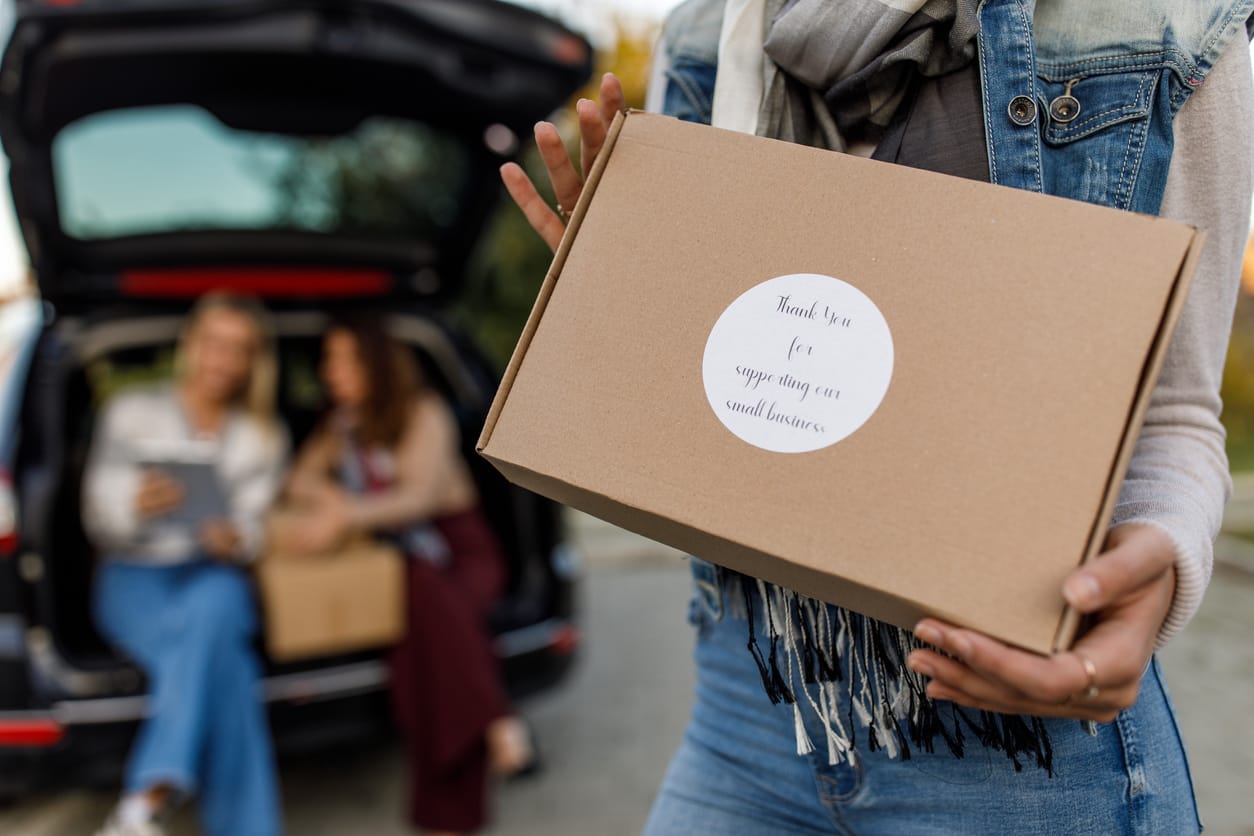
It depends on the product and price point. For fashion, accessories, beauty tools, gifts, and lifestyle products, branded packaging can improve perceived value and repeat purchase potential. For low-ticket test products, basic packaging may be enough.
11. How much does order management software cost?
Costs vary by platform, order volume, users, integrations, and service level. Instead of judging only by monthly price, calculate cost per fulfilled order, including software, service, packaging, shipping, labor, refunds, and support time. TrustRadius notes that OMS pricing can vary based on features, users, SKUs, and monthly orders. Source: TrustRadius Order Management Software
12. What happens if a supplier runs out of stock?
That depends on the platform and workflow. Before committing, test how the system handles out-of-stock items, whether it alerts the seller, whether alternatives can be sourced, and how customer communication is handled.
Sources
The following sources were used to support definitions, software category context, dropshipping automation considerations, BuckyDrop platform claims, and customer case details:
1. Google Search Central — Creating helpful, reliable, people-first content
Used for content quality, sourcing, expertise, and trust principles.
2. Capterra — Order Management Software Category
Used for OMS category definition, common integrations, and small business software context.
3. TrustRadius — Order Management Software Category
Used for OMS feature scope, buyer considerations, and pricing structure context.
4. Shopify — Automated Dropshipping Guide
Used for automated dropshipping definitions, supplier reliability and shipping delay pain points, and dropshipping software evaluation criteria.
Used for BuckyDrop platform positioning, China sourcing, supported Chinese marketplaces, fulfillment workflow, store connection, service policy, and support details.
6. BuckyDrop Shopify App Store Listing
Used for Shopify app claims, listed features, plan features, store compatibility, stock and price updates, automatic order fulfillment, real-time order and tracking updates, and worldwide shipping.
7. BuckyDrop Branded Dropshipping Page
Used for branded dropshipping services, packaging/QC workflow, and customer case examples.
8. BuckyDrop company profile and customer case materials
Used for business overview, Shopify/WooCommerce/API support, warehouse/QC/packaging services, and reported customer cases.
Final Recommendation
The best automated order management software for small businesses is not the one with the longest feature list. It is the one that fits how the business actually fulfills orders.
If you own inventory and ship locally, choose a tool focused on inventory and shipping efficiency. If you sell across multiple marketplaces and warehouses, look at a multichannel OMS. If you are a Shopify or WooCommerce dropshipping seller sourcing from China, you need something different: a workflow that connects sourcing, procurement, inventory updates, order sync, QC, packaging, international shipping, and tracking.
That is where BuckyDrop fits.
BuckyDrop is not for every seller. But for small teams trying to move beyond manual China dropshipping, it can reduce supplier follow-up, organize fulfillment, improve packaging control, and make order management less dependent on spreadsheets and chat messages.
Start by connecting your Shopify or WooCommerce store and testing BuckyDrop with your next 10 to 20 orders. Measure three things: how much manual work disappears, how quickly tracking returns to the store, and whether your real cost per fulfilled order makes sense.
If those numbers work, you do not just have software. You have a fulfillment workflow that can scale.