How Much Capital Do I Need to Start Dropshipping?
How much capital do you need to start dropshipping? BuckyDrop pairs with Shopify data to break down lean starter costs ($300) to full testing runways ($5,000+), highlighting hidden fees and supply chain realities.

Most beginners should plan for $300–$1,000 to run a lean dropshipping test. A budget of $3,000–$5,000+ gives more room for product samples, paid ads, fulfillment costs, refunds, and operational mistakes. You can launch with less, but you should not spend your entire budget on the store alone. A realistic budget should help you test products, verify suppliers, fulfill early orders, and handle problems before scaling.
At BuckyDrop, our team works closely with sellers who need product sourcing, China-based fulfillment, quality control, packaging, shipping coordination, and automated order fulfillment. From that operational perspective, startup capital is not just “launch money.” It is a testing runway.
Quick Answer: Dropshipping Startup Capital by Budget Level
The table below gives estimated budget divisions for beginners. These are planning estimates, not guaranteed costs. Actual spending depends on product category, target market, shipping route, supplier terms, marketing channel, and the dropshipping services used.
Startup capital | Best use | Main budget focus | Main limitation |
$300 | Learning the workflow | Basic store, 1–2 samples, free tools, organic content | Too limited for serious paid ads |
$500 | Focused validation | Samples, basic content, small traffic or creator test | Limited product testing |
$1,000 | Serious beginner test | Product validation, small ads, fulfillment buffer | Requires strict spending control |
$3,000 | Structured launch | Multiple samples, better creatives, paid testing, supplier checks | Needs stronger tracking discipline |
$5,000+ | Full testing runway | Branding, paid testing, automation, fulfillment float, refund buffer | More capital still does not guarantee profit |
The best way to start dropshipping is not to spend the least possible amount. It is to protect enough capital to test product quality, confirm supplier reliability, calculate margins, and handle the first operational problems.
The Startup Capital Formula
Use this formula before spending money:
Dropshipping startup capital = store setup + product validation + marketing tests + fulfillment float + risk buffer
Shopify’s dropshipping cost guide lists key startup cost areas such as ecommerce store setup, business registration, product samples, marketing, dropshipping tools, supplier fees, shipping, fulfillment, taxes, and compliance. That is why a serious budget should include more than just a store subscription.
Cost category | What it includes | Why it matters |
Store setup | Ecommerce platform, domain, theme, basic apps | Gives the business a functional selling channel |
Product validation | Samples, test orders, supplier checks, packaging review | Confirms what customers will actually receive |
Marketing tests | Paid ads, creator content, SEO, organic content tools | Helps test demand and messaging |
Fulfillment float | Product cost, shipping, packing, handling, fulfillment fee | Covers early orders before cash flow stabilizes |
Risk buffer | Refunds, reships, chargebacks, product defects, failed tests | Protects the business from common beginner mistakes |
Estimated Beginner Cost Breakdown

The following estimates assume a lightweight consumer product, no bulk inventory purchase, no regulated products, and a beginner-friendly ecommerce setup.
Cost item | Lean estimate | More realistic estimate | Notes |
Ecommerce platform | $29–$39/month | $29–$105/month | Shopify lists Basic at $29/month yearly or $39/month monthly, and Grow at $79/month yearly or $105/month monthly. |
Domain | Around $10–$20/year | Around $10–$30/year | Shopify gives $16 annually as an example custom domain cost in its dropshipping cost guide. |
Theme | $0 | $0–$300+ | A free theme is usually enough for a beginner test. |
Apps and tools | $0–$50/month | $50–$200/month | May include review apps, email tools, analytics, product sourcing tools, or fulfillment apps. |
Product samples | $50–$150 | $150–$500+ | Shopify recommends budgeting for product samples before selling and notes costs vary by product and supplier. |
Product content | $0–$100 | $100–$500+ | Photos, videos, UGC, editing, or product demonstrations. |
Paid ads | $0–$200 | $300–$2,000+ | Shopify says many dropshippers start around $5–$10/day and should expect at least $100–$200/month to test campaigns. |
Fulfillment float | $50–$300 | $300–$1,500+ | Product cost, shipping, packing, and fulfillment handling. |
Refund/reship buffer | $50–$200 | $200–$1,000+ | Needed for damaged items, delays, wrong variants, or dissatisfied customers. |
Business/admin costs | $0–$200+ | $200–$1,000+ | Shopify notes US business registration can range from $50–$500, with annual fees from $0–$800 depending on location. |
Shopify Dropship Costs: What Beginners Should Budget For
A Shopify dropship store usually starts with the Shopify subscription, but the subscription is only one cost line.
At the time of writing, Shopify lists Basic at $29/month when paid yearly or $39/month when paid monthly, Grow at $79/month yearly or $105/month monthly, and Advanced at $299/month yearly or $399/month monthly. Shopify also lists online standard card rates of 2.9% + 30¢ for Basic, 2.7% + 30¢ for Grow, and 2.5% + 30¢ for Advanced.
A beginner using Shopify should budget for:
· Shopify subscription
· domain
· paid theme, if needed
· product sourcing app
· review app
· email marketing app
· payment processing fees
· third-party transaction fees, if applicable
· samples
· marketing tests
· refunds and reships
Shopify can be a practical Shopify dropshipping platform because it includes store hosting, checkout, product management, payments, marketing tools, analytics, and access to the Shopify App Store. However, Shopify alone does not solve supplier reliability, product quality, shipping speed, or fulfillment operations. The best platform for dropshipping depends on both the storefront and the sourcing/fulfillment workflow behind it.
Dropshipping From China: How It Changes the Capital Plan?
Dropshipping from China can give sellers access to a large supplier base and a wide product range, but drop shipping from China is not only about finding a cheaper product.
A China-based budget should account for:
· product cost
· domestic China handling
· quality control
· warehouse processing
· packaging
· international shipping
· tracking updates
· customs or duties, if applicable
· refund and reship exposure
A product that looks cheap at the supplier level may not be profitable after shipping, fulfillment fees, payment processing, refunds, and customer acquisition costs.
This is where BuckyDrop fits naturally into the capital conversation. For sellers sourcing from China, BuckyDrop is most relevant in the operational part of the budget: drop sourcing, supplier-side coordination, QC, packing, international shipping, tracking updates, and automated order fulfillment. Its Shopify App Store listing says it supports sourcing from 1688, Taobao, Alibaba, and AliExpress, plus private label/custom packaging, automated order fulfillment, QC, packing, global shipping, dedicated support, and real-time stock, price, and tracking updates.
BuckyDrop’s pricing page also separates key cost lines. It lists a CN ¥199/month Pro Plan, CN ¥0 sourcing fees for standard platforms such as 1688 and Taobao, a CN ¥9.90 per parcel order fulfillment fee, a 30-day free storage grace period, and zero-markup shipping based on carrier weight/volume with a flat CN ¥9.9 service fee per parcel.
This does not mean BuckyDrop is always the cheapest option. It means sellers can use published sourcing, warehousing, fulfillment, and shipping fee lines to calculate their real fulfillment float more clearly.
Where BuckyDrop Fits in a Beginner’s Budget?
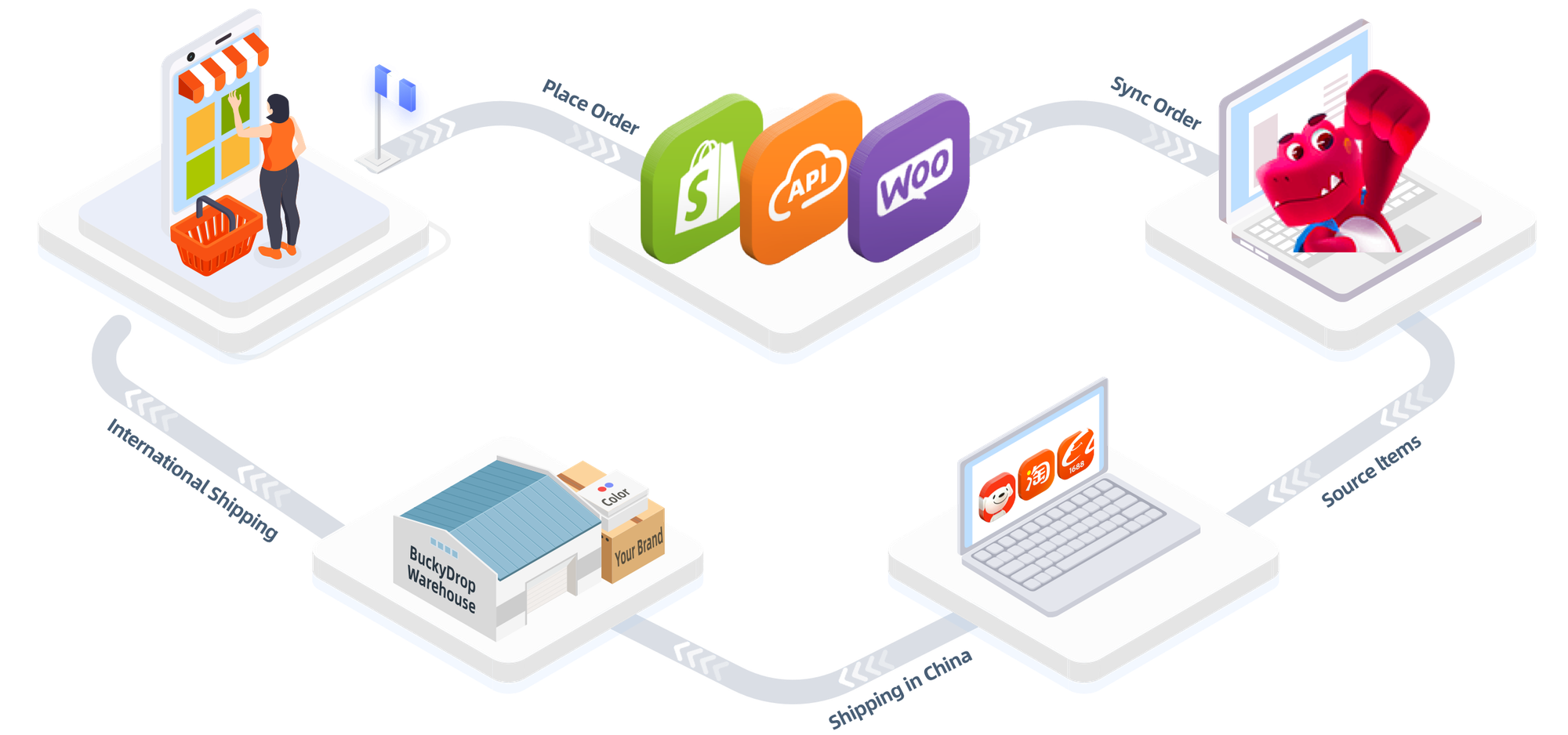
BuckyDrop should not be treated as a shortcut to guaranteed profit. It is better understood as a China-based sourcing and fulfillment workflow for sellers who need more operational control.
It can be relevant when a seller needs:
· drop sourcing from China marketplaces
· product sourcing tools for 1688, Taobao, Alibaba, or AliExpress
· dropshipping fulfillment services
· dropship fulfillment services for Shopify or WooCommerce workflows
· automated order fulfillment
· QC, packing, and global shipping support
· real-time stock, price, and tracking updates
· China-based fulfillment support
The practical question is not “Which tool has the most features?” The better question is:
Will this sourcing and fulfillment workflow help calculate costs, reduce manual mistakes, and fulfill dropshipping orders more reliably?
For a seller testing one product manually, paid tools may be minimal. For a seller testing multiple products, handling variants, or sourcing from China suppliers, dropship services can become part of the operating budget.
Public Insight: Why Support and Fulfillment Affect Startup Capital?

Public reviews mention reliable support, ease of use, account-manager help, sourcing orders, fulfillment management, product defects, and efficiency. For beginners, these themes matter because they connect directly to startup capital:
Review signal | Budget lesson |
Support responsiveness | Keep a problem-solving buffer, not just a software budget. |
Sourcing help | Product cost should be evaluated together with supplier reliability. |
Fulfillment management | Manual errors can create refund, delay, or reship costs. |
Product defects | A refund/reship reserve should be part of startup capital. |
Efficiency | Automation becomes more valuable when order handling is repetitive. |
The lesson is not that any platform guarantees success. The lesson is that support, sourcing, quality control, and fulfillment reliability are real budget factors. Beginners often underestimate them because they focus only on ads and store setup.
Hidden Costs Beginners Often Forget
Many beginners budget for the store and ads, then run out of money when real orders expose operational costs.
Common hidden costs include:
· product samples
· failed product tests
· shipping cost differences by country, weight, volume, and carrier
· payment processing fees
· refunds and reships
· chargebacks
· app upgrades
· customer support time
· taxes, duties, and compliance
· packaging improvements
· currency conversion
· cash-flow gaps between customer payment and supplier payment
Cart abandonment is another reason beginners need realistic testing capital. Baymard’s benchmark lists an average documented online shopping cart abandonment rate of 70.22%, based on 50 studies. This does not mean a beginner will have that exact rate, but it shows why traffic should not be treated as guaranteed revenue.
Final Answer: How Much Capital Do You Need?
For most beginners:
· $300 is enough to learn the workflow.
· $500 is enough for focused product validation.
· $1,000 is a more realistic beginner budget for samples, content, small marketing tests, and fulfillment buffer.
· $3,000 gives room for stronger product testing, supplier checks, and operational support.
· $5,000+ gives a fuller testing runway for branding, paid traffic, automation, fulfillment float, and risk protection.
The safest answer is not the lowest number. The safest answer is the amount that lets a beginner test responsibly without needing the first product to work immediately.
Dropshipping does not require bulk inventory, but it does require capital discipline. Spend first on product validation, supplier reliability, and fulfillment clarity. Then spend on traffic.
FAQs
Can you start dropshipping with $300?
Yes. A $300 budget can help a beginner learn the workflow, build a simple store, order one or two samples, and test organic content. It is not enough for serious paid advertising.
Is $500 enough to start dropshipping?
Yes, if the goal is focused validation. A $500 budget should be used for one niche, a few samples, basic content, and a small test—not broad product testing or aggressive paid ads.
Is $1,000 enough for Shopify dropshipping?
Yes. A $1,000 budget is a practical beginner budget for a Shopify dropship test because it can cover the platform, domain, samples, basic content, small marketing tests, and fulfillment buffer.
How much does a Shopify dropship store cost?
At the time of writing, Shopify lists Basic at $29/month yearly or $39/month monthly, with standard online card rates from 2.9% + 30¢ on Basic. Beginners should also budget for domain, apps, samples, marketing, payment fees, refunds, and fulfillment costs.
Do beginners need to buy inventory for dropshipping?
Usually, no. In dropshipping, the supplier ships products directly to customers, so sellers do not need to hold inventory upfront. However, sellers still need capital for samples, product costs, shipping, tools, marketing tests, refunds, and fulfillment. Shopify explains that suppliers ship directly to customers in the dropshipping model.
What is the biggest hidden dropshipping cost?
The biggest hidden cost is failed testing. Products, creatives, suppliers, shipping routes, and ads do not always work on the first try. Beginners should keep a buffer for refunds, reships, and product tests that do not convert.
Is dropshipping from China cheaper?
Dropshipping from China can lower product sourcing costs, but it is not automatically cheaper after shipping, QC, fulfillment fees, packaging, refunds, and delivery expectations are included.
What are dropshipping fulfillment services?
Dropshipping fulfillment services help sellers process orders, prepare packages, coordinate shipping, update tracking, and manage fulfillment workflows. Some also provide sourcing, QC, packaging, and automated order fulfillment.
When should beginners use BuckyDrop?
BuckyDrop may be useful when a seller is sourcing from China and needs support with drop sourcing, product sourcing tools, QC, packing, shipping, tracking updates, and automated order fulfillment. It is most relevant when fulfillment complexity becomes part of the startup budget.
Is BuckyDrop the best platform for dropshipping?
Not for every seller. BuckyDrop is better understood as a China-based sourcing and fulfillment solution. The best platform for dropshipping depends on the product, target market, budget, store platform, and fulfillment needs.
Should beginners use automated order fulfillment?
Not always from day one. Manual fulfillment can help beginners understand the process. Once orders become regular or involve multiple products, suppliers, or variants, automated order fulfillment can reduce manual errors and save time.
What is the best way to start dropshipping?
The best way to start dropshipping is to choose one niche, test a few products, order samples, calculate total landed cost, build a simple store, test demand, and scale only after the product, traffic, and fulfillment numbers make sense.
Sources
· Shopify Pricing — Used for Shopify plan pricing, payment processing rates, and platform cost references.
https://www.shopify.com/pricing
· Shopify Dropshipping Cost Guide — Used for dropshipping startup cost categories, product sample costs, advertising test budget examples, business registration cost context, and beginner budget references.
https://www.shopify.com/blog/how-much-does-it-cost-to-start-dropshipping
· Shopify How to Start Dropshipping — Used for explaining the dropshipping model, including how suppliers ship products directly to customers.
https://www.shopify.com/blog/how-to-start-dropshipping
· BuckyDrop Pricing Page — Used for BuckyDrop sourcing fees, fulfillment fees, storage policy, shipping service fee references, and Pro Plan pricing.
https://www.buckydrop.com/en/services/pricing/
· BuckyDrop Shopify App Store Listing — Used for BuckyDrop Shopify integration features, supported sourcing platforms, automated order fulfillment, QC, packing, global shipping, stock/price/tracking sync, rating, and review count.
https://apps.shopify.com/buckydrop
· BuckyDrop Shopify App Store Reviews — Used for public review themes related to support responsiveness, sourcing help, fulfillment management, product defects, ease of use, and operational efficiency.
https://apps.shopify.com/buckydrop/reviews
· Baymard Institute Cart Abandonment Benchmark — Used for cart abandonment benchmark data and checkout-risk context.